By Pet Tech Compass Editorial Team
Last reviewed: August 12, 2026
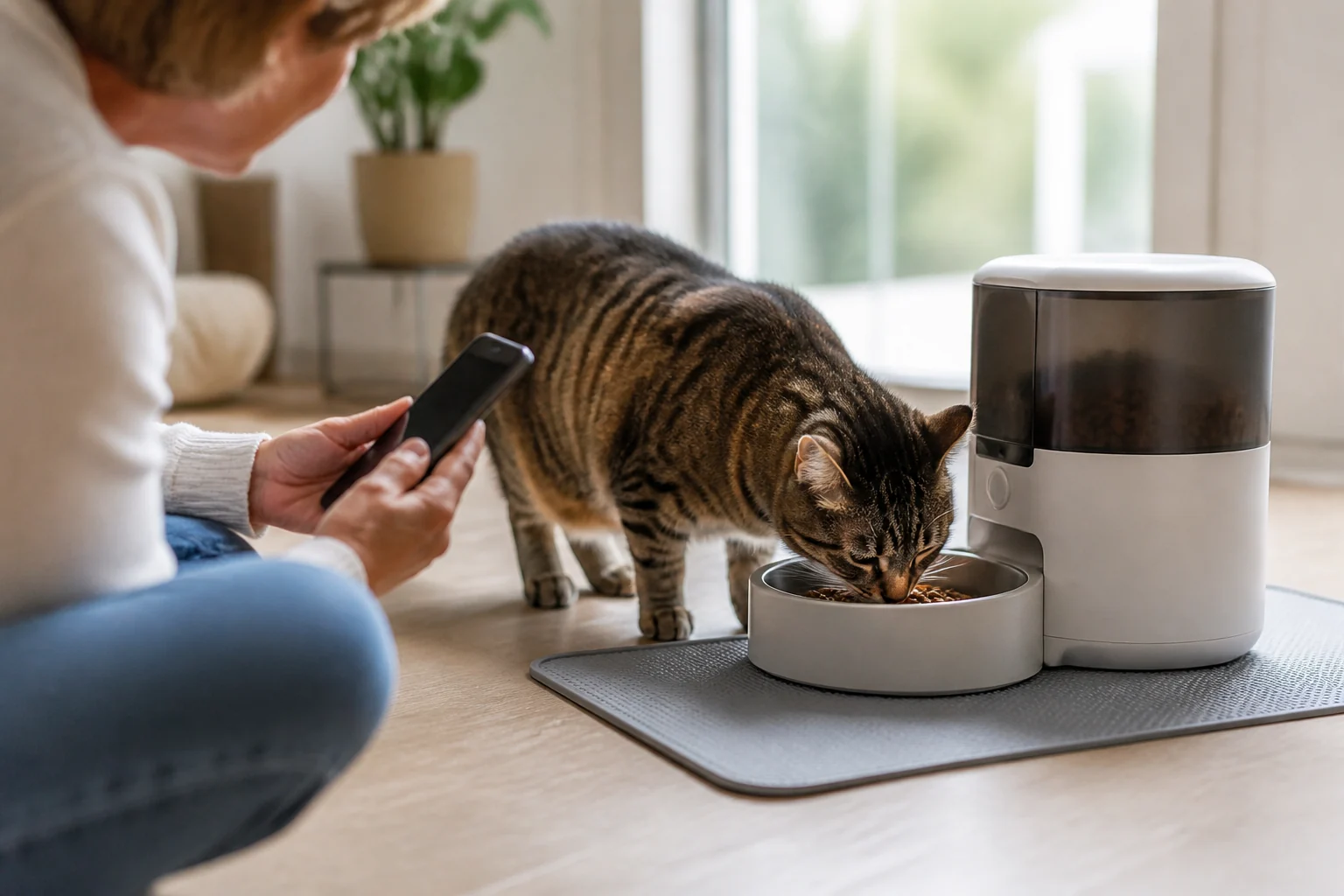
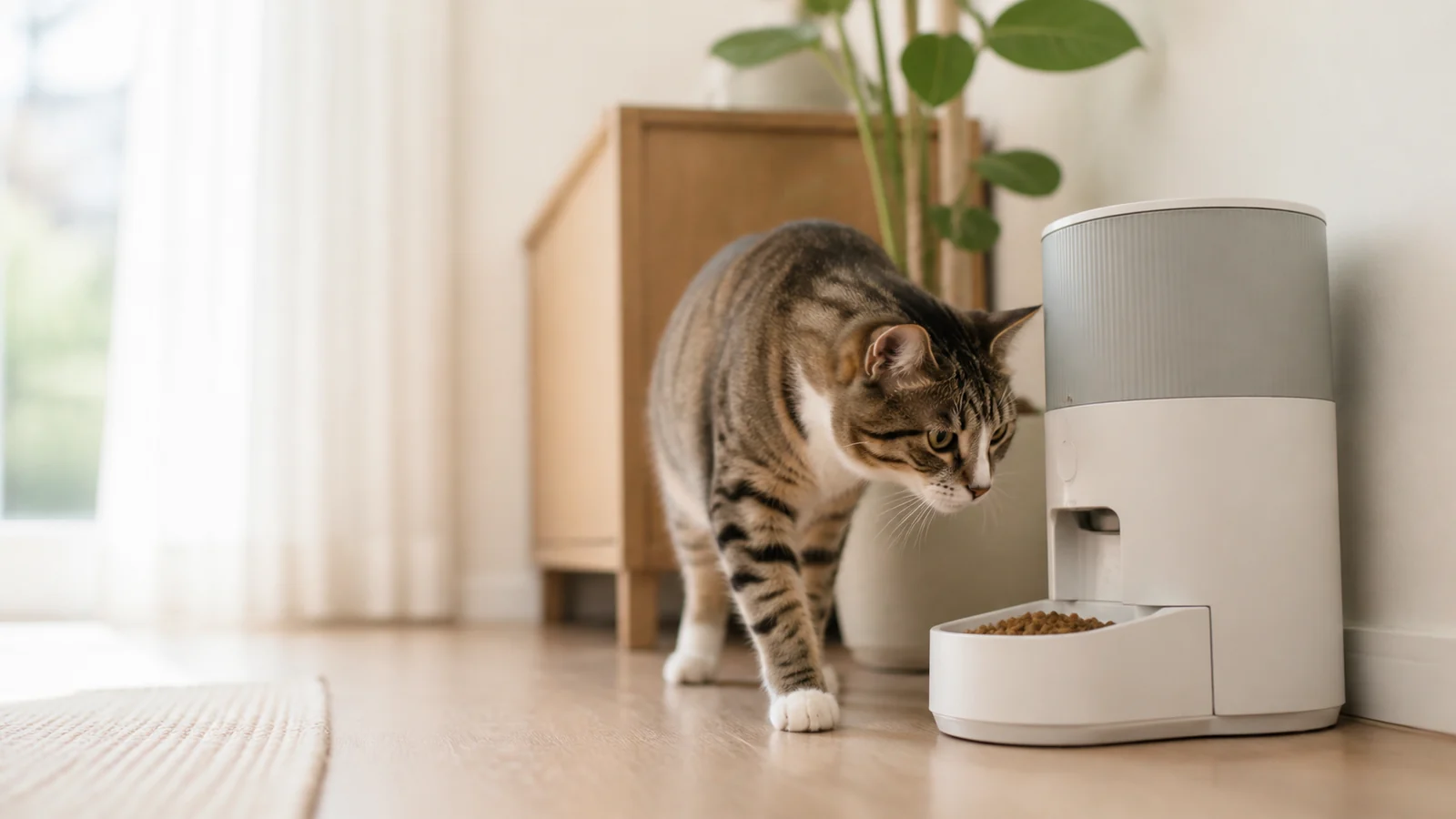
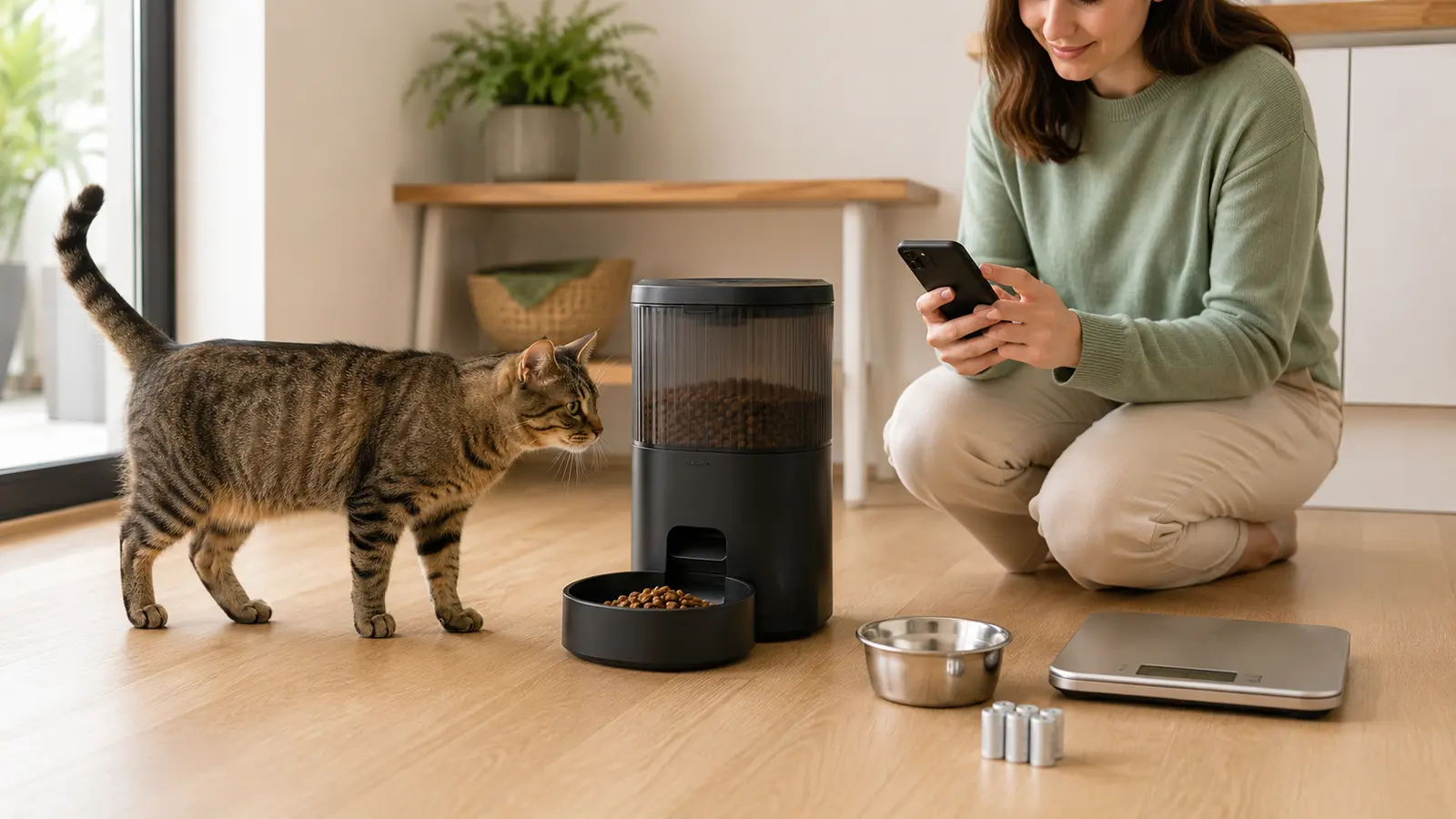
Quick answer: Put an automatic cat feeder indoors on a level, stable, dry surface in a quiet, low-traffic area. Your cat should be able to approach and leave without being cornered. Keep the station away from litter boxes, direct sun, heating vents, splashing water, and other pets that may block access. Also allow room for cleaning, protect the power cord, and test Wi-Fi at the final location if the feeder is connected.
A convenient spot for a person is not always a comfortable spot for a cat. The right location supports relaxed eating, reliable dispensing, easy cleanup, and daily observation. The model’s manual still takes priority because approved surfaces, indoor-use limits, ventilation, power, and wireless requirements vary.
The five-part placement test
- Does the cat feel safe approaching and leaving?
- Is the feeder separated from litter and competition?
- Is the surface flat, stable, dry, and easy to clean?
- Are heat, moisture, cords, and food theft controlled?
- Can a person inspect the bowl and feeder every day?

Start with a quiet area that does not trap the cat
Choose a location outside the home’s busiest walking route. Avoid door swings, narrow dead ends, noisy laundry equipment, and places where children or dogs repeatedly pass. The cat should have a clear view and an easy way out. In a multi-pet home, two approach routes are preferable when another animal could guard one route.
The Feline Veterinary Medical Association says feeding programs should include a place where the cat feels safe. That does not always mean a hidden corner. A corner can be uncomfortable when another cat can block the only exit.

Keep the feeder away from litter boxes
Food stations and toileting areas should be in different locations. Cat Friendly Homes specifically advises placing food and water away from litter boxes. Do not treat opposite ends of a tiny utility closet as meaningful separation. Use different parts of a room when space is limited, or preferably different rooms.

Use a level, stable, washable surface
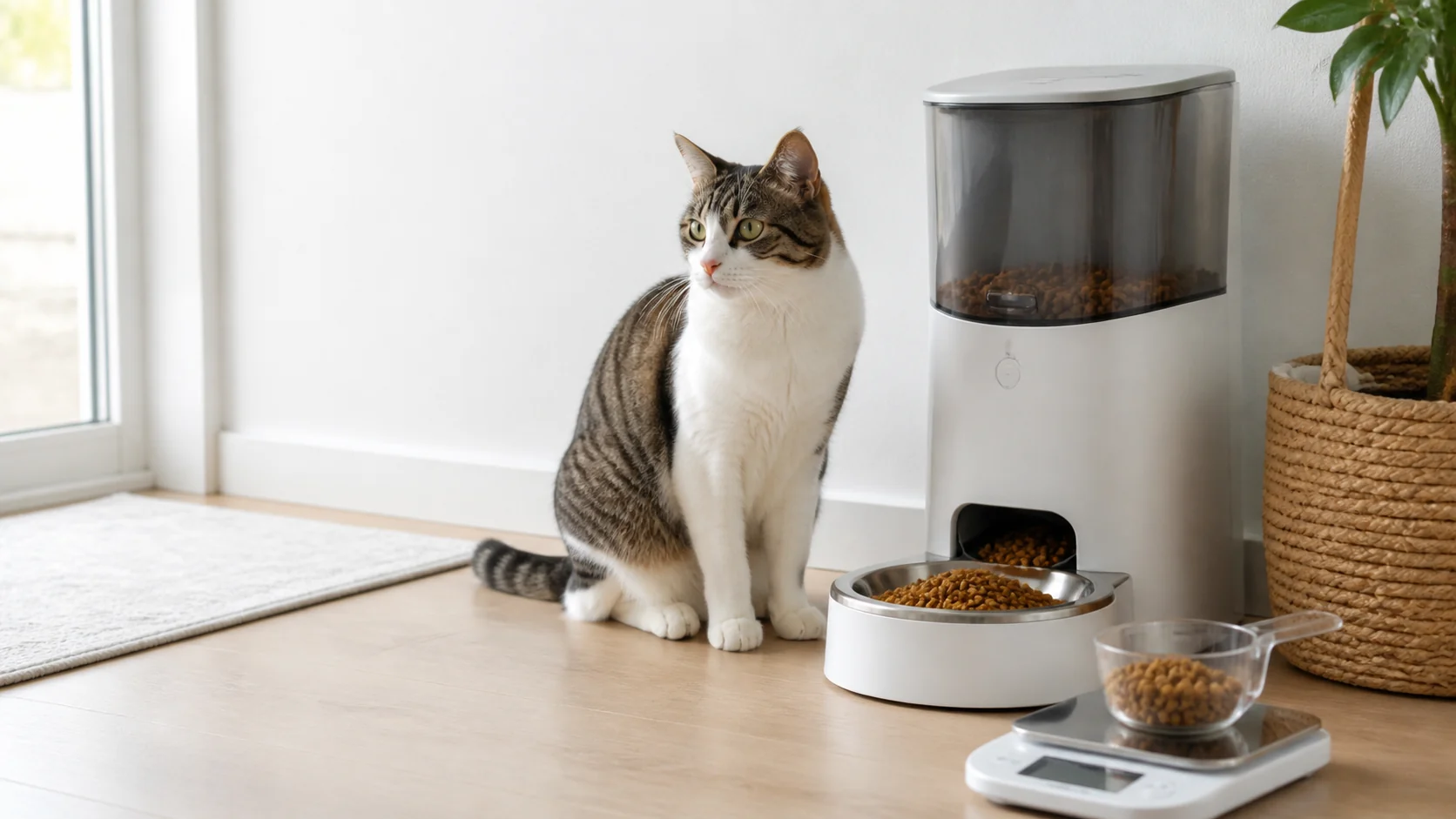
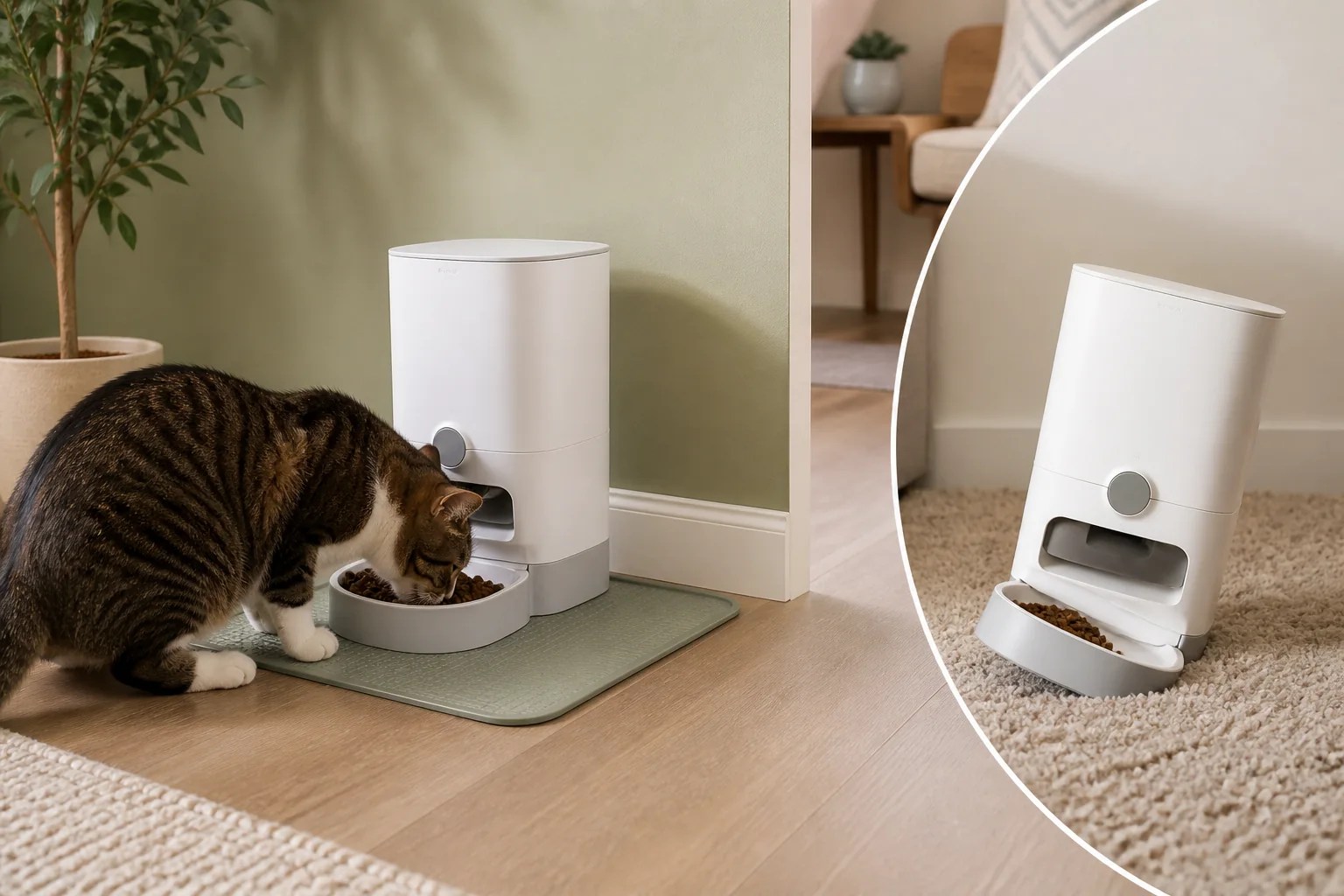
A tilted or rocking feeder can shift portions, misalign a rotating tray, spill food, or invite a determined cat to tip the unit. Place it on a hard, level floor or a firm platform approved by the manufacturer. If you add a mat, choose a thin, non-slip, washable mat that does not obstruct sensors, vents, feet, or the bowl.
Plan the power connection safely
For an adapter-powered feeder, use the supplied or manufacturer-approved power equipment. Route the cord so the cat cannot chew, pull, or become entangled in it. Keep the plug accessible to a person and avoid stretching a cord across a walkway. If the model accepts backup batteries, install the specified type and test the backup rather than assuming it works.

For a fuller backup plan, read what happens to an automatic feeder during a power outage.
Avoid direct sun, heat, humidity, and splashes
Do not place the feeder beside a radiator, heating vent, hot appliance, sunny window, shower, sink splash zone, or damp basement wall. Heat and moisture can affect food quality and electronics. Use the feeder only in the environment approved in its manual; many consumer models are intended for indoor use.

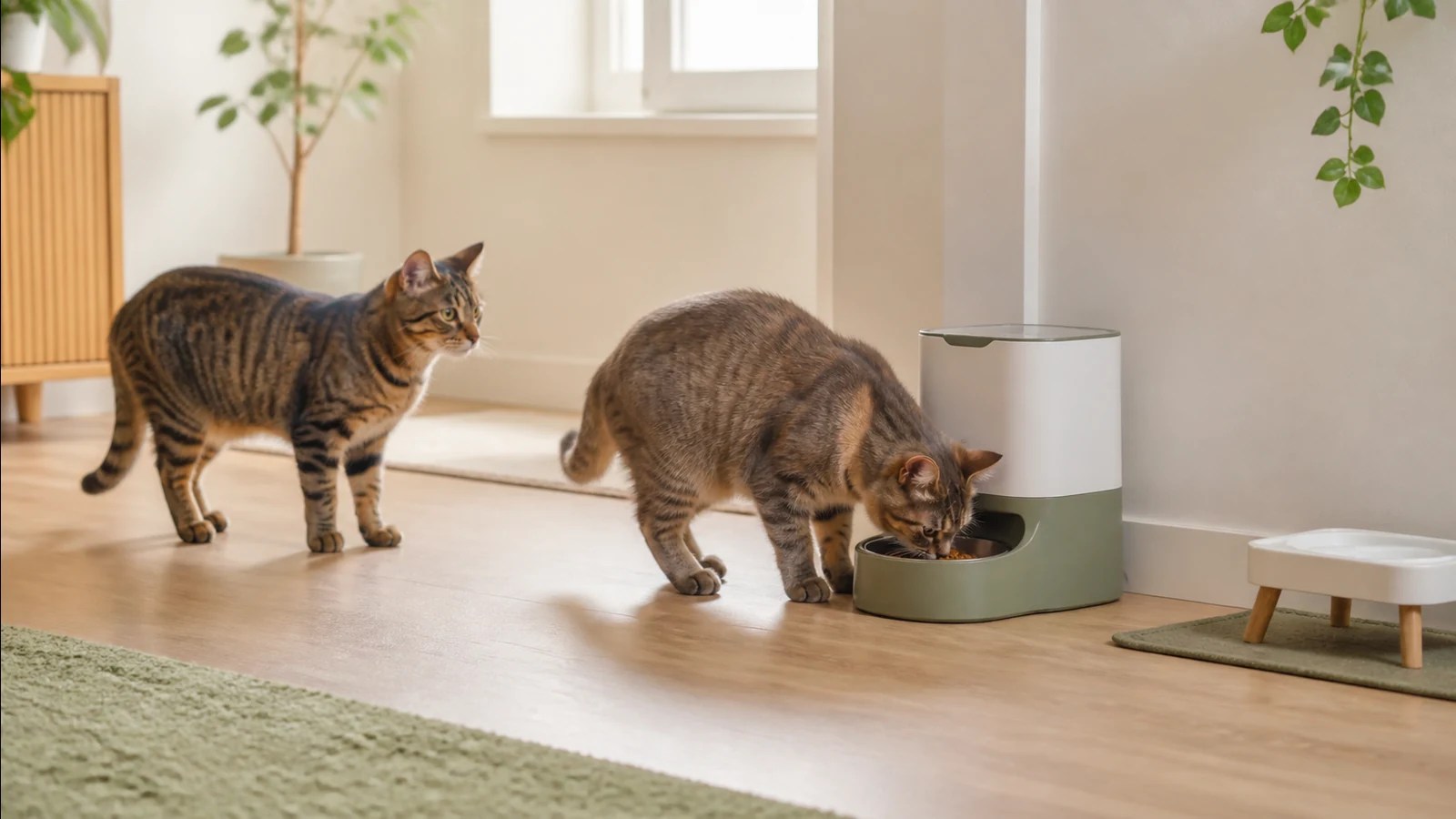
Separate feeding stations in a multi-cat home
Two bowls beside each other are not truly separate resources. Provide individual bowls and enough distance or visual separation for each cat to eat without staring, stealing, or blocking. Cats outside the same social group may need stations in different rooms. Watch actual mealtimes because apparent tolerance can hide displacement.

See our detailed guide to whether two cats can share one automatic feeder.
Test Wi-Fi where the feeder will actually stay
Set up a connected feeder in its final location, then test scheduling, manual dispensing, notifications, reconnection after a router restart, and any camera view you rely on. A setup completed beside the router does not prove the device will remain connected across the home. Remember that many feeders can still run stored schedules without Wi-Fi, but behavior varies by model.

Check your model against our guide to using an automatic feeder without Wi-Fi.
Leave enough room to clean and inspect it
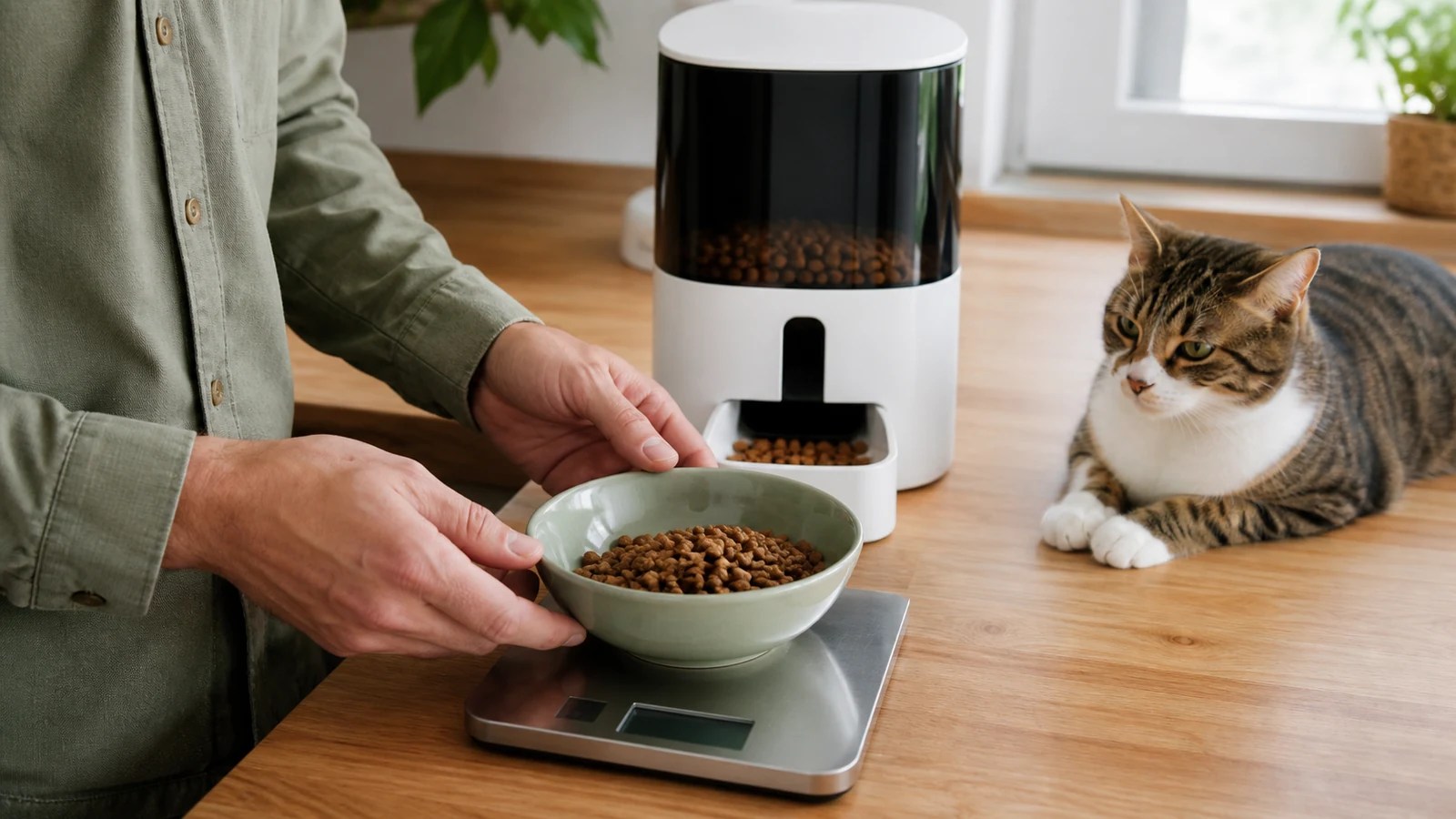
You should be able to remove the bowl, open the hopper, wipe the floor, and see spilled or stale food without moving furniture. A feeder hidden behind a sofa may be quiet but easy to neglect. Keep it visible enough for a daily check without putting it in the center of household traffic.

Use the cleaning interval and disassembly instructions in the manual, supported by our guide on how often to clean an automatic cat feeder.
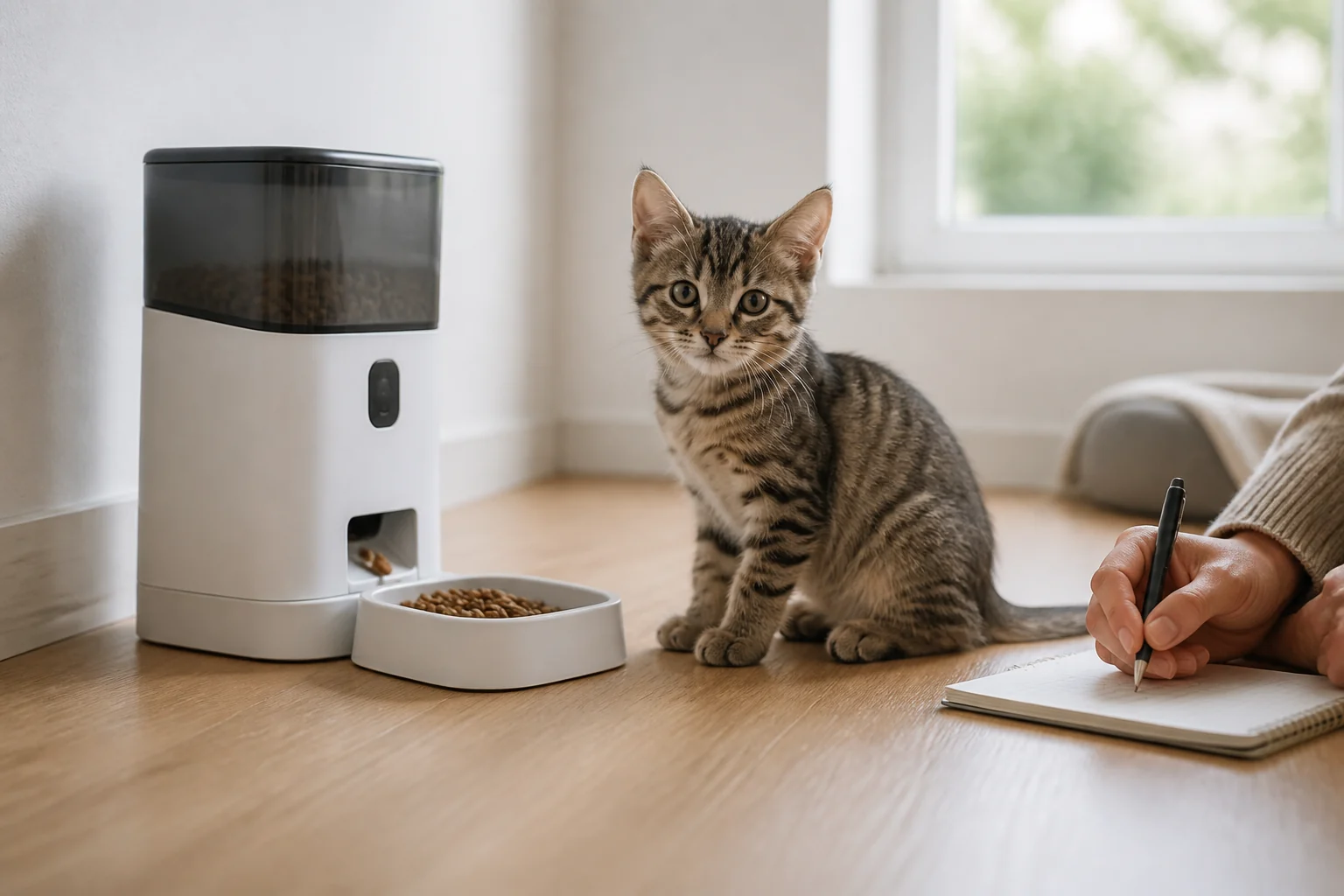
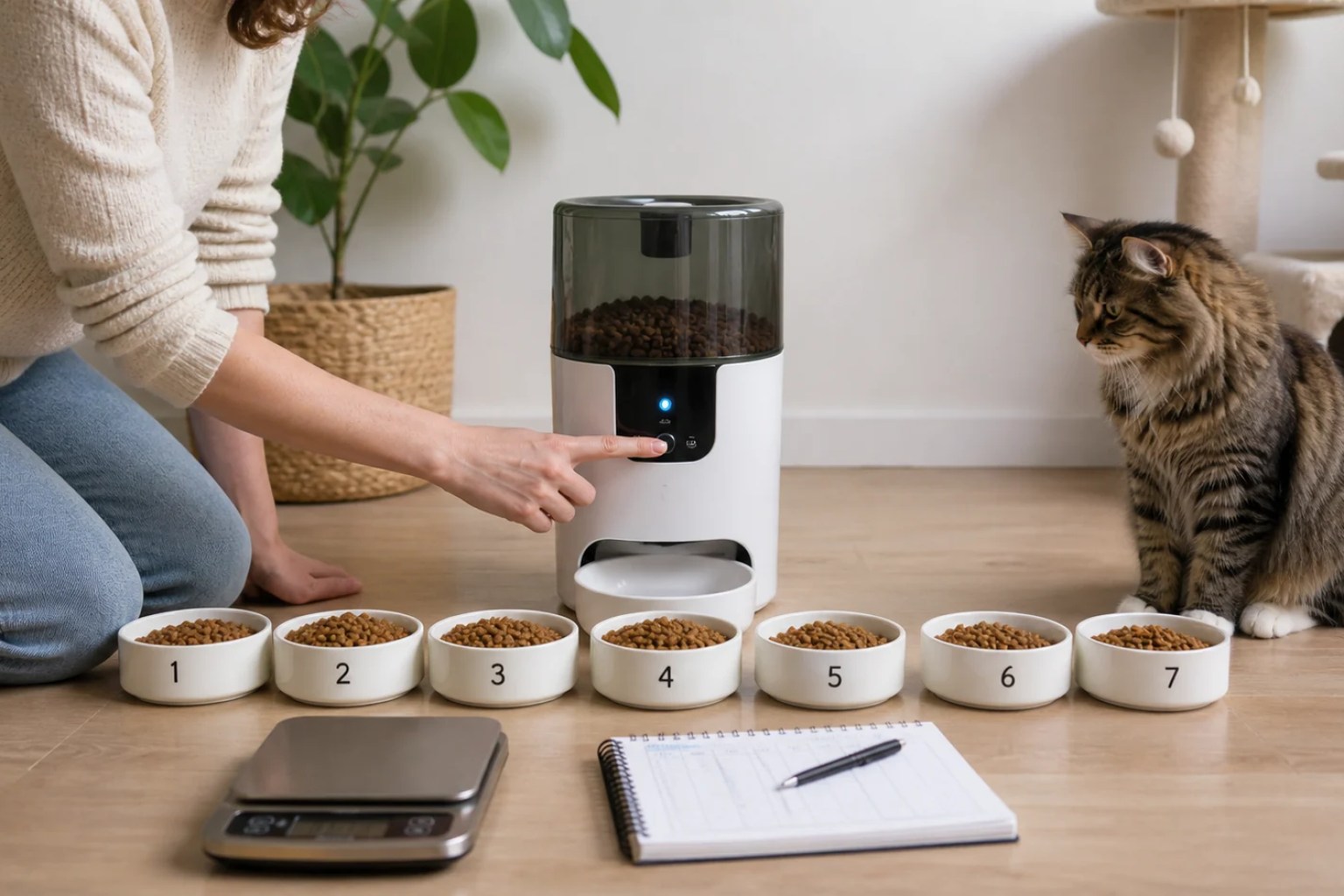
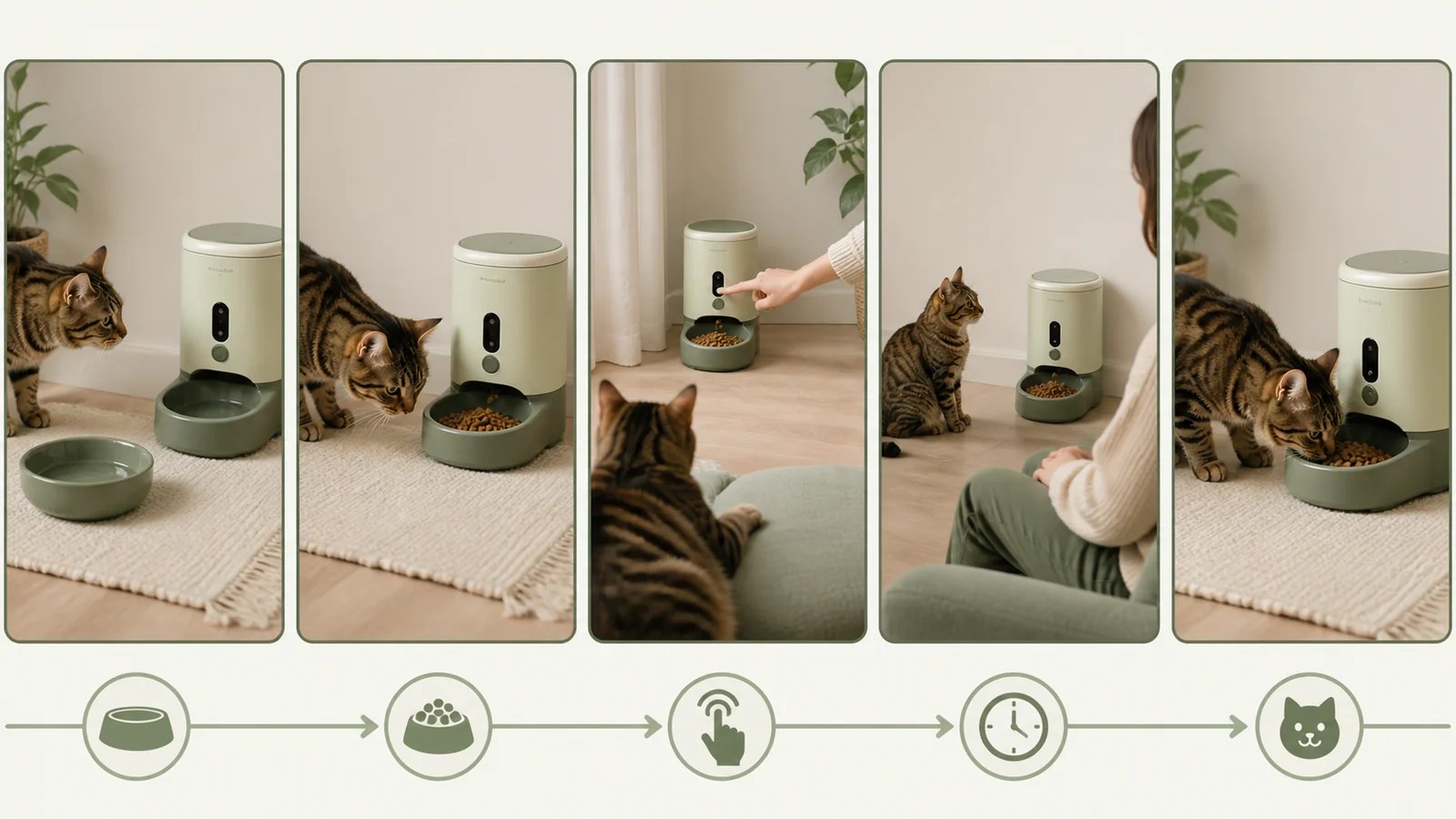
A practical 48-hour placement test
- Inspect the empty spot: listen for sudden appliance noise and watch normal foot traffic.
- Check the floor: confirm the loaded feeder does not rock, slide, or sit at an angle.
- Observe the cat: look for hesitation, crouching, scanning, rushing, or another pet blocking access.
- Run several meals: verify that food lands in the bowl and does not scatter under furniture.
- Test failures: follow the manual to check batteries, reconnection, and alerts safely.
- Clean once: make sure every routine cleaning step is practical in that location.
Do not force a frightened cat to eat there. If the cat avoids the feeder, move it to a familiar safe feeding area and reintroduce it gradually. Sudden appetite loss, pain while eating, repeated vomiting, weakness, or a major behavior change needs veterinary attention, not another placement experiment.

Frequently asked questions
Can I put an automatic feeder in the kitchen?
Yes, if the location is quiet, dry, level, away from heat and splashes, and not in a busy walkway. A kitchen beside a dishwasher or frequently opened door may be less suitable.
Should the feeder be against a wall?
A wall can reduce movement and access from behind, but do not block ventilation, lids, cords, or an animal’s escape route. Follow the model’s clearance instructions.
Should cat food and water be beside each other?
Some cats prefer separated food and water resources. Offering water in one or more separate appealing locations can provide choice. Monitor what your cat actually uses.
Can I put an automatic feeder outside?
Only if the manufacturer explicitly approves that use and you can control weather, pests, wildlife, temperature, and moisture. Many common models are indoor-only, so a covered porch is not automatically acceptable.
What if my cat keeps moving or tipping the feeder?
First confirm that the surface is level and the unit is assembled correctly. Use only safe restraints or accessories allowed by the manufacturer. Our guide to stopping a cat from breaking into a feeder covers the problem in detail.
Bottom line
The best automatic feeder location is a calm, accessible indoor spot that also meets the device’s operating rules. Separate it from litter boxes and competing pets, use a level dry surface, protect cords, avoid heat and moisture, and preserve daily access for inspection and cleaning. Test the complete routine with your cat before depending on it.
Official sources reviewed
- FelineVMA: Feline Feeding Programs Consensus Statement – safe feeding locations, household-specific plans, multiple stations, and automatic feeders.
- FelineVMA: Setting Up the Environment for Success – multiple, separated resources in appropriate locations.
- Cat Friendly Homes: Supplies and Essentials – several feeding stations in multi-cat homes and separation from litter boxes.
- Cat Friendly Homes: Everything You Should Know About Litter Boxes – quiet litter locations and separation from food and water.
- PetSafe: Healthy Pet Simply Feed – an example of a feeder specified for indoor use; requirements vary by model.
Research note: This guide was reviewed against current feline-welfare and manufacturer sources on August 12, 2026. Exact placement, clearance, power, temperature, moisture, and connectivity requirements are model-specific.
Affiliate disclosure: Pet Tech Compass may earn a commission from qualifying purchases made through affiliate links, at no additional cost to you. No product was selected or ranked in exchange for inclusion.