By Pet Tech Compass Editorial Team
Last reviewed: August 3, 2026
Ants usually return because they can still reach food, crumbs, grease, or an established scent trail. Killing the visible ants without removing the food source and access route often provides only temporary relief.
An automatic feeder adds hidden areas where crumbs can collect: under the bowl, inside the outlet, beneath the base, and around the rotor. A successful plan combines immediate cleanup with food storage, feeder placement, entry-point control, and careful pesticide safety.
What to Do Immediately
- Move your cat away from the area. Prevent access to ants, contaminated food, cleaners, and pest-control products.
- Turn off and unplug the feeder. Remove batteries if the manual requires it before cleaning.
- Discard exposed food. Do not return food containing ants, debris, moisture, or unknown contamination to the original bag.
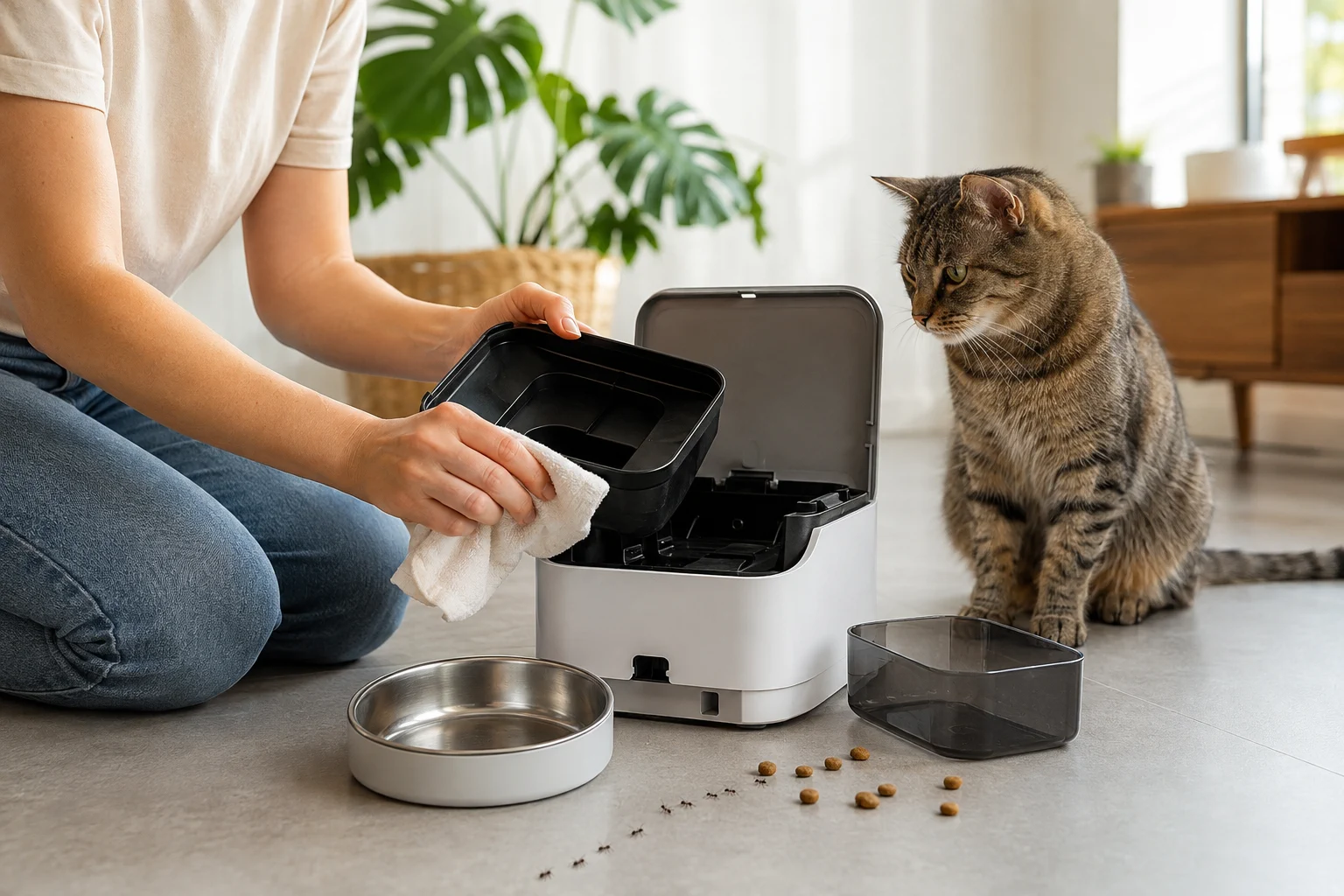
- Disassemble approved parts. Remove the bowl, hopper, lid, and rotor only as directed by the manufacturer.
- Clean and dry completely. Wash food-contact parts using the approved method. Wipe the motorized base without immersing it.
- Vacuum or wipe the trail. Remove ants and crumbs from the floor, baseboard, wall, cord route, and beneath nearby furniture.
- Inspect the original food bag. If ants entered the main supply, discard it securely and clean the storage area.

Find the Route, Not Just the Ants
Follow the trail away from the feeder. Inspect baseboards, door thresholds, window frames, pipe openings, wall cracks, electrical penetrations, and gaps beneath cabinets. Ants may travel along a power cord or touch a wall and bridge directly onto the feeder.
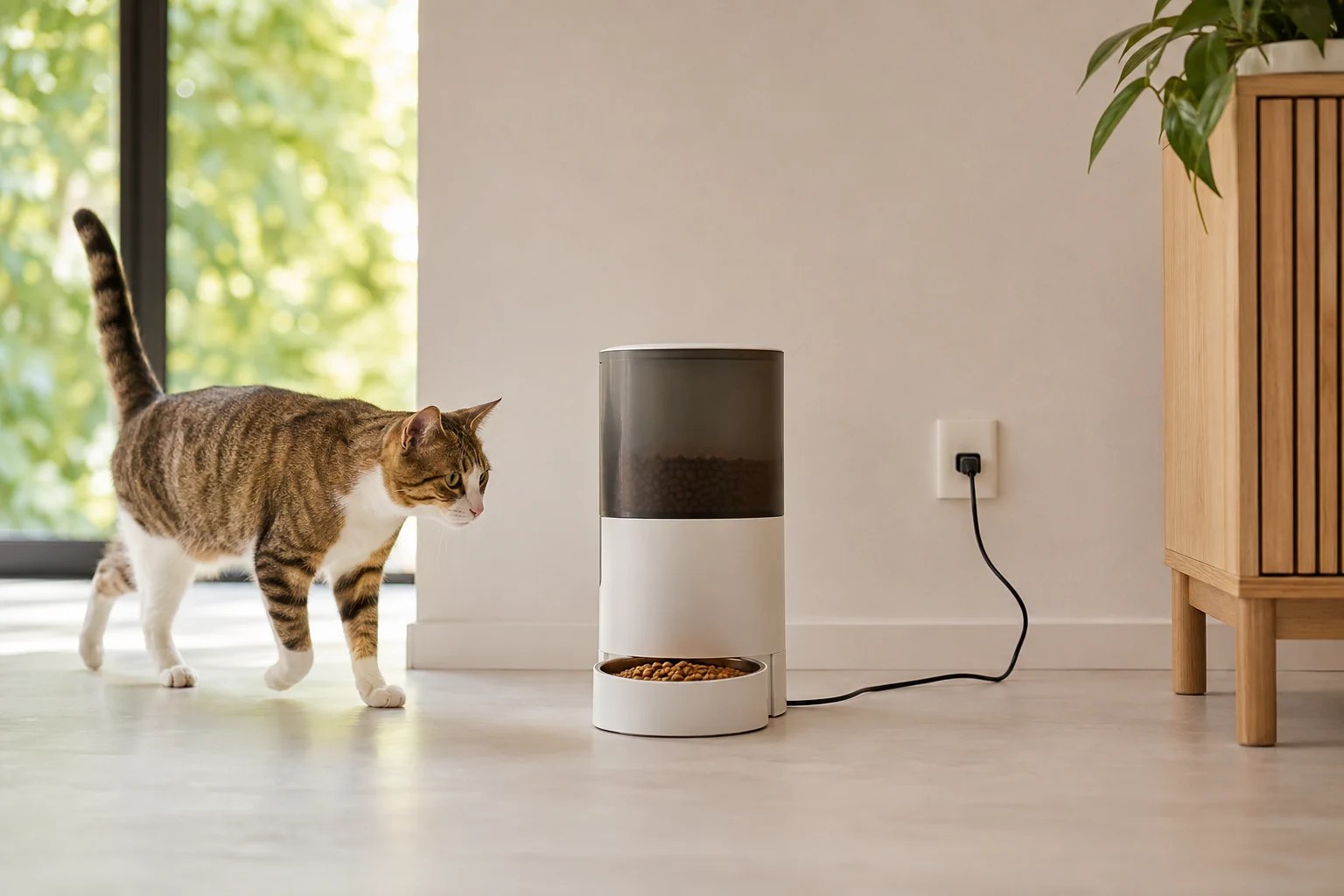
After cleaning, move the feeding station a short distance from walls and furniture so there is no easy bridge. Keep cords tidy without creating a new climbing route, and use pet-safe physical repairs such as sealing cracks and gaps where appropriate.
Remove Every Food Source
- wash the food bowl regularly and remove uneaten crumbs;
- wipe the dispensing outlet and surrounding mat;
- clean beneath and behind the feeder;
- keep the garbage container closed;
- store treats and backup food securely;
- do not continually pour new kibble over old residue; and
- repair water spills that can support pest activity.
The FDA’s pet-food storage guidance recommends keeping dry food in its original bag and storing it in a cool, dry, secure location. If another container is used, placing the original bag inside it preserves product information and adds a second barrier.
Need a Part-by-Part Cleaning Schedule?
Clean the bowl, outlet, hopper, rotor, sensors, and base without damaging the electronics.
Use a Better Feeder Location
Choose a cool, dry, easy-to-clean area away from exterior doors, open windows, wall cracks, houseplants with active insects, and direct sunlight. A hard floor is easier to inspect than deep carpet. Leave visible space around the feeder so new trails can be noticed early.
A raised stand or ant-resistant feeding station may help only if it is stable, compatible with the feeder, and cannot be tipped. Avoid improvised water moats around electrical feeders: spilled water can damage the device, create a slipping hazard, or allow a power cord to bridge the barrier.
Be Careful With Sprays, Powders, and Baits
The EPA’s pet pesticide guidance says not to spray or store pesticide products near pet food or water dishes and to prevent animals from reaching bait products. “Natural” does not automatically mean safe to inhale, lick, or place near food.
Start with sanitation and exclusion. If ants continue, identify the species or contact a licensed pest professional. When using any pesticide, select a product labeled for the intended indoor use, follow the label exactly, and place it where your cat cannot touch, lick, chew, or knock it loose. Never transfer a pesticide to an unlabeled container.
A Seven-Step Prevention Checklist
- Inspect the bowl, outlet, and floor every day.
- Load only a short-term supply of kibble.
- Keep the original food bag sealed inside secure storage.
- Empty and clean the hopper instead of endlessly topping it up.
- Keep the feeder away from walls and obvious entry points.
- Seal accessible cracks and remove clutter near the feeding area.
- Check again after warm weather, rain, construction, or moving the feeder.
How Much Food Should Stay in the Hopper?
Smaller, regularly inspected loads reduce old crumbs and make pest activity easier to catch.
Frequently Asked Questions
Can I spray ant killer around the feeder?
Do not spray on or near food, bowls, water, or the feeder. Follow the pesticide label and keep pets away from treated areas for the stated time.
Can I save kibble if I remove the ants?
Discard food exposed to ants or an unknown pesticide. Removing visible insects does not restore the food’s storage history.
Will an airtight hopper solve the problem?
A better seal may help, but ants can still reach the bowl, outlet, crumbs, or cord. Sanitation and entry-point control are still necessary.
Continue Checking Your Automatic Feeder
Check the outlet, rotor, kibble size, motor, power, and schedule before increasing the portion.
Confirm food condition, dispensing, power, water access, monitoring, and an in-person backup plan.
Official Sources Reviewed
- U.S. EPA: Do’s and Don’ts of Pest Control
- U.S. EPA: Read the Label First—Protect Your Pets
- U.S. FDA: Proper Storage of Pet Food and Treats