By Pet Tech Compass Editorial Team
Last reviewed: August 3, 2026
A determined cat can turn a small design weakness into a daily routine. The fix depends on the exact access point. Adding random barriers may stop the cat temporarily but can also jam the feeder, damage the motor, trap moisture, create a tipping hazard, or prevent a scheduled meal.
Observe the feeder between meals or use a camera to find the behavior before changing anything. Then choose the least invasive correction that the manufacturer supports.
Six Common Ways Cats Defeat Automatic Feeders
| Behavior | Likely weak point | First check |
|---|---|---|
| Lifting the lid | Unlocked or incomplete latch | Seat and lock the lid exactly as shown |
| Pressing controls | Manual-feed button active | Enable control or child lock |
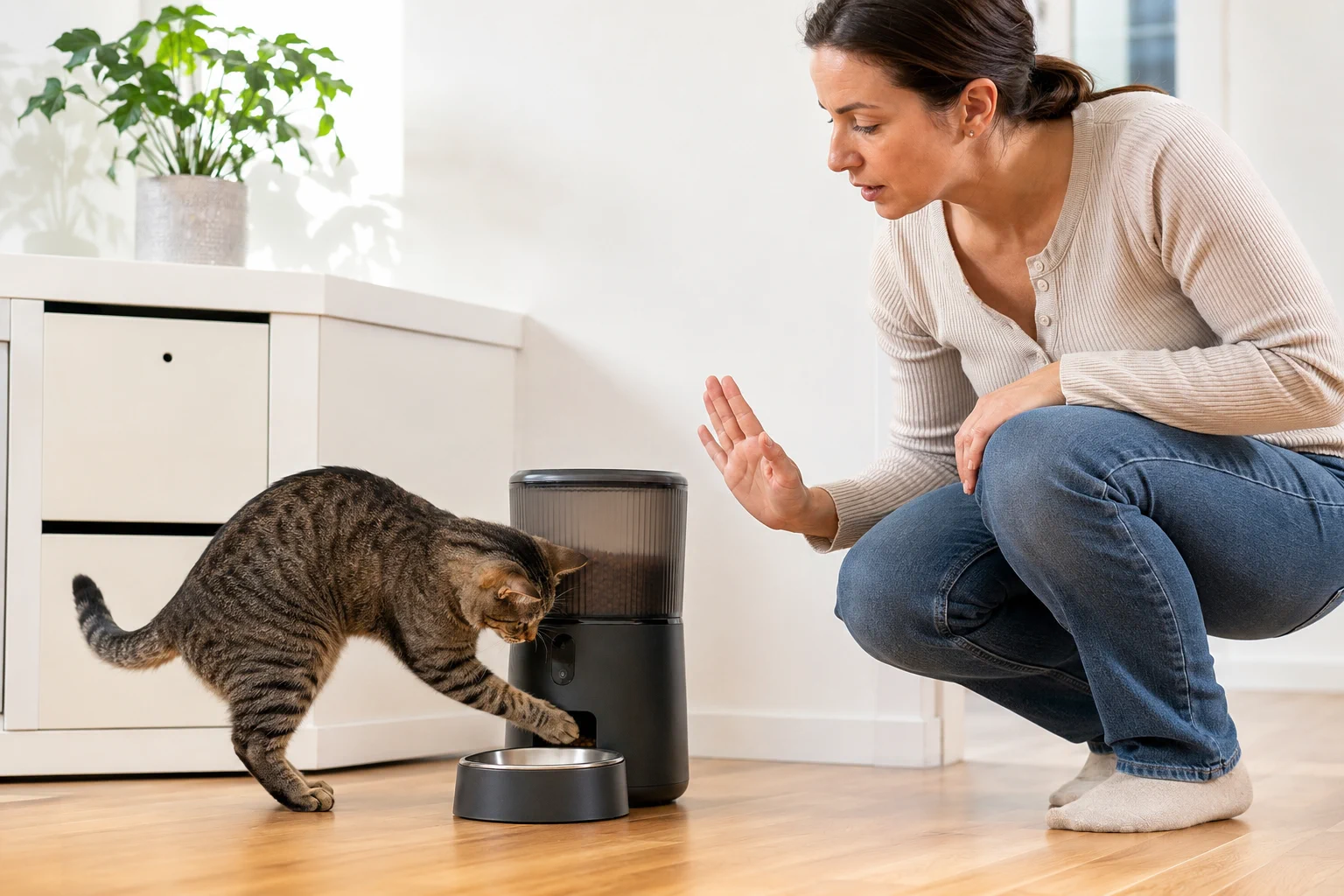
| Pawing the outlet | Open chute or loose food near rotor | Inspect outlet and approved guard |
| Shaking food loose | Dispensing mechanism moves backward | Use a model designed to resist shaking |
| Tipping the unit | Narrow, light, or slippery base | Stable placement and approved non-slip setup |
| Pulling the cord | Exposed loose cable | Safe cord routing and backup power test |
Start With the Built-In Locks
Check the manual for a lid latch, twist-lock, pet-proof lock, control lock, or child-lock function. These features are model-specific. For example, some current feeders advertise enclosed dispensing systems and pet-proof lid locks, while some control panels can disable manual feeding until a button sequence unlocks them.
Confirm the lock physically rather than trusting an app icon. Pull gently on the closed lid, press the manual-feed button, and observe whether the feeder behaves as expected. Repeat the test after cleaning because a lid or hopper that looks seated may not be fully engaged.
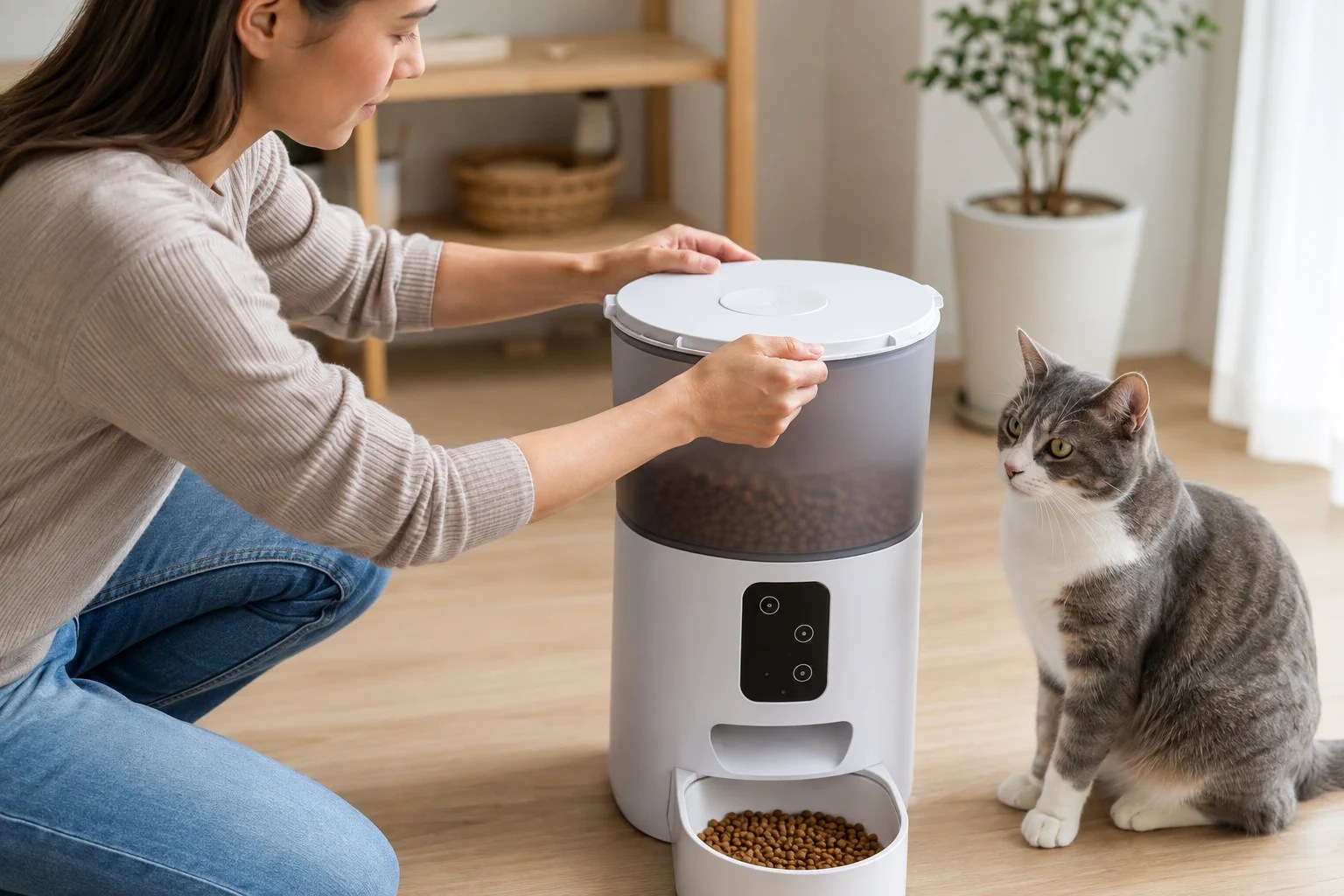
If the hopper, lid, rotor, or outlet was recently removed, confirm that every part is dry and installed in the documented position. Use the automatic feeder cleaning guide to check which parts can be washed and how to test the feeder after reassembly.
Secure the Feeder Without Unsafe Modifications
- Place it on a level, hard-to-slide surface with the bowl attached correctly.
- Keep it away from steps, ledges, water, and objects the cat can use for leverage.
- Use only a manufacturer-approved stand, wall restraint, guard, or mounting method.
- Route the cord so the cat cannot pull or chew it, without pinching or overheating it.
- Keep vents, cameras, microphones, infrared sensors, load cells, and outlets unobstructed.
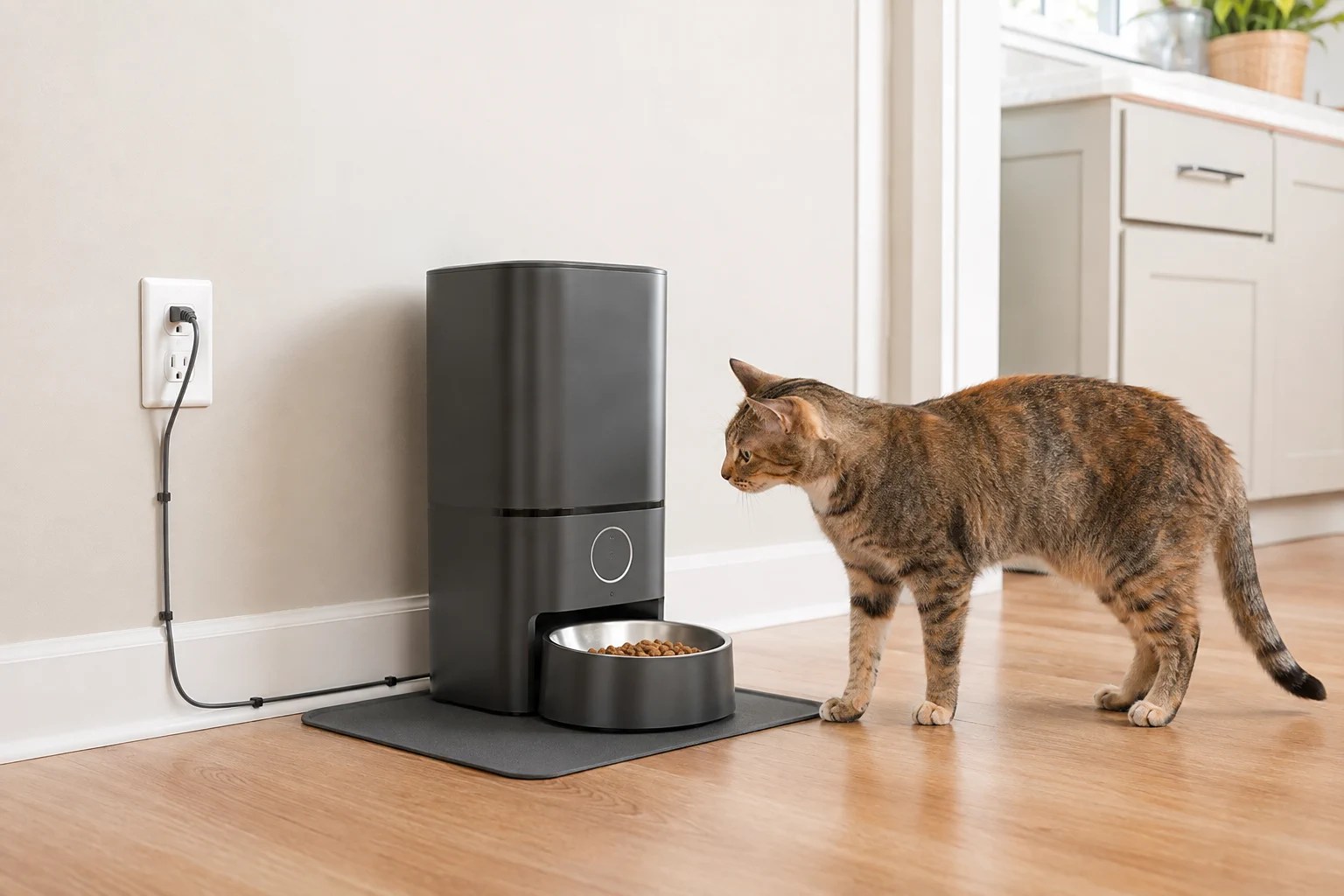
Could Pulling the Cord Stop Scheduled Meals?
Check whether backup batteries operate the dispensing motor and what happens when wall power is disconnected.
Check the Outlet and Rotor
If the cat reaches into the outlet, unplug the feeder and inspect for loose kibble, a missing outlet cover, an incorrectly seated rotor, or a part installed backward. Use only the kibble sizes approved for the device. Oversized or irregular pieces can hold a flap open or leave food within reach.
After reassembly, run several manual dispenses and weigh the result. A security change is not successful if it causes inconsistent portions or prevents food from reaching the bowl.
Did the Fix Change Portion Size?
Measure at least 10 cycles with the real kibble before restoring the schedule.
Address Why the Cat Is Food-Seeking
Some cats investigate feeders because the behavior has been rewarded. Others may be hungry, bored, competing with another pet, or reacting to a feeding plan that does not fit their needs. The Feline Veterinary Medical Association notes that feeding programs can include frequent small meals, puzzle feeders, forage feeding, and multiple feeding locations depending on the household.
Do not increase or restrict food solely to stop feeder tampering. Confirm the daily calorie plan with a veterinarian, especially if the behavior is new or accompanied by weight change, increased thirst, vomiting, diarrhea, or persistent hunger.
Is Another Cat Creating Food Competition?
Learn when two cats may share one feeder and when separate or access-controlled feeding stations are safer.
When Replacement Is the Safer Option
Replace the feeder if the lid no longer locks, housing is cracked, cord is damaged, rotor can be reversed by a paw, buttons cannot be locked, or the unit repeatedly tips despite correct placement. Useful features include a positive lid latch, enclosed dispensing path, recessed or lockable controls, broad non-slip base, protected cord route, and readily available replacement parts.
Frequently Asked Questions
Can I tape the lid shut?
Tape can leave adhesive, trap dirt, block vents, or make routine cleaning difficult. Use the designed latch or replace a feeder that cannot be secured.
Can I put the feeder inside a box?
An enclosure may block airflow, sensors, the bowl, or the cat’s safe access. Use only a setup approved for the model.
What if the feeder stops after I secure it?
Remove the modification, restore the manufacturer configuration, and check the outlet, rotor, power, and schedule.
Food No Longer Reaching the Bowl?
Work through the schedule, outlet, rotor, motor, and power checks in order.
Before Leaving the Feeder Unattended
Observe several complete scheduled meals after making any security change. Confirm that the cat can reach the bowl normally, the feeder remains stable, the cord stays protected, and the planned amount reaches the bowl.
Will the Setup Be Safe While You Are Away?
Check food access, power, water, monitoring, backup plans, and in-person care before depending on the feeder.
Official Sources Reviewed
- Feline Veterinary Medical Association: Feline Feeding Programs
- PETKIT: Feeder Lock and Enclosed-Dispensing Feature Information
- PETLIBRO: Feeder Control Lock Instructions