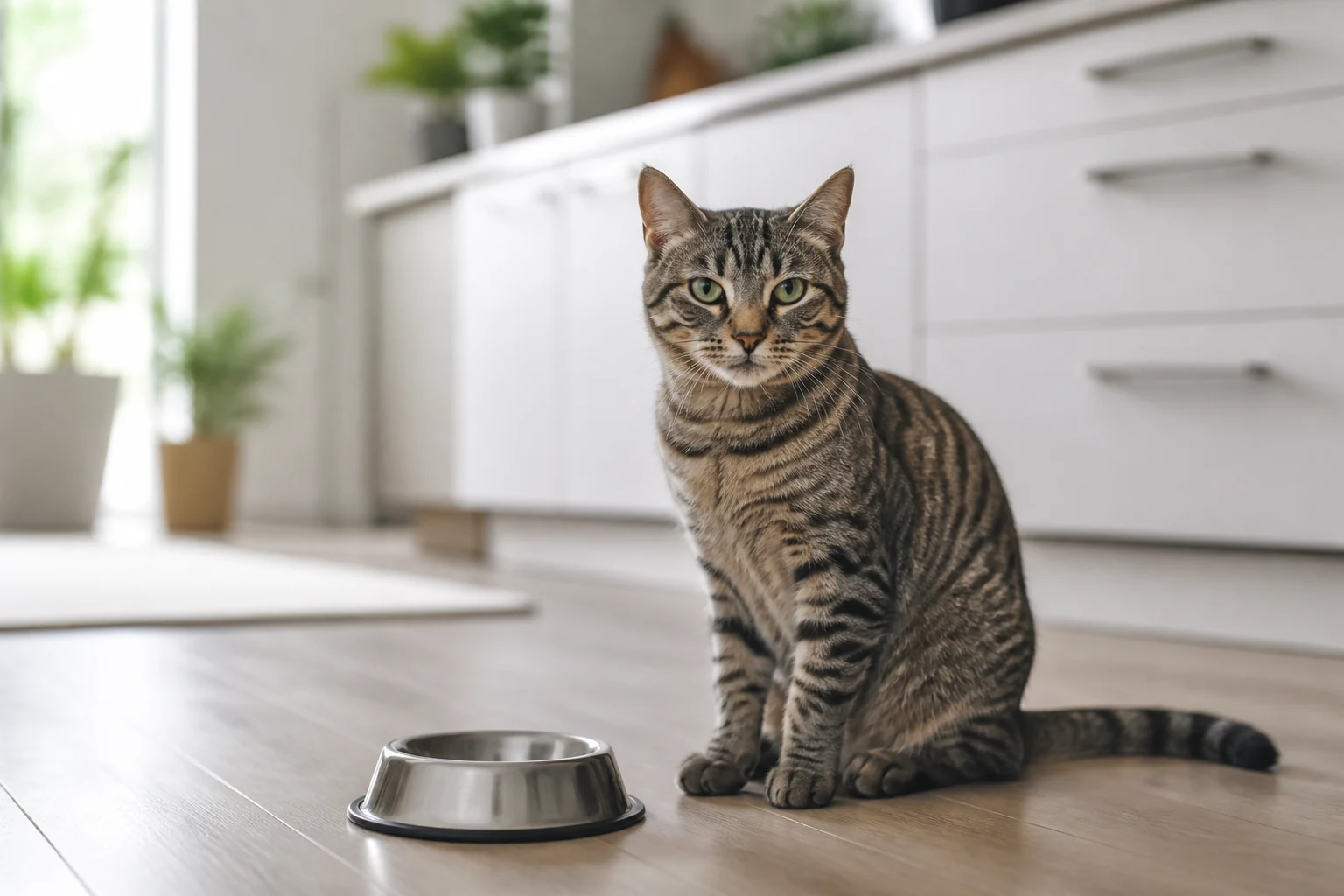
Why Does My Cat Throw Up After Eating?
Nine possibilities, the warning signs that change the plan, and when a measured feeding schedule is actually useful.

Finding food on the floor minutes after a meal makes one question feel urgent: Did my cat eat too fast—or is something wrong? Both are possible. Note when it happens and look for the warning signs below before trying a different feeder.
Do not run a feeding experiment when red flags are present.
Seek urgent help for blood, marked weakness or lethargy, abdominal pain, repeat vomiting, dehydration, loss of appetite, suspected exposure to a toxin, or possible ingestion of string, a toy, medication, a plant, or another foreign object. Do not induce vomiting unless a veterinary professional directs you to.
Vomiting and regurgitation are different observations
There may be nausea, drooling, retching, or abdominal heaving before material comes up. Note timing, contents, appetite, stool, energy, and any repeat pattern.
Food may return shortly after eating with little warning or abdominal effort. Tell your veterinarian how soon it occurs and whether the food looks undigested.

Nine possibilities to discuss—not nine home diagnoses
A large or rushed meal
Too much food too quickly can be a pattern worth discussing after illness has been ruled out.
A sudden diet change
New food, treats, scraps, spoiled food, or several changes at once can complicate the picture.
Hair is involved
Hair may appear, but frequent vomiting should not automatically be labeled a harmless hairball.
Something else was swallowed
Plants, medication, string, yarn, rubber bands, and household chemicals can be serious hazards.
A digestive issue needs testing
Parasites, food reactions, inflammatory disease, metabolic illness, and obstruction are among many possibilities.
Multi-cat competition
Some cats race through meals when another cat is watching or waiting nearby.
Nausea or pain
Eating does not rule out illness. Look at energy, posture, grooming, water, and litter-box changes too.
Life stage matters
Kittens, seniors, and cats with existing health conditions deserve a lower threshold for veterinary advice.
The pattern is repeating
Frequency and new accompanying signs matter more than whether one isolated cleanup was easy.
Make meals less competitive before blaming the bowl.
Watch one meal from a distance. Does a cat keep looking over their shoulder, finish instantly, or head straight to another bowl? Separate feeding locations or visual barriers may reveal a different pattern.
For some homes, portioned routines make each cat’s meal more predictable. But a device cannot confirm that the right cat ate the right amount.


A seven-day observation log for your veterinary conversation
| Record | Why it matters |
|---|---|
| Exact meal time and portion | Reveals a large gap, large meal, or repeat timing. |
| Time from eating to episode | Helps describe the pattern accurately. |
| What came up | Undigested food, hair, foam, bile, blood, or foreign material all matter. |
| Behavior before and after | Retching, passive return, hiding, normal recovery, or discomfort give context. |
| Food, treat, medication, or home changes | Creates a useful history for the clinic. |
| Stool, water, appetite, and energy | Shows whether the concern is broader than one meal. |


It can support a suitable plan. It cannot make a medical problem safe to ignore.
Consider a timed feeder only after concerning causes have been discussed with your veterinarian and the episodes reliably follow a large or rushed meal.
- Your cat is otherwise well and your vet is comfortable with a feeding-plan change.
- You know the correct total daily amount for your cat.
- You divide that existing amount into smaller planned portions—not extra food.
- You test the device while you are home and watching first.

“Eating too fast” is one possibility—not a universal explanation.
Recognize urgent signs, collect a clean history, involve your veterinarian when vomiting is frequent or new, and use an automatic feeder only to support a meal plan that is already appropriate for your cat.
Sources
- Cornell Feline Health Center: Vomiting
- VCA: Vomiting in Cats
- VCA: Tips to Help Soothe Tummy Troubles
- Cornell: Common Cat Hazards
Pet Tech Compass may earn a commission from qualifying purchases. This article is educational information, not veterinary diagnosis.
For future care budgeting, compare indoor-cat insurance separately from today’s symptoms. Do not delay veterinary care while arranging coverage. Is Pet Insurance Worth It for an Indoor Cat? 7 Costs to Compare