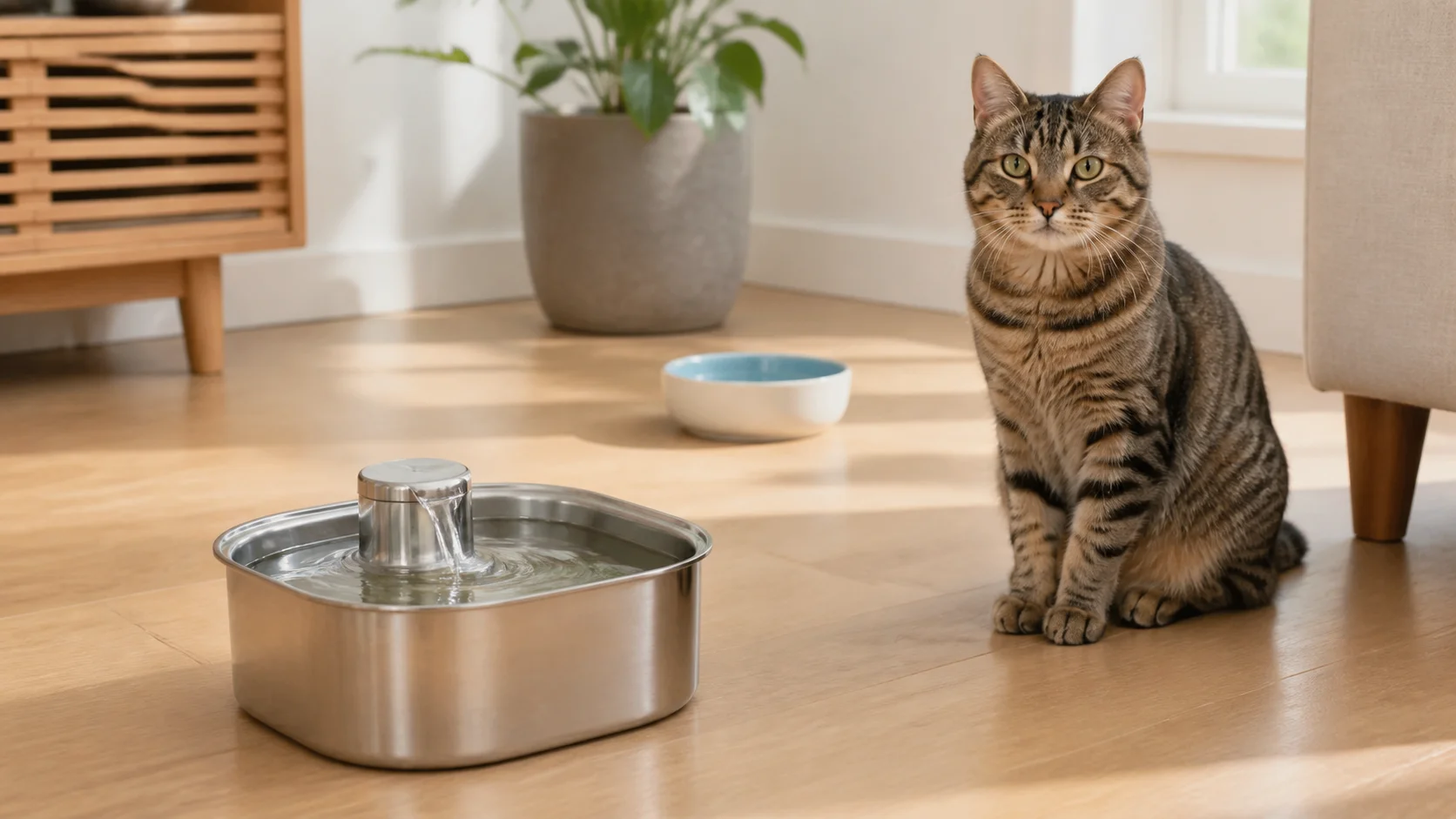
Why Is My Cat Not Drinking From a Water Fountain?
Six checks to make before replacing the fountain, plus the signs that mean this is no longer a device question.
A cat may drink from a bowl, seek the faucet, or walk past a new water fountain as if it is not there. That does not automatically mean the fountain is broken. Start by separating a fountain refusal from a possible overall change in drinking.

Reduced drinking from every source needs veterinary advice.
Contact a veterinary professional promptly if reduced drinking comes with weakness, appetite changes, vomiting, diarrhea, weight loss, pain, breathing changes, or litter-box changes. Do not restrict water to test thirst, and do not assume a fountain refusal explains a sudden change in total water intake.
First, separate two different problems
Fountain refusal
Your cat ignores the fountain but still drinks elsewhere. This is usually a preference or setup question. Keep observing total water intake and offer a familiar bowl while you test the fountain.
Reduced water intake overall
This is not a product troubleshooting task. Cats eating wet food may drink less from a bowl, but concern about dehydration or a new change in drinking deserves prompt veterinary advice.
Six checks before you replace the fountain
Noise and movement
Place it on a stable, level surface. Rattling, vibration, or a low water level can make a unit louder than expected. Do not remove other water options to force an adjustment.

Fresh water and clean parts
Hair, food crumbs, mineral buildup, filter residue, and a dirty pump can change smell, taste, or flow. Follow the exact manual for your model.

Actual water flow
Check the minimum fill line, stream strength, filter, pump, and assembly. Unplug the device before disassembly and use only the cleaning methods approved in its manual.

Placement and access
A fountain next to a litter box, loud appliance, doorway, food station, or another pet may be easy to avoid. Try a quiet location with a clear approach.

A familiar backup bowl
Offer a clean, wide bowl in another calm location. It protects hydration while showing whether the issue is fountain preference or a broader change in drinking.

A gradual introduction
Put the cleaned fountain beside an accepted bowl. Let your cat inspect it without being carried to it or forced to drink. Start with the gentlest setting if the model allows it.

A six-check decision table
| What you notice | Check first | Safe next step |
|---|---|---|
| Cat drinks from a bowl but ignores the fountain | Noise, vibration, and location | Keep the bowl; move the fountain to a quiet stable spot. |
| Fountain light is on but flow is weak | Water level, filter, pump, and assembly | Unplug, follow the manual, clean approved parts, and refill. |
| Cat sniffs then walks away | Freshness, residue, or unfamiliar sound | Refresh water, clean the unit, and introduce it beside a known bowl. |
| One cat uses it and another does not | Access or household conflict | Add another water station in a separate area. |
| Cat seeks the faucet instead | Flow, temperature, or bowl preference | Offer a wide clean bowl and a quiet fountain trial. |
| Cat drinks less from every source | Overall health, not fountain preference | Contact a veterinarian promptly. |

Change one variable at a time.
- Keep the familiar bowl available at all times.
- Clean and refill the fountain according to its model-specific instructions.
- Place it in a quiet area away from the litter box and busy routes.
- Use low flow or still-water mode first when available.
- Observe where your cat drinks for several days; do not force a choice.
- Stop the experiment and seek veterinary advice if total drinking falls or other concerning signs appear.

If your cat repeatedly chooses running tap water, read Why Does My Cat Drink From the Faucet? for a preference-based setup test.

An ignored fountain is often a setup issue, not a reason to remove water options.
Keep a familiar clean bowl available, test one change at a time, and follow the manual for the exact model. If your cat is drinking less overall or seems unwell, treat it as a veterinary question rather than a device-shopping problem.
Sources
- Cornell Feline Health Center: Hydration
- VCA Animal Hospitals: How To Get Cats to Drink More Water
- PetSafe: How to Clean Your Drinkwell Original Pet Fountain
- Philips Support: How Do I Clean My Philips Water Fountain?
Pet Tech Compass may earn a commission from qualifying purchases. This article provides general educational information and is not veterinary diagnosis.
Leave a Reply