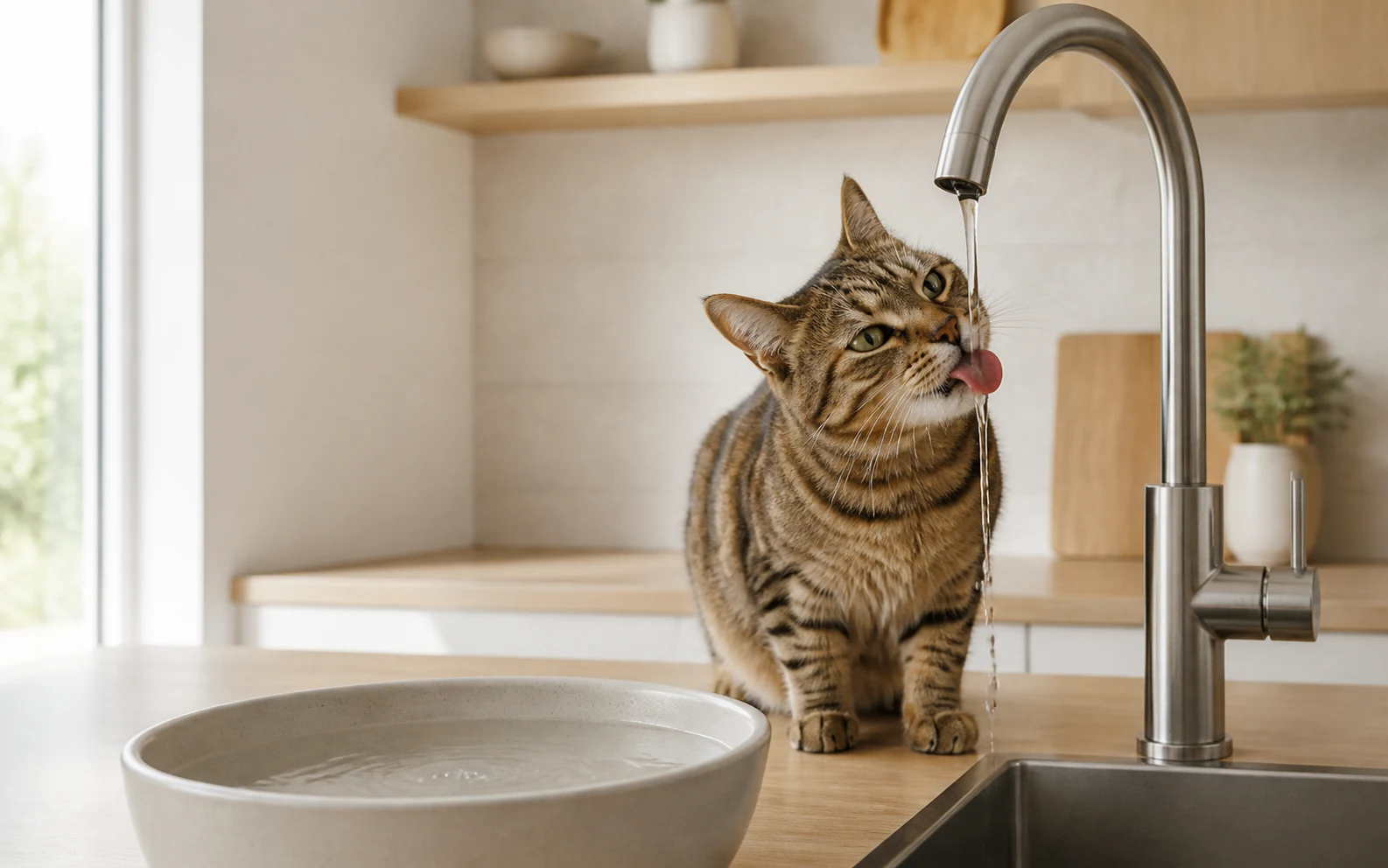
Why Does My Cat Drink From the Faucet?
Seven ordinary reasons a faucet can beat a water bowl—and the signs that should not be ignored.
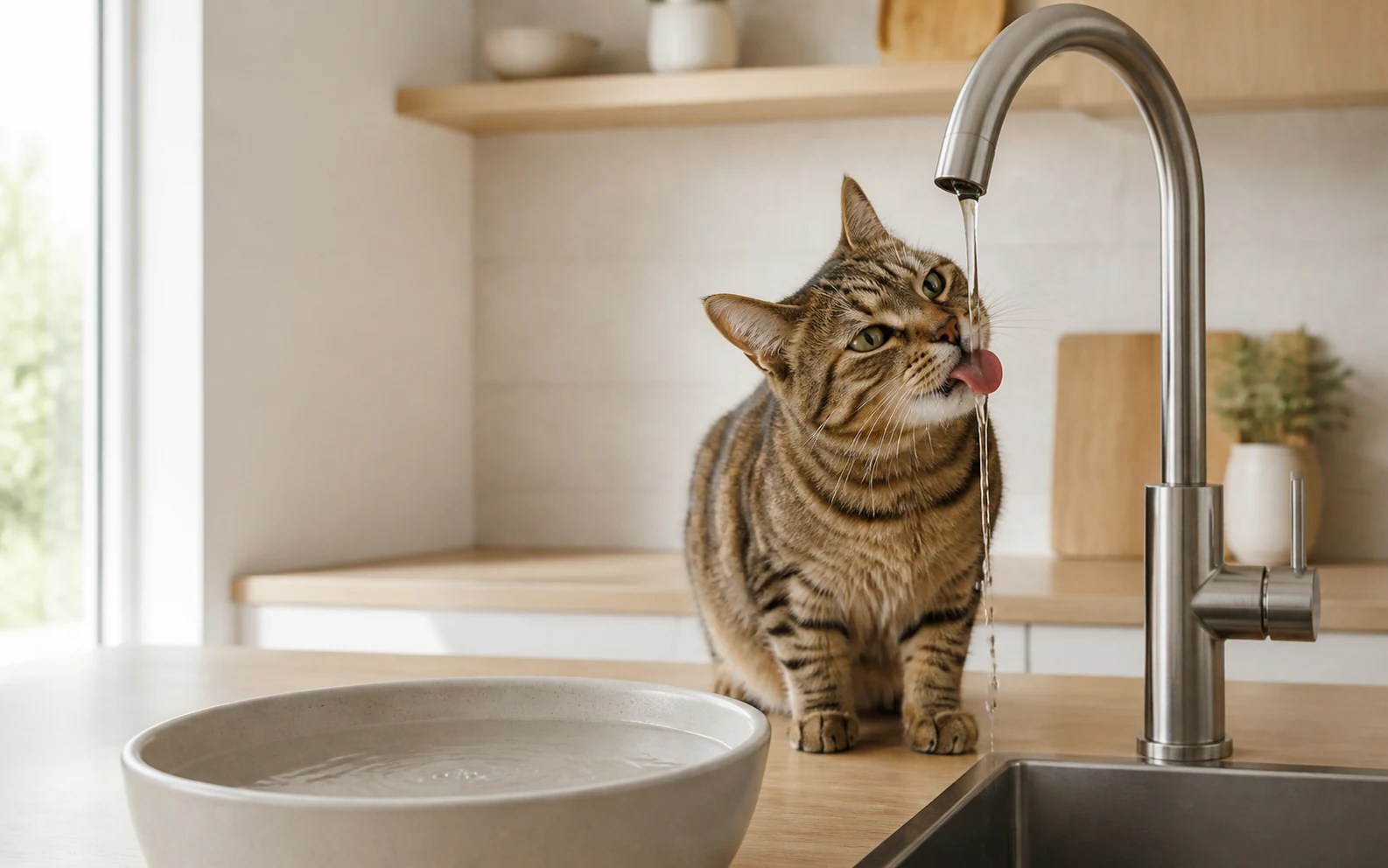
Your cat has a fresh bowl of water. Yet the moment you turn on the kitchen or bathroom tap, they appear as if you opened a private café.
It is funny—but it can also be useful information. Some cats are drawn to the sound, movement, coolness, location, or freshness of running water. A faucet preference does not automatically mean that anything is wrong. A sudden increase in drinking, however, is different and deserves attention.
Why faucet water wins for some cats
A thin stream is visible and audible in a way a still bowl is not. Some cats simply enjoy running water.
Water left in a bowl can collect dust, food crumbs, or unfamiliar odor. Freshly changed water can make a difference.
A sink or counter can be quiet, elevated, and separate from food, litter, or household traffic.
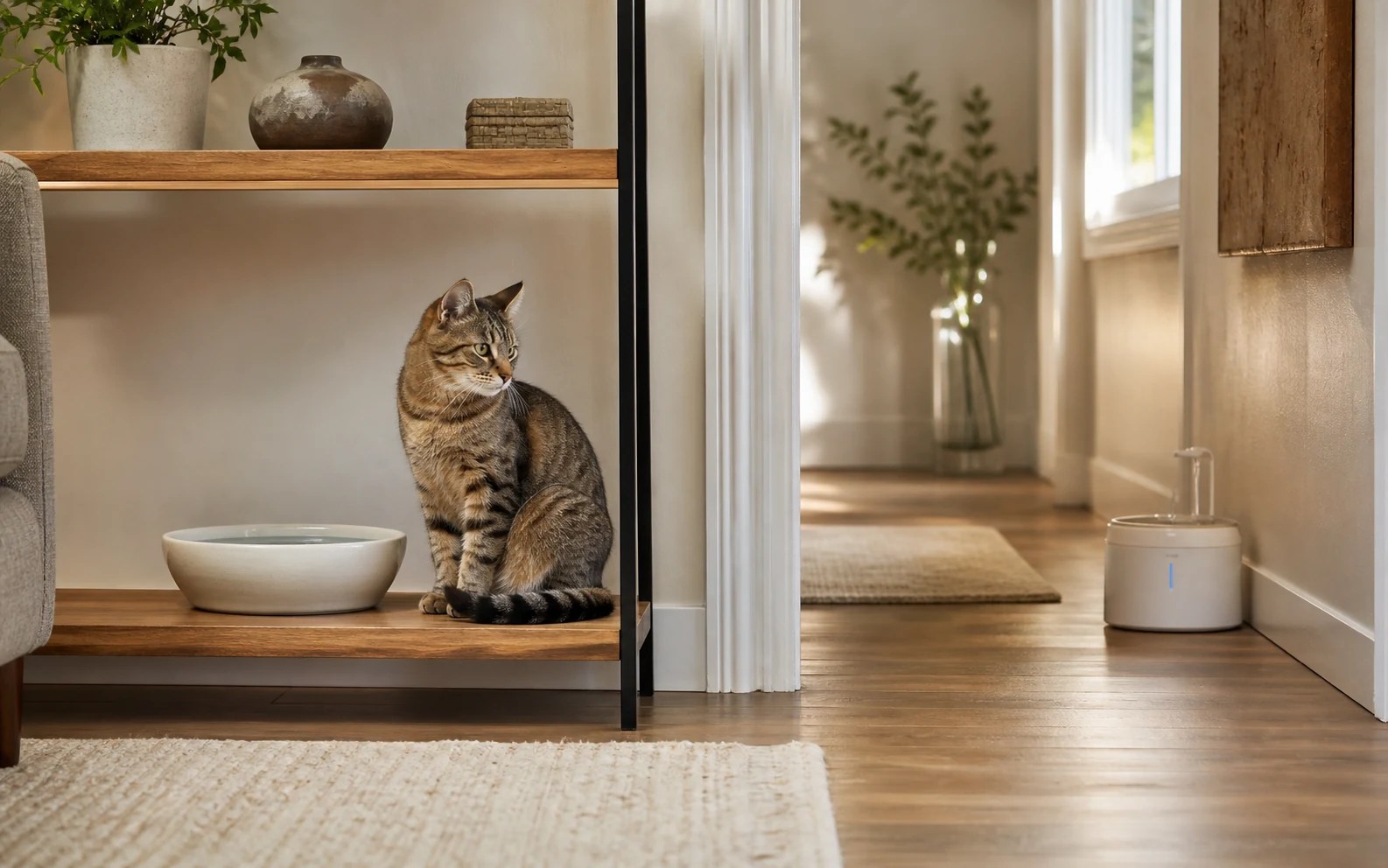
Try a wide, shallow ceramic, stainless-steel, or glass bowl if your cat avoids a narrow or deep one.
Some cats like cool tap water; others prefer room temperature. Offer two fresh options rather than guessing.
If the faucet has reliably produced an interesting drink before, your cat may return whenever they hear it.

When a water fountain helps
A fountain is worth trying when your cat repeatedly seeks running water and you can maintain it properly. Introduce it gradually beside the familiar bowl. Do not remove the bowl on day one.
| If you observe | Try this |
|---|---|
| Cat drinks from faucet but ignores a bowl | Add a wide clean bowl in a quiet new location. |
| Cat investigates the fountain but does not drink | Keep it off at first if possible, then introduce movement gradually. |
| Cat drinks more from the fountain | Keep a backup bowl and clean the fountain on schedule. |
| Cat avoids it after a few days | Check noise, placement, cleanliness, and filter condition. |

Keep the fountain genuinely clean
Flowing water is not automatically fresh water. Disassemble and clean the fountain thoroughly, and change filters as the manufacturer directs. If you would not want to drink from the reservoir, your cat may not either.

A simple 7-day water preference test
- Keep the current bowl available.
- Add one wide, shallow bowl in a separate calm area.
- Wash and rinse bowls daily; refresh water often.
- On day three, add a fountain beside—not instead of—the familiar bowl.
- Watch where your cat actually drinks, without forcing a choice.
- Keep water separate from the litter box.
- If drinking is suddenly much higher than usual, call your veterinarian.
When faucet drinking is a health question
Faucet drinking by itself can be ordinary behavior. What matters is change. Contact your veterinarian if your cat is suddenly drinking much more, urinating more, losing weight, vomiting, eating differently, or becoming lethargic. Increased thirst and urination can occur with conditions including chronic kidney disease and diabetes; only an examination and testing can identify the cause.
Never restrict water to “test” whether your cat is thirsty. Keep fresh water available while you arrange professional advice.
The bottom line
Your cat may love the faucet because it offers moving, cool, fresh-feeling water in an appealing location. Start with better bowl setup and hygiene, then try a quiet, easy-to-clean fountain if your cat seems interested. If the amount of drinking changes suddenly, treat that as a veterinary question—not a product-shopping question.
Sources: VCA · International Cat Care · Cornell CKD · Cornell diabetes
Pet Tech Compass may earn a commission from qualifying purchases. This article is educational information, not veterinary diagnosis.