By Pet Tech Compass Editorial Team
Last reviewed: August 3, 2026
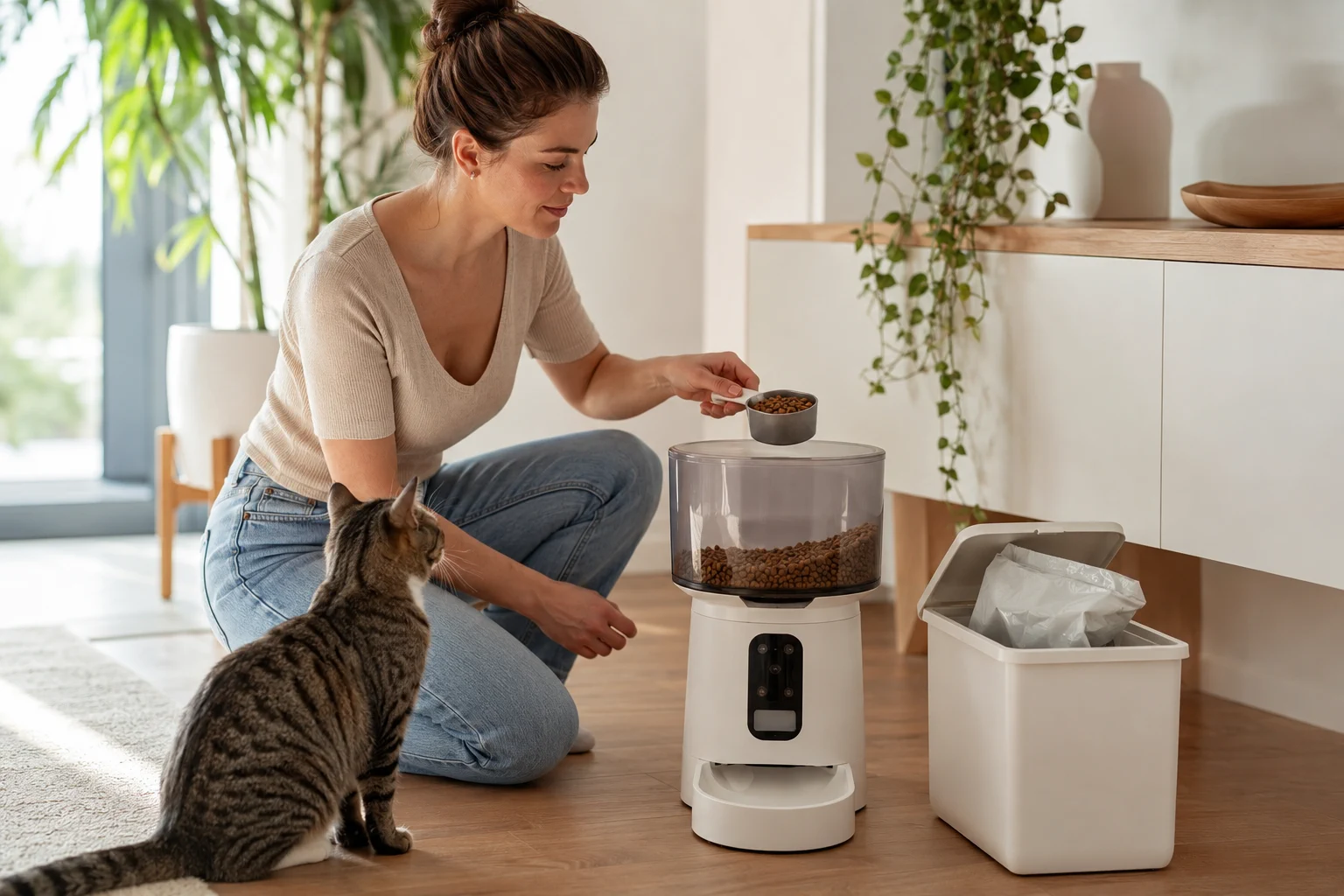
A feeder hopper protects kibble from casual access, but it is not the same as the original food package. Every time the lid opens, warm or humid air can enter. Food at the bottom may remain there through repeated top-ups, while fats and crumbs collect on the hopper and rotor.
The right refill interval depends on the food, climate, feeder seal, hopper size, household temperature, and how quickly your cat eats. The safest approach is to keep the main supply properly stored and use the feeder as a short-term dispensing container.
Why There Is No Single Safe Time Limit
- Food formulas differ. Fat content, coating, kibble shape, and packaging affect how a product handles air and moisture.
- Hoppers differ. A gasketed lid may reduce air exchange, but it does not make the chamber airtight forever.
- Homes differ. Heat, humidity, sunlight, steam, and insects change storage conditions.
- Usage differs. A small hopper emptied in days is different from a large hopper repeatedly topped up for weeks.
A “best by” date normally applies to the unopened product stored as directed. Once the bag is opened and food is transferred to a feeder, follow any after-opening instructions printed by the manufacturer rather than treating the date as a guarantee.
A Better Rule: Load Several Days, Not Several Weeks
For routine use, estimate the amount your cat eats per day and add only enough for the next several days. This reduces the time kibble spends exposed inside the feeder and forces regular inspections. A large-capacity hopper is useful for convenience, but capacity should not be confused with a recommended storage period.
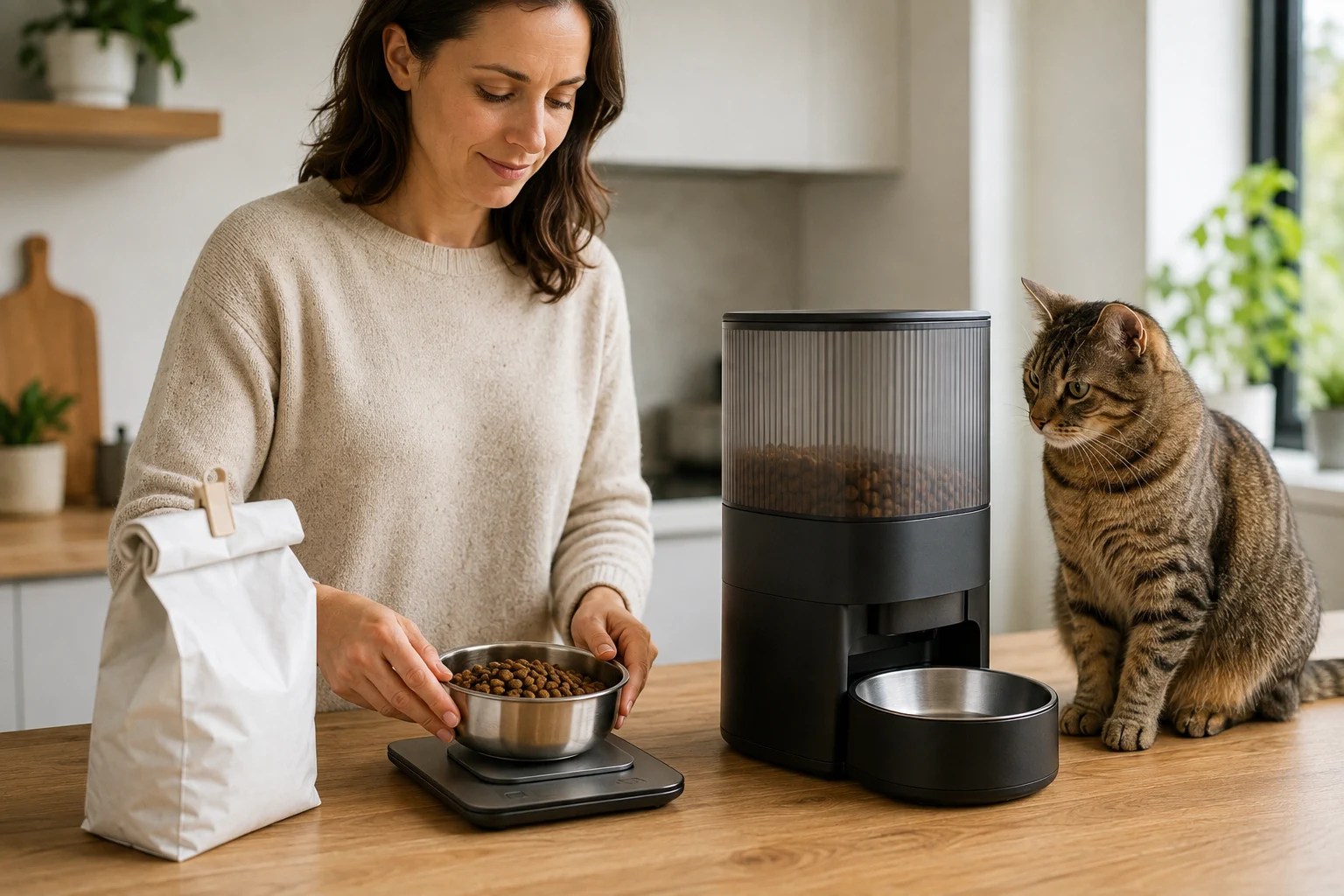
Daily food amount × number of days until the next planned inspection = starting hopper load. Use the weight recommended for your cat, not the feeder’s vague “portion” label.
For example, if the feeding plan uses 60 grams per day and you intend to inspect the hopper in four days, start with about 240 grams plus only a small operational margin. Reweigh actual dispenses because output changes with kibble density and shape.
Does One “Portion” Equal the Expected Weight?
Test at least 10 dispenses with your cat’s actual kibble before calculating how much food the hopper needs.
Store the Main Supply in Its Original Bag
The FDA’s pet-food storage guidance recommends keeping food in its original bag so the product name, manufacturer, UPC, lot number, and best-by date remain available. If you use a separate container, the FDA recommends placing the entire original bag inside it when possible.
The original package also provides a food-specific barrier. Keep the top securely closed and store it in a cool, dry location. FDA guidance says dry pet food should be kept below 80°F (about 27°C), because excess heat or moisture can contribute to nutrient breakdown.
Do not pour a new bag over old food in a storage bin or feeder. Finish or remove the old batch, wash food-contact parts according to their instructions, dry them completely, and retain the new lot information.
What Makes Kibble Deteriorate Faster?
Heat and direct sunlight
Do not place the feeder beside a sunny window, radiator, oven, or other heat source. A warm hopper can speed quality loss and may create temperature swings that encourage condensation.
Humidity and water
Steam from a kitchen, splashes from a fountain, damp cleaning parts, or a humid room can make kibble clump. Keep the feeder dry and allow washed components to air-dry completely before refilling.
Air and repeated lid opening
Opening the lid frequently exchanges the air inside. Close it fully after each refill and inspect the gasket for food dust or damage.
Old crumbs and residual fats
Fine crumbs settle at the bottom and fats can coat surfaces. Repeated top-ups mix fresh kibble with older residue, which is why emptying and cleaning between batches matters.
Insects and household pests
A closed lid can reduce access but cannot correct an existing infestation. Discard affected food safely, clean the feeder and surrounding area, and inspect the main package.
Are Ants Reaching the Feeder?
Remove contaminated food, clean scent trails, inspect entry points, and use feeder-safe prevention methods.
Signs Food Should Be Discarded
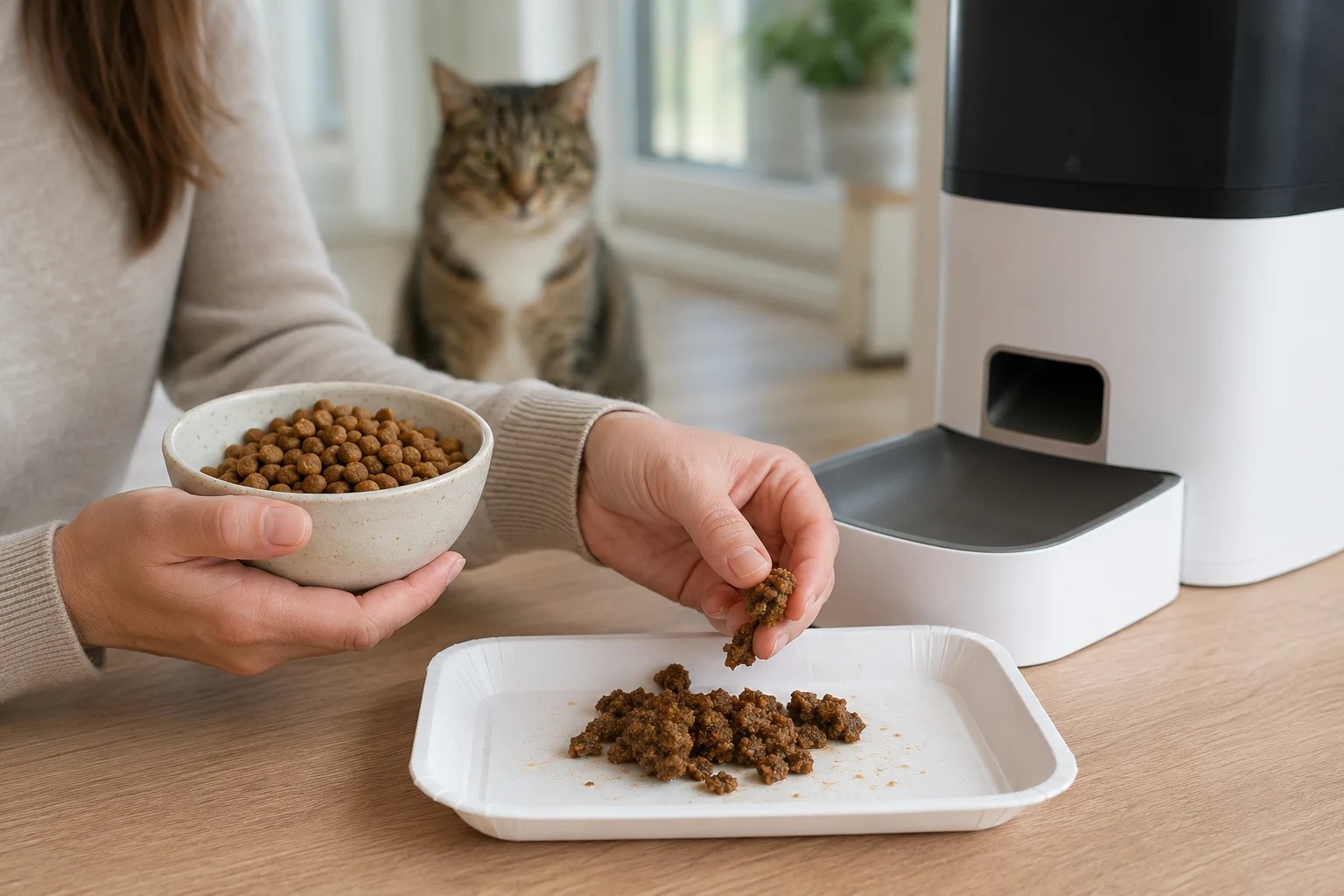
- rancid, sour, musty, or otherwise unusual odor;
- dampness, soft texture, swelling, or clumps;
- mold, discoloration, webbing, insects, or droppings;
- greasy residue that is unusual for that food;
- a damaged package or missing storage history;
- a recall involving the product’s lot number; or
- sudden refusal by a cat that normally eats the food.
A Safe Refill Routine
- Check the original bag’s best-by date and after-opening directions.
- Confirm the feeder is clean, completely dry, and correctly assembled.
- Smell and inspect the food already in the hopper; do not automatically top it up.
- Add only the amount needed until the next planned inspection.
- Close the lid and confirm the gasket and latch are clear.
- Run a manual dispense and verify that food reaches the bowl.
- Keep a dated photo of the bag’s product name, lot number, and best-by date.
- Wash the bowl regularly and inspect the outlet for crumbs or moisture.
When Was the Hopper Last Cleaned?
Use a part-by-part schedule for the bowl, outlet, hopper, rotor, sensors, and base.
Did the Manual Test Fail?
If the motor runs but no food reaches the bowl—or the motor does not run—check the outlet, rotor, power, schedule, and kibble compatibility.
Frequently Asked Questions
Can I fill the hopper for a month?
A hopper may physically hold that much food, but capacity is not a freshness recommendation. Use the food label and feeder manual, consider local heat and humidity, and prefer smaller loads that you inspect regularly.
Does a desiccant pack make food last longer?
Use only the type, placement, and replacement schedule approved for the exact feeder. Never place an unapproved packet where a cat could reach it or where it could enter the dispensing mechanism.
Can I mix two bags of the same food?
Avoid mixing batches in the hopper because it makes rotation and recall identification harder. Keep each bag’s lot information and clean the container between bags.
Should I leave extra food before a trip?
Load a tested amount, but do not treat excess kibble as protection against a jam, power failure, illness, or spilled water. Arrange in-person care for overnight or multi-day absences.
Planning to Leave the Feeder Unattended?
Fresh food is only one part of a safe setup. Test power, dispensing, water access, and human backup.
Official Sources Reviewed
- U.S. FDA: Proper Storage of Pet Food and Treats
- U.S. FDA: Tips for Safe Handling of Pet Food and Treats
- U.S. FDA: Save Your Pet Food Lot Number
If food is present but the feeder still does not release it, use our troubleshooting guide.