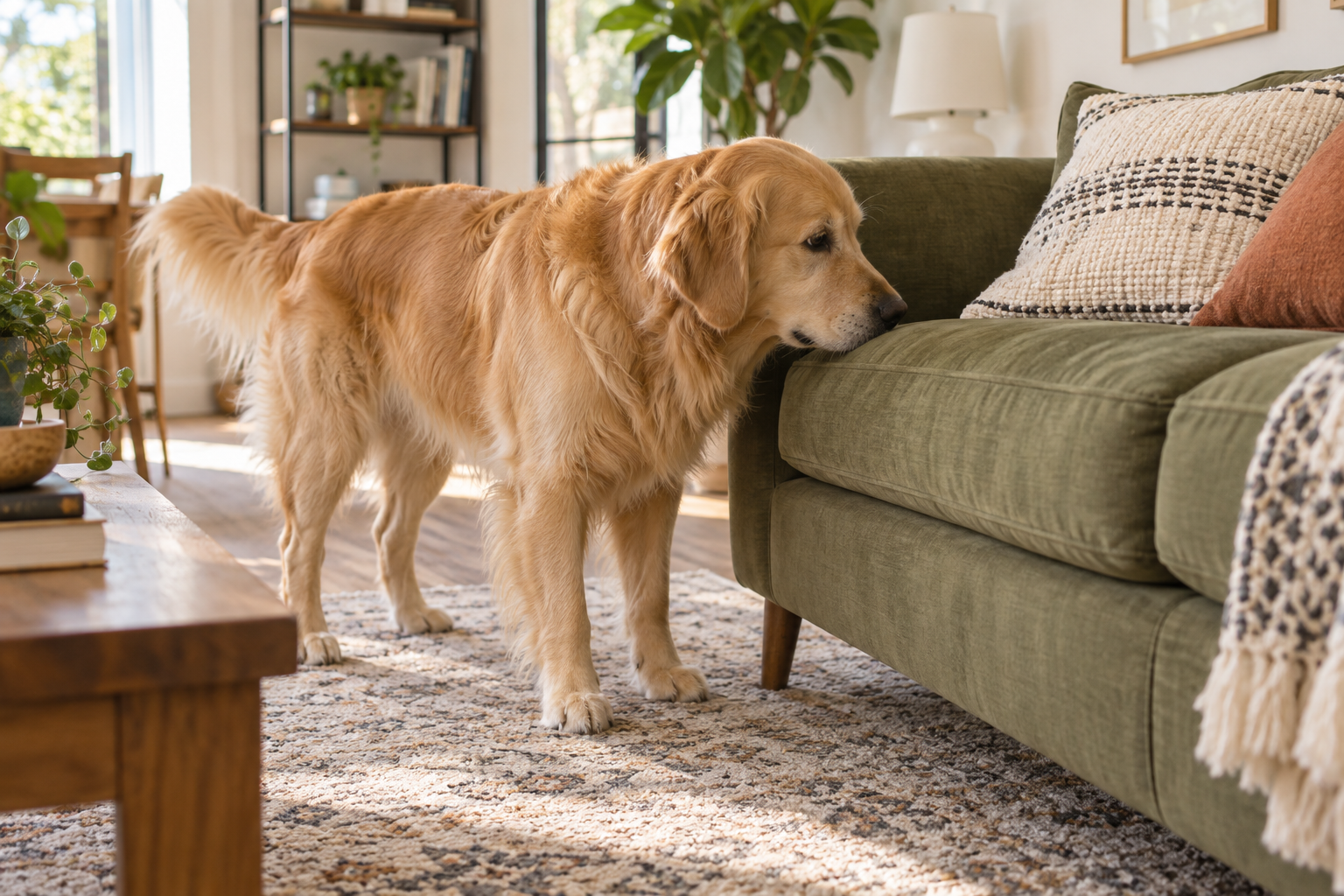
If your dog starts licking the sofa, check the cushion for spilled food first. A few curious licks can be ordinary; a long, repeated session that is new or hard to interrupt deserves a closer look. The couch is a clue, not a diagnosis.
Start here: Check the exact spot, call your dog away once, and notice what happens next. Are they otherwise eating, playing, and acting like themselves? If the licking is suddenly intense or comes with signs of illness, call your veterinarian rather than trying to label it as boredom.
1. Is there something interesting on that cushion?
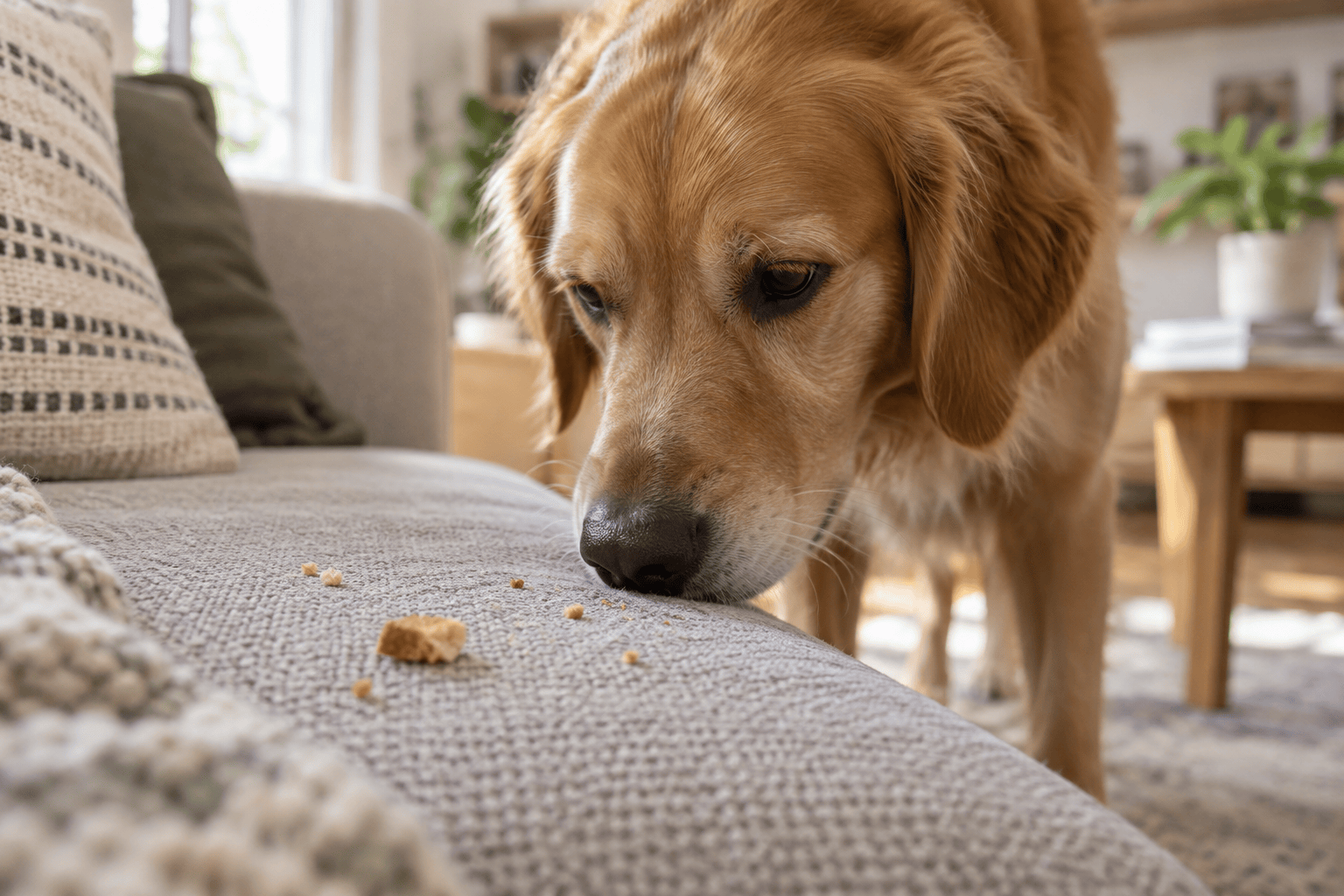
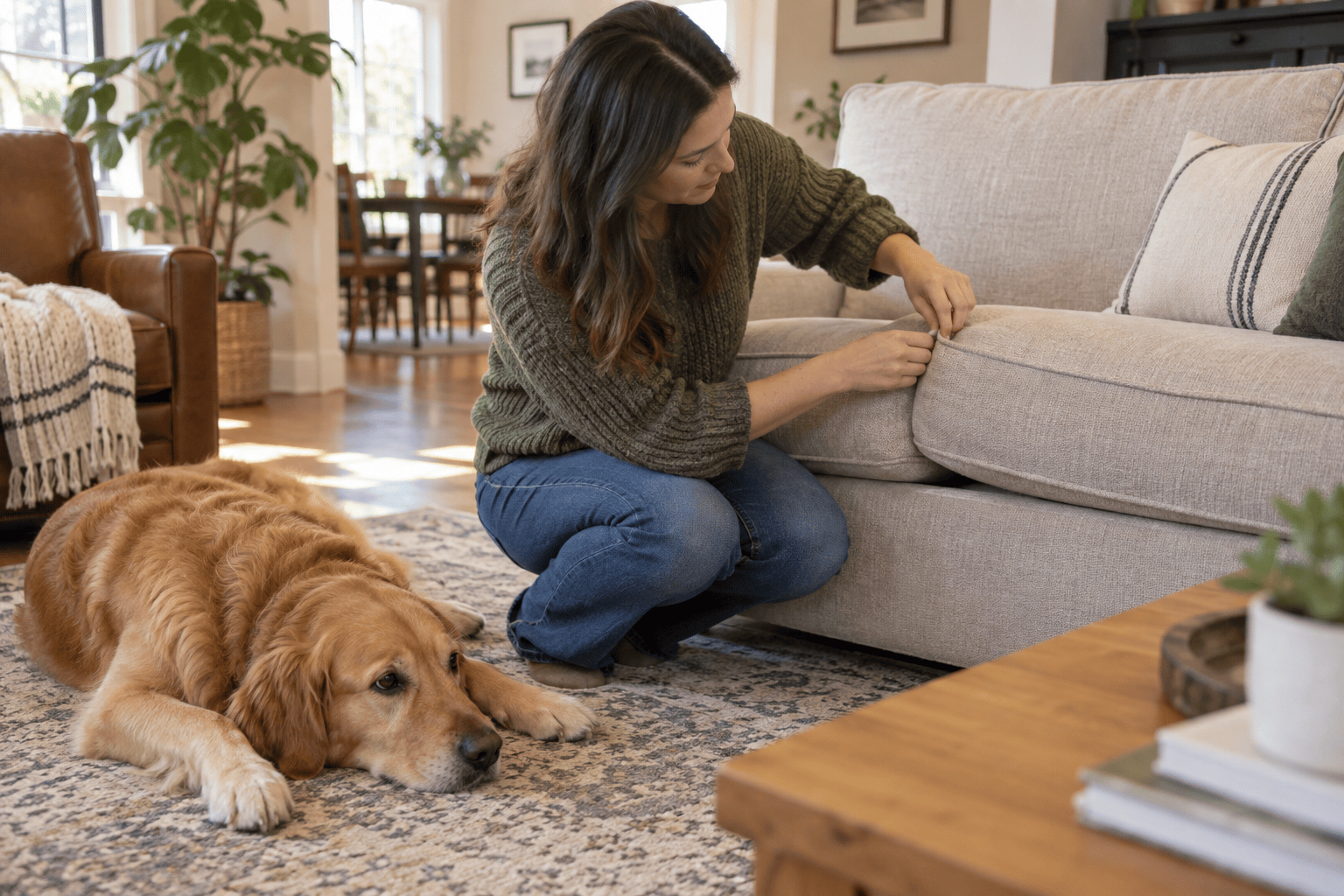
Dogs investigate with their mouths and noses. A couch can hold dinner crumbs, the smell of skin, or the trace of a treat. If your dog gives one particular place a few licks and moves on, inspect that place before reading too much into the behavior.
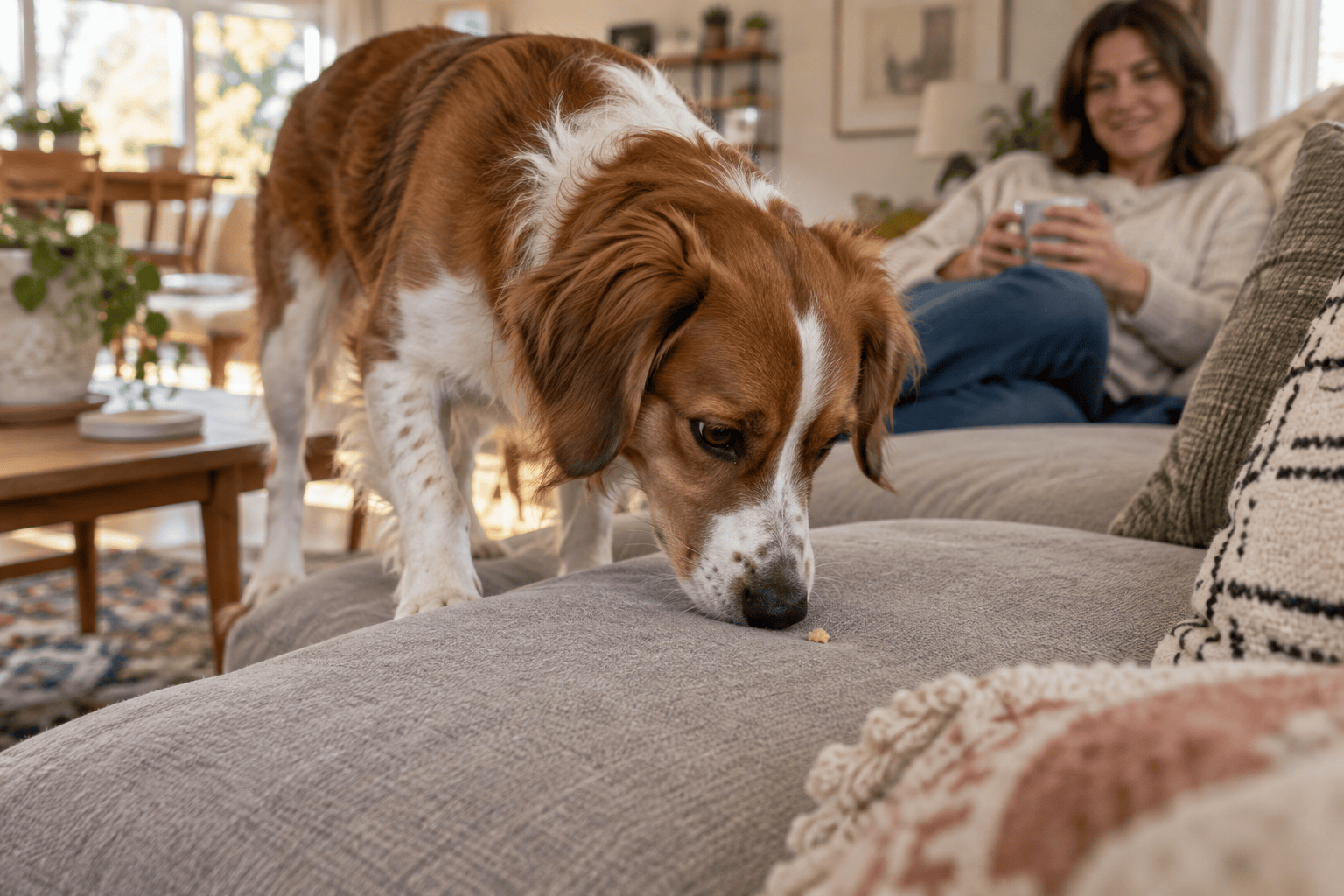
Lift the throw, check the seams, and remove any food or loose stuffing. If you recently cleaned the upholstery, keep your dog off the area until it is fully dry and follow the product label. Do not spray a deterrent onto fabric your dog may lick without checking whether the product is safe for pets and that surface.
2. When does the licking happen?
The timing is more useful than a single photo. Does it happen after meals, while everyone is out, during a noisy evening, or only on one chair? Make a short note for two or three days: time, duration, where your dog licked, and what happened just before. Do not wait days to seek help if your dog also seems unwell.

Less activity can sometimes lead to repetitive licking. A change in routine or household stress can also be relevant. Neither explanation should be assumed from the licking alone. A pattern can point you toward the next question, not give you a final answer.

3. Can your dog stop and do something else?
Say your dog’s name once and offer an ordinary alternative: a walk, a familiar toy, or a food puzzle that is appropriate for them. Do not scold or repeatedly pull them away. You are observing whether they can shift attention, not running a medical test.

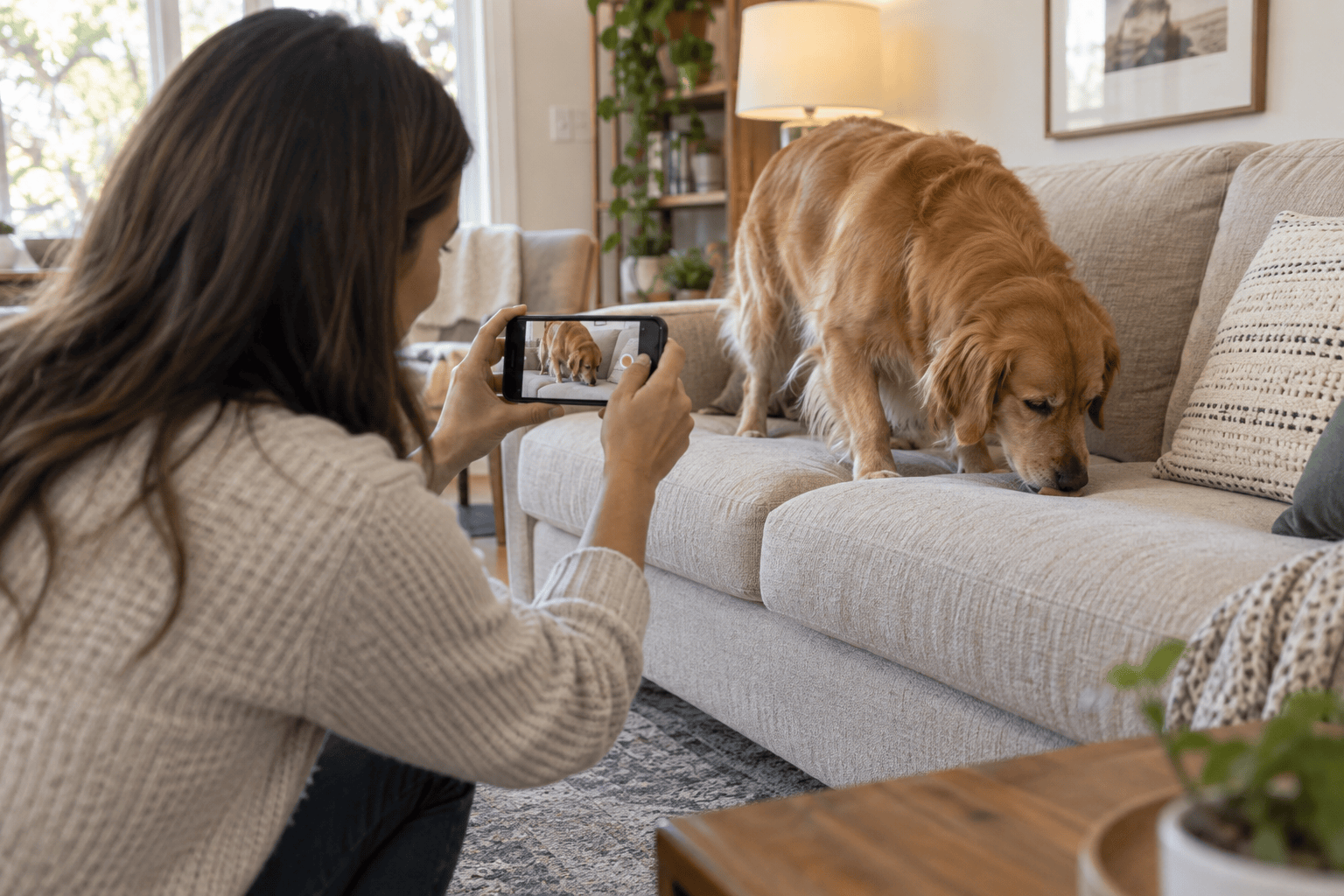
If the dog readily leaves and returns to normal activity, note that. If they immediately go back, seem unable to disengage, or lick for long periods, record a short video and talk to your veterinarian. Repetitive surface licking can have behavioral or medical causes, and a clinician can help separate them.

4. Did anything else change?
Look beyond the furniture. Appetite, vomiting, stool, energy, and the dog’s usual sleep or behavior may tell a fuller story. Excessive licking of soft surfaces can sometimes accompany nausea or digestive discomfort. That does not mean every couch lick signals a stomach problem.
Also check whether your dog is licking only or chewing and swallowing fabric. Missing threads, foam, or stuffing change the situation. If you think material was swallowed, call a veterinarian promptly for advice; vomiting, repeated retching, belly pain, low energy, or inability to keep food down need urgent evaluation.
5. When should you call the vet?
Arrange a veterinary conversation if the licking is new and frequent, lasts a long time, is difficult to interrupt, damages the sofa, or comes with changes in appetite, behavior, or energy. For an older dog with a new repetitive habit, mention the age and any other changes. You do not have to prove the cause before calling.

For now, the practical sequence is simple: inspect the spot, note the timing, offer a calm alternative, and check the whole dog. A couch stain is annoying. A new pattern in your dog is worth understanding.
Sources: American Kennel Club, furniture licking; VCA Animal Hospitals, compulsive disorders in dogs; ASPCA, destructive chewing.
Leave a Reply