Category: Smart Litter Boxes

  • Why Does My Cat Use the Litter Box Right After I Clean It? It’s Probably Not Spite.

    Why Does My Cat Use the Litter Box Right After I Clean It? It’s Probably Not Spite.

    CAT LITTER BEHAVIOR

    Why Does My Cat Use the Litter Box Right After I Clean It?

    It is probably not spite. Here is what a fresh box can mean to your cat—and when the pattern deserves a closer look.

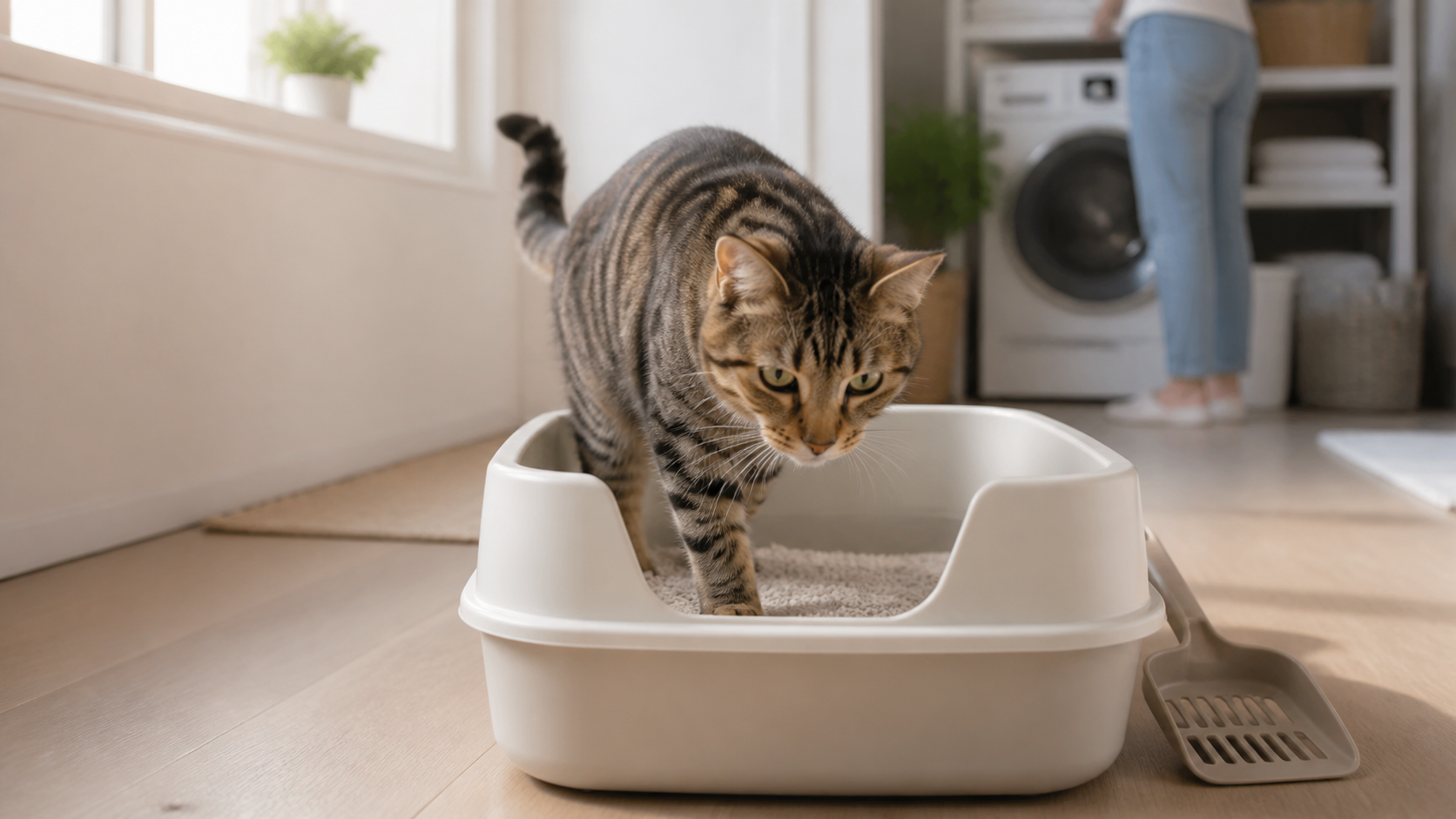
    Tabby cat using a freshly cleaned open litter box in a bright home

    Your cat ignores the litter box for hours. Then you finish cleaning it, put the scoop away, and—almost on cue—your cat climbs in.

    It feels personal. You did the work; your cat immediately undoes it.

    The good news: this is usually not spite, revenge, or your cat “protesting” your cleaning routine. A freshly cleaned box can simply be more appealing, more noticeable, or perfectly timed with your cat’s normal routine. Cats also pay close attention to their environment, and a box that suddenly smells different can be worth investigating.

    Why a freshly cleaned litter box can be irresistible

    1. Clean is simply more comfortable

    Some cats are extremely particular about waste, litter texture, and odor. When you remove clumps and waste, you give the cat the cleanest possible surface at exactly the moment they need it. That timing can look deliberate—but it may be no more dramatic than choosing the cleanest restroom available.

    2. The scent map just changed

    Cats use smell to interpret familiar spaces. Cleaning removes waste odor and changes familiar scent cues, so a cat may sniff, step in, dig, or use the box after the change. That is not proof of territorial marking; it is a normal response to a changed space.

    3. It may be routine timing

    If you scoop at the same time every day, you may be cleaning just before your cat’s usual bathroom trip. Meals, naps, play, and quiet household periods can all create a predictable rhythm.

    4. In a multi-cat home, access matters

    The newly cleaned box can briefly become the best option in the room. One cat may prefer it because another cat used the other box, there is less odor, or that location feels safer at the moment.

    Cat inspecting a freshly cleaned litter box

    Is this normal—or worth calling the vet about?

    What you see Often suggests Best next step
    One comfortable use right after cleaning Clean-box preference or normal timing Keep the routine steady and observe
    Sniffs, digs, then uses it normally Interest in the changed environment Avoid heavy fragrance; keep access easy
    Repeated visits with little or no output Possible discomfort or urgency Contact a veterinarian promptly
    Straining, crying, blood, hiding, or sudden accidents Not a “clean box” personality quirk Seek veterinary advice; urinary signs can be urgent
    Sudden avoidance after a cleaning change Problem with litter, scent, noise, location, or the box Return to the last accepted setup where safe; review one change at a time

    Litter-box behavior can be linked to medical problems, location preferences, litter aversion, and social stress. The discussion here is about a cat that uses the box comfortably—not a cat that is struggling to use it.

    The gentle-clean rule: clean enough, not “freshly scented”

    Your goal is a box that is dry, clean, and familiar—not one that smells like a bathroom-cleaner aisle.

    1. Scoop regularly. With clumping litter, remove waste often enough that the box stays dry and usable.
    2. Use a mild, low-residue cleaner for full washes. Rinse and dry the box thoroughly before refilling.
    3. Keep the litter unscented unless your cat already accepts something different. Sudden litter changes can cause trouble.
    4. Do not change the box, litter, location, and cleaner all at once. Too many changes make a new problem hard to identify.
    5. Replace cracked or permanently smelly plastic boxes. Old surfaces may not become acceptable again with more scrubbing.
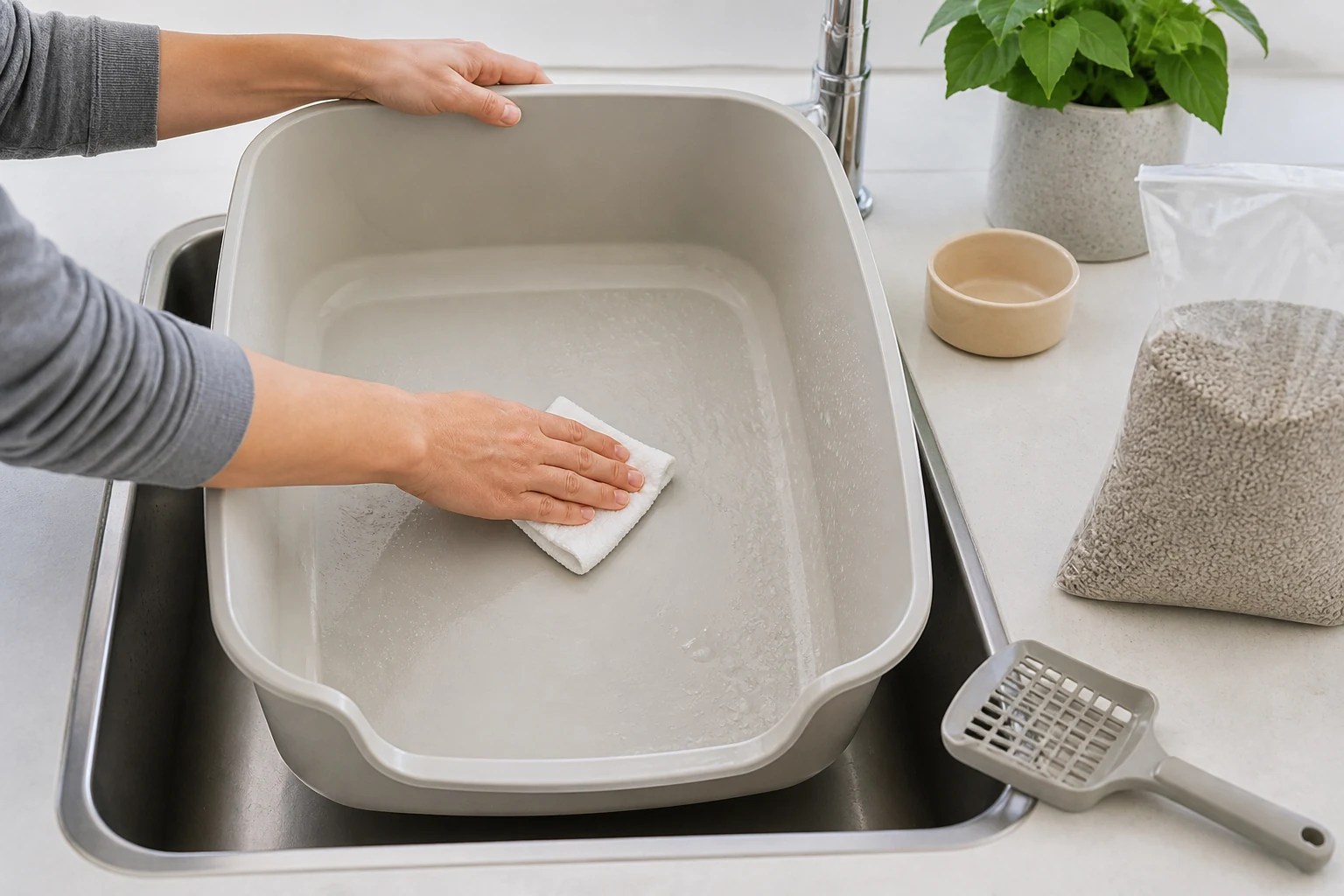
    Person gently cleaning a cat litter box with unscented supplies

    “But my cat waits until I am watching.”

    That can feel like a performance review, but cats are not generally trying to make a point about your chores. A quiet room, a recently opened route to the box, your predictable routine, or a clean surface may all line up at once.

    Avoid punishing, yelling at, or startling a cat over litter-box behavior. If there is a real problem, punishment can add anxiety without revealing the cause. Cornell specifically cautions that punishment is ineffective for house-soiling problems and can make them worse.

    If you use a self-cleaning litter box

    Automatic boxes add one extra variable: the box may be clean after a cycle, but its movement and sound may change how a cat feels about it.

    • Uses it after the cycle and looks relaxed: the clean surface may be a positive part of the routine.
    • Approaches, watches, then leaves: keep a conventional backup box available while you assess comfort.
    • Avoids it after it runs, or has accidents nearby: pause automatic cycling if your model allows and work through a gradual introduction.

    VCA notes that self-cleaning boxes may work well for some cats while noise or movement can worry others. The right test is whether your cat can enter, turn, dig, and leave calmly.
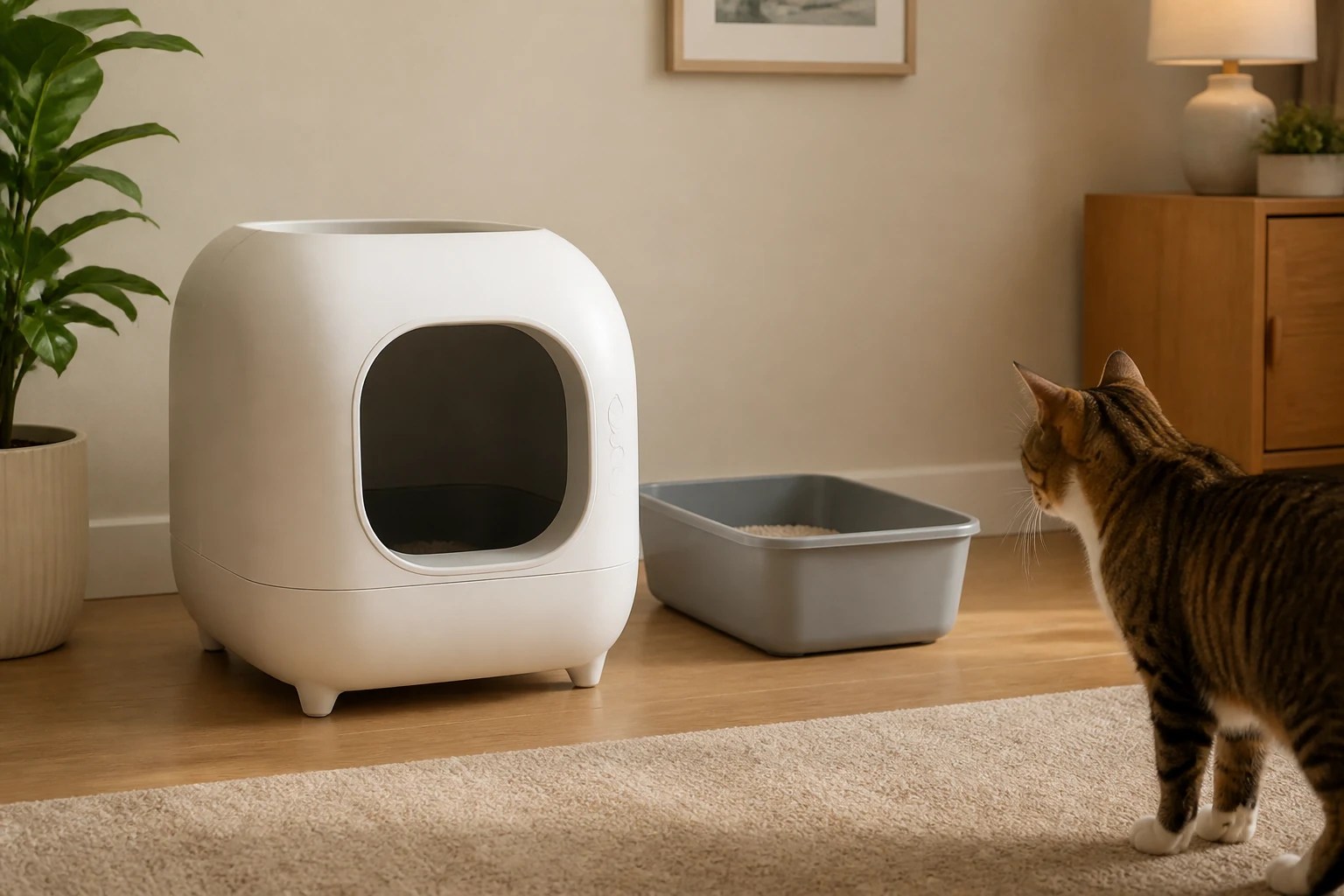
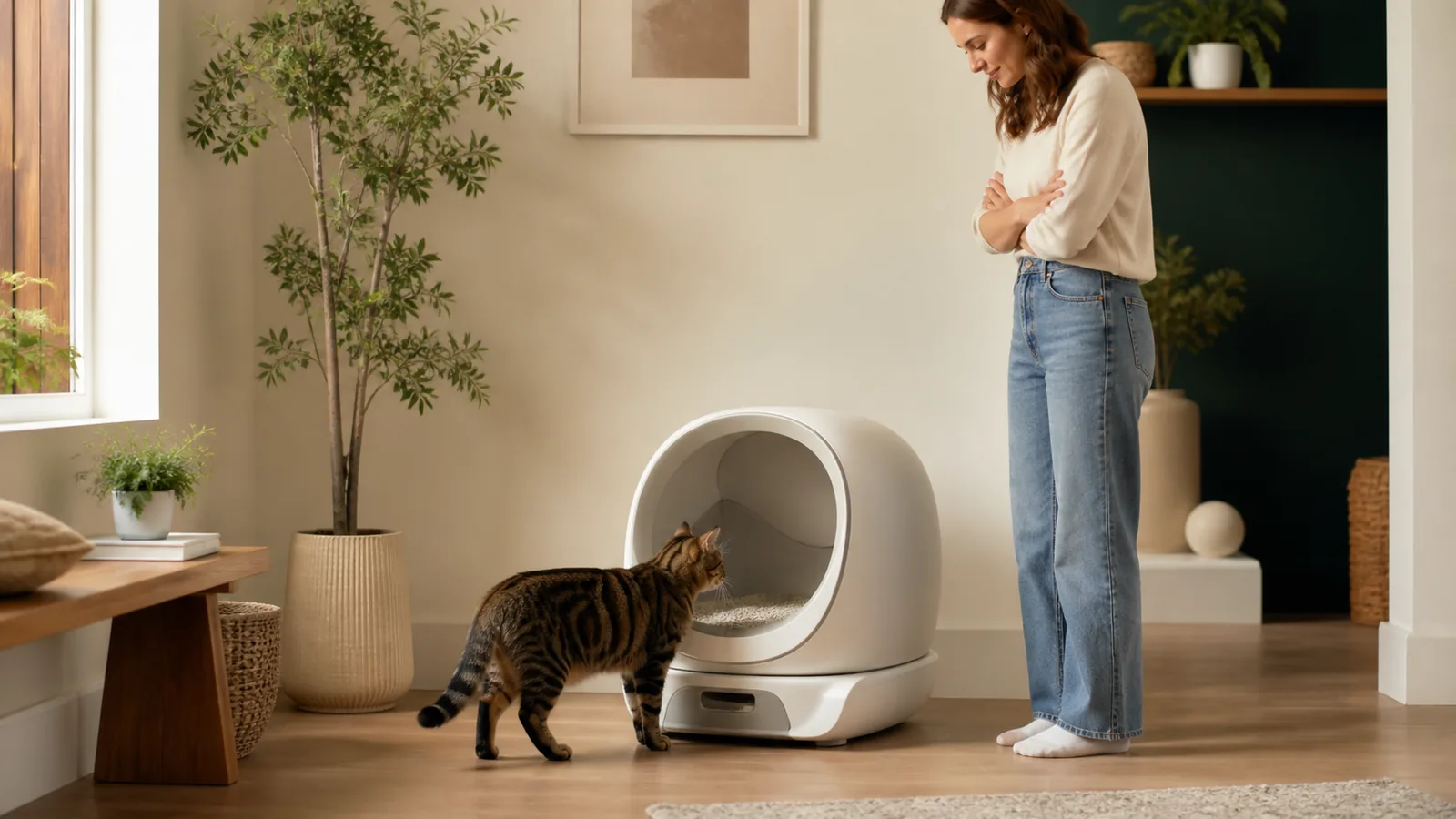
    Cat calmly approaching a self-cleaning litter box

    A two-day observation plan

    Day 1: Keep everything the same

    Scoop at your usual time. Note whether your cat uses the box within 15 minutes and whether the behavior looks relaxed and normal.

    Day 2: Change only the timing

    Scoop at a different quiet time. Do not change litter, cleaner, location, or box style. If use remains comfortable, you likely have a clean-box fan. If it becomes urgent or uncomfortable, shift to health and setup checks.
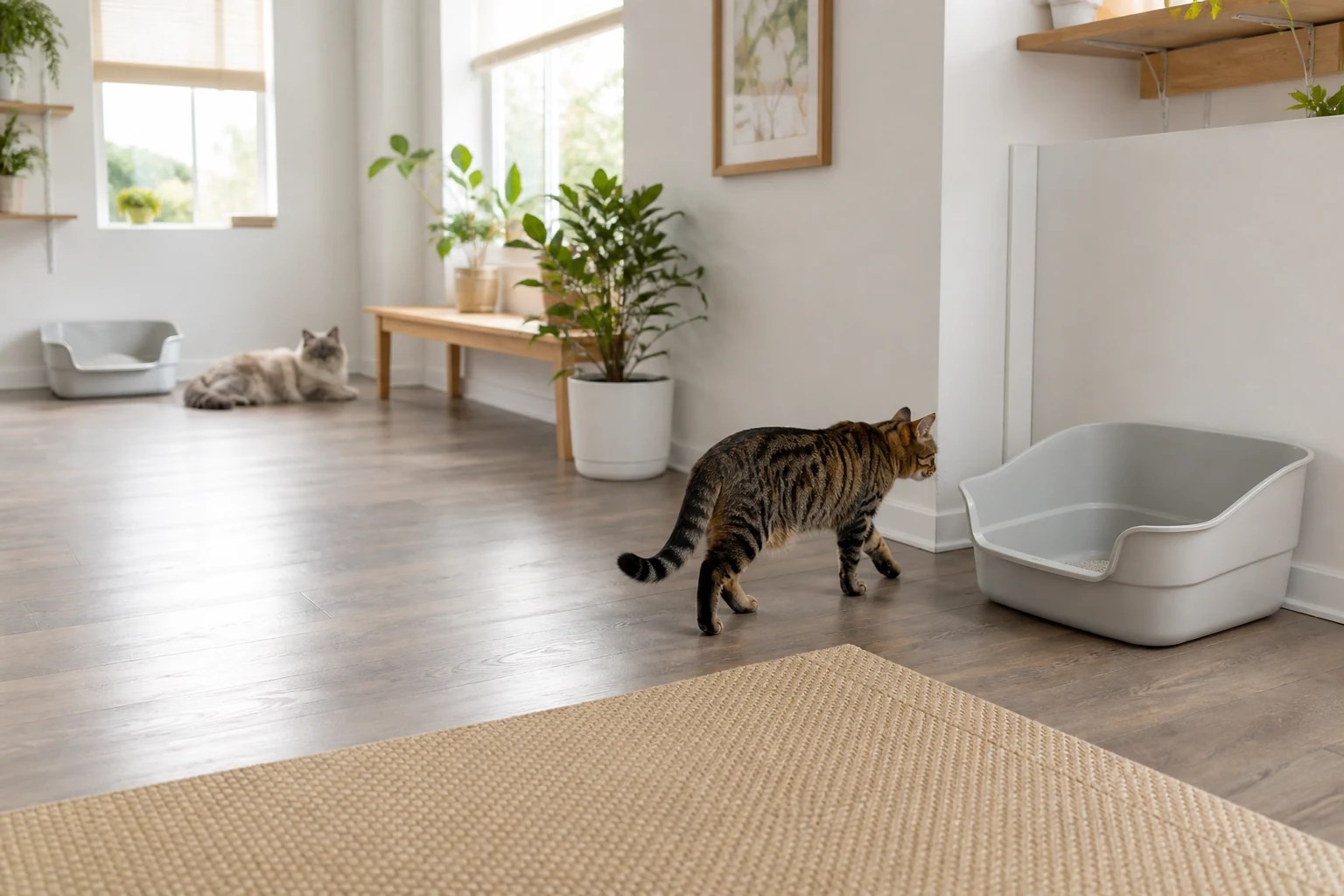
    Two cats with separate litter boxes in a calm home

    When the behavior is not “just a funny habit”

    Book veterinary advice when litter-box behavior is new, escalating, or paired with discomfort. Seek urgent care for a cat that strains to urinate, makes repeated unsuccessful attempts, cries in the box, has blood in urine, or appears unwell—especially a male cat.

    Also take a closer look when a cat begins eliminating outside the box, perches on the edge, refuses to step in the litter, or suddenly avoids a previously accepted self-cleaning box. Medical causes, pain, mobility changes, social pressure, litter changes, and location problems can overlap.

    The bottom line

    Your cat using the litter box immediately after you clean it is usually a compliment to the clean box, not a complaint about you. Keep the setup predictable, skip heavy fragrance, give multi-cat households enough options, and watch for a comfortable, ordinary toileting pattern.

    FAQ

    Why does my cat poop right after I clean the litter box?

    Often because the box is clean and the timing matches your cat’s routine. One normal, comfortable use is usually not a concern. Persistent straining, pain, or new accidents are different and deserve veterinary advice.

    Is my cat re-marking the litter box after I clean it?

    Cats respond to familiar smells and a changed environment, but using the box right after cleaning does not by itself prove territorial marking. Look at the whole pattern.

    Should I leave old litter behind so my cat recognizes the box?

    Do not leave waste behind as a strategy. Keep a familiar unscented litter, use a gentle cleaner, rinse well, and make changes gradually.

    Do self-cleaning boxes make cats use the box more?

    They can help maintain a cleaner surface, but not every cat accepts motion or noise. Introduce the box gradually and keep an appropriate backup option while your cat adjusts.

    Reviewed sources

    Editorial note: This article is general educational information, not a diagnosis. Pet Tech Compass may earn a commission when readers buy through qualifying links; that does not change our editorial guidance.
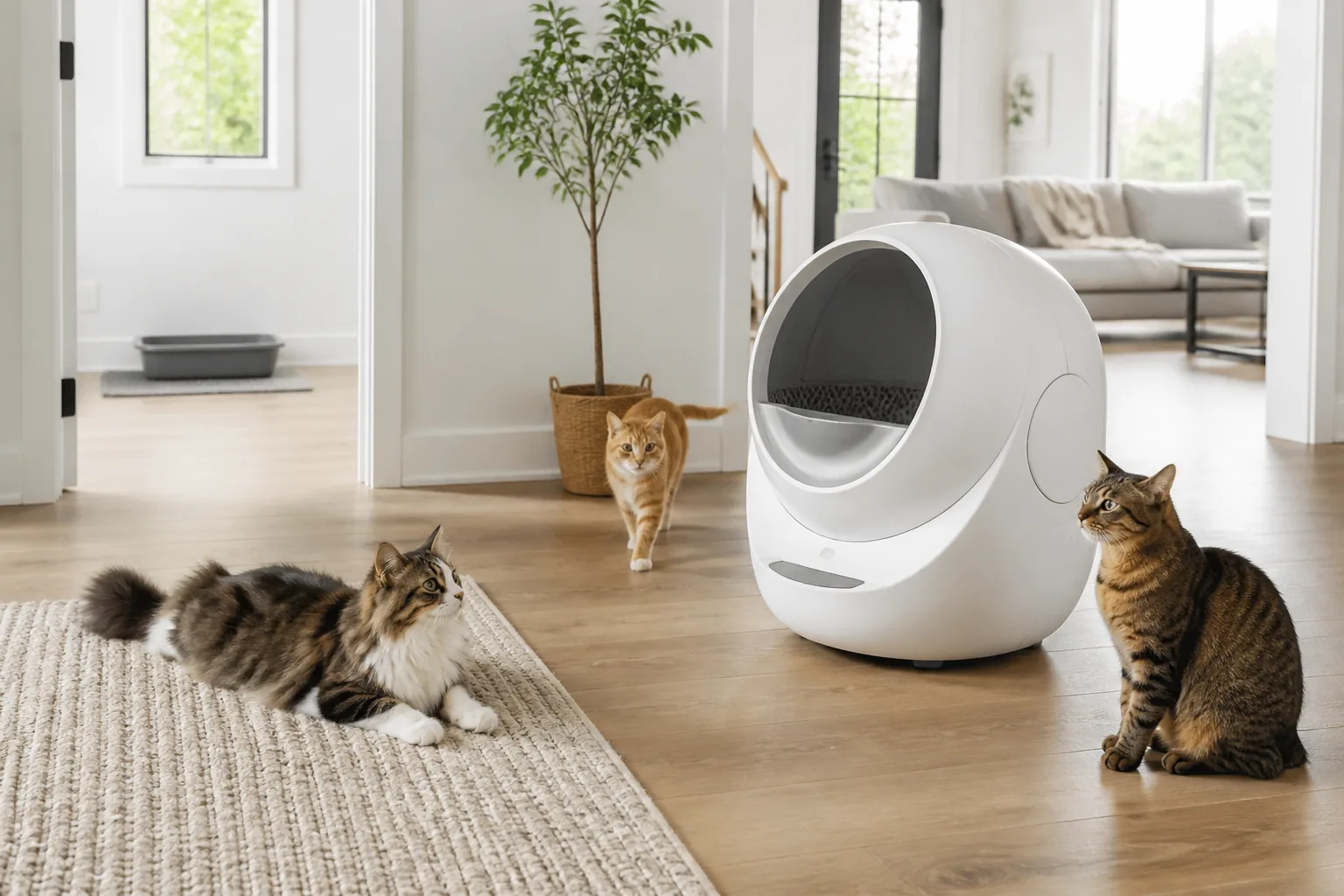
  • Can Multiple Cats Share a Self-Cleaning Litter Box? 7 Tests Before You Rely on One

    Can Multiple Cats Share a Self-Cleaning Litter Box? 7 Tests Before You Rely on One

    Multi-cat automatic litter guide

    A machine’s advertised cat capacity describes hardware. It does not prove that every cat can approach, use, and leave the same toilet comfortably.

    Quick answerOne automatic box may be part of a multi-cat setup when cats willingly share, the bed resets between visits, maintenance keeps pace, and alternative boxes remain available in separate locations.
    Three different cats near a generic self-cleaning litter box with an ordinary backup box in another room
    Count usable toilet resources—not just the number printed on a product page.
    Three meanings of capacity

    A machine can pass one test and fail the other two

    01

    Mechanical

    Can the motor, litter bed, and drawer process the household’s waste volume?

    02

    Physical

    Can the largest, oldest, and least mobile cat enter, turn, posture, and exit?

    03

    Social

    Can every cat approach and leave without another cat controlling the route?

    Automatic and ordinary litter boxes in separate home zones with open access routes
    Adjacent boxes can behave like one guarded resource station; separation creates real choice.
    Seven household tests

    Test the cats, traffic, and maintenance—not only the motor

    Count social groups

    Cats that groom, rest, and play together may share more readily. Watch for quiet staring, following, doorway waiting, and use only at quiet times.

    Map approach and escape

    A closet, corner, or dead-end hall creates a route another cat can control. Distribute boxes in genuinely different locations.

    Measure recovery

    Observe peak periods. Record cycle completion, repeated entries that reset the timer, pauses, faults, and overlapping visits.

    Track waste and litter speed

    Log drawer fill, liners, top-ups, odor, sensor alerts, and clean litter waste for seven days. Set service by observation.

    Check the smallest and largest cat

    Every cat must meet the exact automatic-mode threshold and fit the usable entrance and interior comfortably.

    Test individual monitoring honestly

    Similar weights, floor surface, camera view, subscriptions, and offline behavior can affect identity data. Monitoring is not diagnosis.

    Prove the backup plan

    Keep an ordinary box elsewhere, compatible litter, manual cleaning instructions, travel checks, fault procedures, and veterinary contact information.

    Owner recording timing while two cats approach a stationary automatic litter box from different distances
    Quiet observation reveals queues and guarding that an advertised capacity cannot measure.
    Do not remove old boxes

    Run a 7-day sharing trial

    Days 1–2

    Stationary introduction

    Maintain all familiar boxes. Record investigation and avoidance; keep power off when the manual recommends it.

    Days 3–4

    Supervised cycles

    Confirm thresholds and observe whether movement or sound changes another cat’s willingness to approach.

    Days 5–7

    Traffic audit

    Track visits, overlap, drawer fill, litter use, guarding, faults, and outside-box elimination.

    Primary shared box
    Supplementary box
    Poor household fit
    Powered-off automatic litter box with waste drawer liner scoop refill litter and measuring container
    Multi-cat capacity is measured by the household’s real drawer and litter-consumption rate.
    One machine versus distributed resources

    When sharing may work—and when to add boxes

    Question One unit may be workable Add or retain boxes
    Social relationship Affiliated cats; no guarding Separate groups, staring, blocking, chasing
    Access Open approach and escape Closet, dead end, narrow doorway
    Traffic Rare overlap; reliable reset Queues or interrupted cycles
    Physical fit Every cat moves comfortably Large, arthritic, timid, or mobility-limited cat struggles
    Safety All cats meet requirements Any cat falls below automatic threshold
    Maintenance Serviced before urgent alerts Fast fill, odor, low litter, repeated faults
    Backup Ordinary box available elsewhere The machine would be the only toilet
    Watch the least confident cat

    Warning signs that sharing is failing

    • Waiting while another cat sits nearby
    • Ambushing at the entrance or exit
    • Elimination beside the machine
    • Sudden use of tubs, laundry, or soft surfaces
    • Frequent visits with little output
    • One cat disappears from usage history
    • Drawer fills far faster than expected
    • Refusal after a noisy or interrupted cycle
    Veterinary warning: Straining, repeated small urinations, blood, vocalizing, constipation, diarrhea, appetite change, or signs of pain require prompt veterinary attention.
    Automatic litter box and ordinary litter pan in separate accessible rooms with two cats
    A backup box in another location remains usable during maintenance, faults, power loss, or social conflict.
    Buying priorities

    Do not rank products by cat count alone

    1. Fit the largest cat
    2. Detect the smallest cat
    3. Size the drawer for real output
    4. Return the bed to service reliably
    5. Disassemble and clean quickly
    6. Work safely offline with clear alerts
    7. Identify individuals only when useful
    8. Keep parts and consumables available
    Practical verdict

    Advertised cat count is an upper hardware claim—not a household prescription

    Multiple cats may share one automatic box mechanically and willingly. But one unit should not erase distributed, accessible toilet resources.

    Keep backup boxes, watch social behavior, measure real recovery and drawer rates, and let the least confident cat determine whether the setup works.

    Continue the series

    Related guides

    FAQ

    Multi-cat sharing questions

    Is one self-cleaning litter box enough for two cats?

    It may process the waste, but that does not guarantee comfortable access. Keep another box elsewhere and observe traffic, guarding, fit, and drawer capacity.

    Can four cats use one automatic litter box?

    Some products advertise capacity for up to four cats. Treat it as a hardware claim; four cats create faster fill, overlapping visits, and greater risk that one location becomes unavailable.

    Will an automatic litter box identify each cat?

    Some estimate identity by weight; selected camera models offer visual recognition. Accuracy varies with weights, placement, lighting, subscriptions, and features.

    How often should the drawer be emptied with multiple cats?

    Use observed fill rate and the exact manual. Check daily during the first week and schedule service before the drawer becomes full.

    Should I remove the old boxes after the cats use the robot?

    No immediate removal is recommended. Keep familiar boxes during transition and retain distributed backup resources.

    Sources and research notes

    Research note: Capacity, recognition, subscriptions, thresholds, and app history vary by model and region. Reviewed August 18, 2026. Follow the exact current manual.

    Affiliate disclosure: Pet Tech Compass may earn from qualifying purchases. Advertised capacity does not replace independent evaluation of fit, access, behavior, maintenance, and backup resources.

  • Can You Use Regular Litter in a Self-Cleaning Litter Box? 6 Compatibility Checks

    Can You Use Regular Litter in a Self-Cleaning Litter Box? 6 Compatibility Checks

    Automatic litter compatibility guide

    Sometimes—but “regular litter” is not a compatibility standard. A rotating sifter, rake tray, and sensor-heavy smart box can require completely different litter.

    Quick answerStandard-weight, fast-clumping clay works in many sifting boxes, but not every machine. Match the litter to the exact model, then test it while you are home.

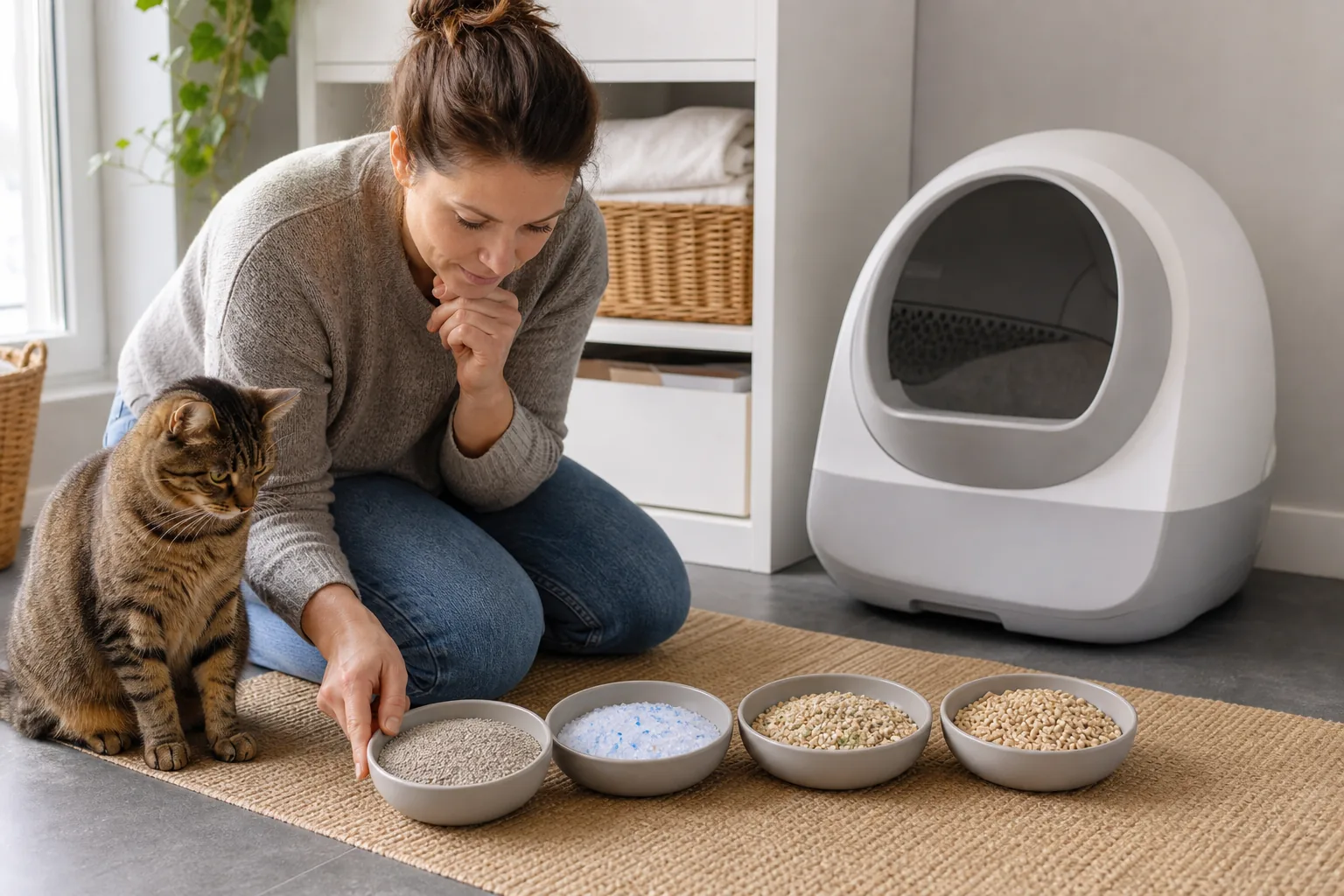
    Cat owner comparing litter samples beside a generic self-cleaning litter box
    Compatibility depends on the machine’s separator, sensors, fill limit, and cycle timing—not the word “regular.”

    30-second bag test

    Check six things before buying a large bag

    1. Firm clumps?
    2. Particles within the screen limit?
    3. Approved material?
    4. Suitable weight and flow?
    5. No sensor-visibility conflict?
    6. Enough time to dry before cycling?
    The operating chain

    Compatibility is a system

    A litter can work beautifully in an ordinary pan and fail inside an automatic separator.

    01Clump
    02Pass
    03Release
    04Detect
    05Reset
    Removed sifting screen separating clean litter from a firm clump
    The clean particles must pass the separator while the waste clump stays intact.
    Six compatibility checks

    What the machine actually needs

    Clumping behavior

    The clump must survive movement. Weak clumps can break apart, return damp fragments to the clean bed, or smear the liner.

    • Use only litter formats allowed by the manual.
    • Test one clump after the normal cycle delay.
    • Inspect the clean bed, screen, and drawer.

    Particle dimensions

    Long pellets may be discarded as waste even when clean. PETKIT’s PURA MAX manual, for example, specifies litter shorter than 1.2 cm and under 3 mm in diameter.

    • Measure the format—not only the material name.
    • Distinguish long tofu pellets from crushed tofu.

    Weight and flow

    Unusually light litter may sift unpredictably or affect weight-dependent features. Never compensate by overfilling.

    • Follow the fill line.
    • Use the stated standard or supported weight.
    • Recalibrate only as instructed.

    Sensor visibility

    Color and translucency can matter. Whisker warns that translucent or white crystal litter may affect level and drawer readings in certain models.

    • Watch readings after a litter change.
    • Keep optical areas clean.
    • Return to an approved litter if readings become implausible.

    Dust, residue, and moisture

    Low dust does not guarantee firm clumps. Watch for paste-like residue, damp fragments, condensation, sensor dust, and clean grains in the waste bag.

    Required litter format

    Some PetSafe legacy tray systems use crystals, while its clumping models have different requirements. Confirm the full model name, generation, tray, screen, fill level, and delay.

    Four unlabeled cat litter samples showing clumping granules crystals crushed plant litter and long pellets
    Material names are not enough: particle length, diameter, weight, and clump strength change how a machine sorts litter.
    Screening matrix

    Use this table before opening the bag

    This is a screening guide, not permission to override the manual for your exact machine.

    Litter format General fit Main risk Verify first
    Standard-weight clumping clay Often supported Dust, tracking, liner sticking Manual approval, fill line, cycle delay
    Crystal litter Model-specific Sensor visibility or non-clumping behavior Exact crystal format and model
    Fine or crushed tofu Conditional Soft clumps or oversized pieces Maximum diameter and length
    Long tofu pellets Often unsuitable Jams or clean-litter waste Screen dimensions and explicit approval
    Wood or pine pellets Often unsuitable Sawdust and poor clump separation Machine designed specifically for pellets
    Paper litter Often unsuitable Non-clumping or oversized pieces Explicit manual approval
    Corn or plant-based clumping litter Model-specific Light flow, moisture, weak clumps Weight, clump strength, cleaning frequency
    Before you trust automatic mode

    Run three supervised cycles

    01

    Dry flow

    Fill only to the line. Confirm clean litter settles correctly and is not dumped.

    02

    Clump release

    After the approved delay, confirm the clump leaves intact without smearing.

    03

    Sensor reset

    Confirm normal status, plausible readings, and actual delivery into the drawer.

    Owner supervising a litter compatibility test with a cat and a familiar backup box nearby
    Keep a familiar backup box available while you test both mechanical performance and cat acceptance.
    Stop and investigate

    Signs the litter is not working

    • Clean litter fills the drawer
    • Cycles jam or stop
    • Wet clumps stick or smear
    • Level alerts become implausible
    • Dust builds near sensors
    • Your cat starts avoiding the box
    Powered-off automatic litter box with excess clean litter in the waste drawer
    Clean litter in the drawer can point to overfilling, particle size, weight, or the wrong cycle.
    Health warning: If a cat strains, urinates frequently in small amounts, vocalizes, shows blood, appears painful, or suddenly eliminates outside the box, contact a veterinarian promptly. Do not assume a litter experiment is the only explanation.
    Cat acceptance matters too

    Change litter without forcing the cat

    1. Keep a familiar ordinary box nearby.
    2. Choose an unscented approved option when possible.
    3. Mix only when both the machine and litter guidance allow it.
    4. Increase the new litter gradually over several days.
    5. Keep initial automatic cycles off or supervised when directed.
    6. Restore the familiar setup if the cat avoids the box.
    Practical verdict

    “Regular” works only when the exact litter matches the exact machine

    The broadly compatible starting point for many rotating sifters is standard-weight, fast-clumping litter with particles that pass the screen. But crystal trays, alternative-litter machines, and sensor-heavy models can require something different.

    Buy a small bag, verify the current manual, run three supervised cycles, and judge what reaches the waste drawer.

    Continue the smart-litter series
    FAQ

    Common compatibility questions

    Does every self-cleaning litter box need clumping litter?

    No. Many rotating sifters require clumping litter, while some rake-and-tray systems are designed for crystals. Follow the exact model’s current manual.

    Can tofu litter go in an automatic litter box?

    Only in models that allow its particle dimensions and clumping behavior. Long tofu pellets are often too large for fine screens; crushed versions may work in selected models.

    Why is my automatic box dumping clean litter?

    Possible causes include overfilling, particles that cannot pass the screen, unsuitable litter weight, or the wrong operating cycle. Stop and use the model’s troubleshooting guide.

    Can I mix clay and plant-based litter?

    Only if the machine manufacturer allows both and the mixture stays within its size, weight, and clumping requirements.

    Should I change the cleaning delay after switching litter?

    Possibly, but use only delay options and recommendations provided for your model. Observe the first cycles while you are home.

    Sources and review notes

    Research note: Compatibility can change by generation, screen, firmware, region, and product revision. Reviewed against official manufacturer material available August 18, 2026. Follow the manual for the exact machine.

    Affiliate disclosure: Pet Tech Compass may earn a commission from qualifying purchases. Editorial conclusions are based on documented compatibility and practical ownership requirements, not commission rates.

  • Are Self-Cleaning Litter Boxes Worth It? 7 Things to Know Before Buying

    Are Self-Cleaning Litter Boxes Worth It? 7 Things to Know Before Buying

    SMART LITTER BOX BUYING GUIDE

    The right machine can remove daily scooping. The wrong one becomes an expensive box your cat avoids. Judge the purchase by cat fit, documented safety, real maintenance, and total cost—not by the word “automatic.”

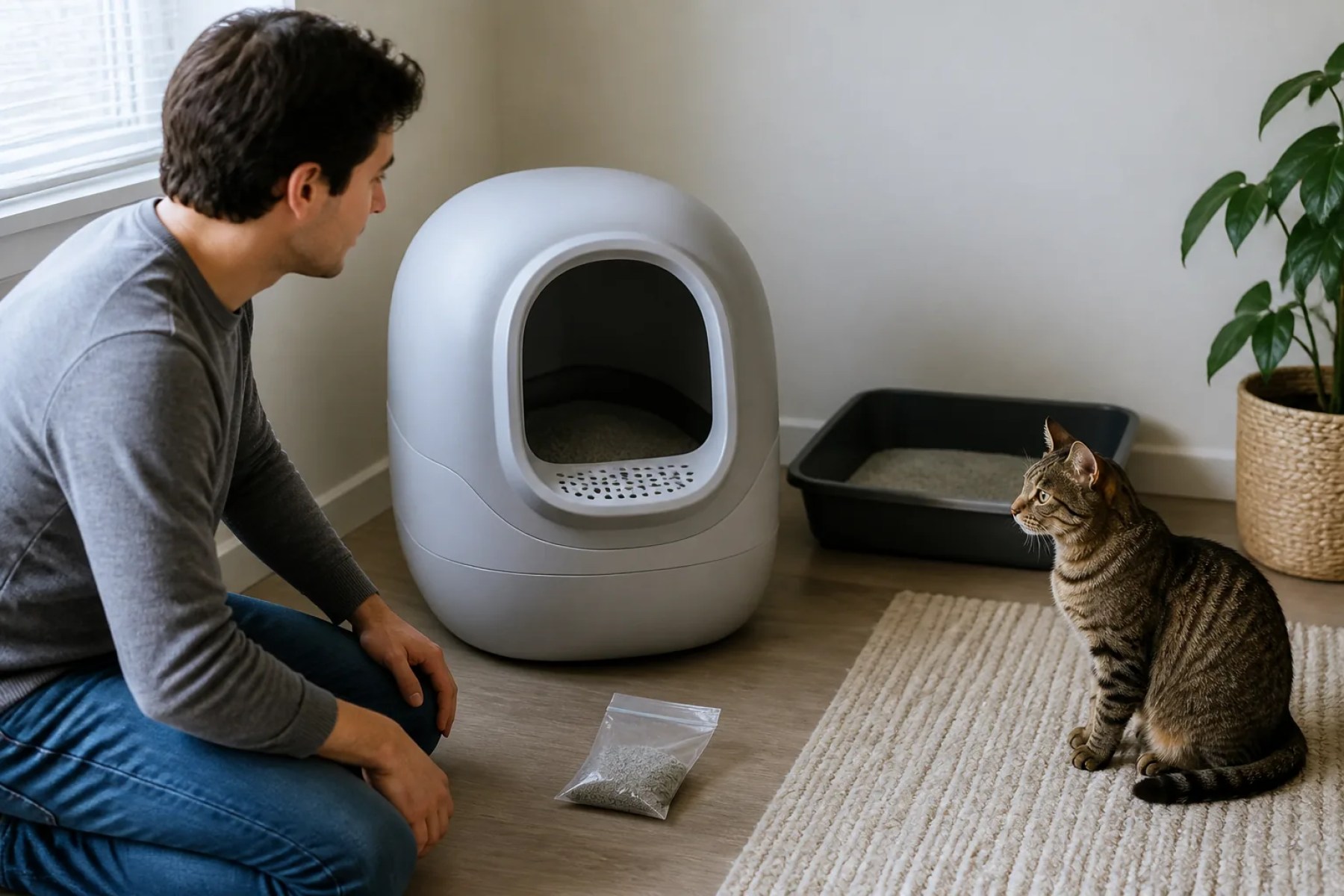
    Cat and owner evaluating a generic self-cleaning litter box
    Cat acceptance is the first buying test. AI-generated illustration.
    QUICK ANSWER

    A self-cleaning litter box is worth it when daily scooping is the main problem, your cat comfortably fits and accepts the design, and you can manage drawer emptying, deep cleaning, consumables, and troubleshooting. It is not a maintenance-free appliance.

    The honest verdict

    Convenience is real—but narrower than the marketing

    Most models detect that a cat has left, wait, then rake or rotate to move clumped waste into a drawer. That can remove a repetitive daily chore. It does not wash the litter bed, refill litter, clean sensors, remove stuck residue, or confirm that a cat is healthy.

    LIKELY WORTH IT WHENTime saved from daily scooping matters more than the purchase and upkeep cost.
    PROBABLY SKIP IT WHENYour cat dislikes the design, placement is unsuitable, or you expect zero maintenance.

    60-second decision

    Five questions before you compare models

    01 / FITCan your cat turn easily?Check usable interior—not outside dimensions.
    02 / ACCEPTANCECan you transition slowly?Keep a familiar manual box available.
    03 / PLACEIs the floor suitable?Firm, level, dry, powered, and clear.
    04 / COSTCan you fund year one?Include litter, bags, trays, filters, and parts.
    05 / CAREWill you still inspect it?Empty, clean, troubleshoot, and watch output.
    4–5 YES: reasonable candidate.   0–2 YES: a large manual box may be the more reliable purchase. This is a decision aid—not a safety rating.

    Your cat has to fit—and choose it

    Measure entry width and height, litter-bed space, step height, and turning room. Senior or mobility-limited cats may need a lower stable entry. A large cat can fit through an opening yet still lack room to dig and turn.

    Large cat checking the entry of a generic automatic litter box
    Interior space and entry access matter more than the exterior silhouette. AI-generated illustration.
    Resource rule: FelineVMA guidance says bigger is generally better and commonly recommends one litter box per cat plus one extra, in different locations. One robot does not automatically replace every box.

    Safety is a complete system

    Look for a current model-specific manual, more than one form of cat detection, cycle interruption, a delay after exit, a defined automatic-mode weight threshold, and documented behavior during a jam or sensor fault.

    Whisker says kittens below 3 lb (1.3 kg) should not use Litter-Robot 4 in automatic mode. Neakasa specifies a different threshold and Kitten Mode for its M1 Lite Plus. Never transfer one model’s number to another.

    Owner supervising a cat near a stationary automatic litter box during setup
    Introduce the unit while stationary and follow its exact manual. AI-generated illustration.
    Never test interruption by putting a cat in a cycling machine. Use only the manufacturer’s stated test procedure and supervise the transition.

    It reduces scooping—not maintenance

    WORK USUALLY REDUCED

    • Scooping after individual visits
    • Handling fresh clumps daily
    • Waste sitting exposed in the bed
    • Manual visit counting on capable models

    WORK THAT REMAINS

    • Checking completed cycles
    • Emptying and washing the drawer
    • Adding compatible litter
    • Cleaning sensors and stuck residue
    • Periodic disassembly and deep cleaning
    • Maintaining a backup box
    Automatic litter box with removable parts prepared for deep cleaning
    Inspect the disassembly process before buying—not after. AI-generated illustration.

    Calculate the full first-year cost

    The machine price is only the first layer. Include every required or realistically recurring item.

    HARDWARE
    LITTER / TRAYS
    BAGS
    FILTERS
    WARRANTY
    PARTS
    FIRST-YEAR COST = MACHINE + ACCESSORIES + CONSUMABLES + COVERAGE + LIKELY PARTS
    Official U.S. example Price shown Aug. 18, 2026 Context
    PetSafe Crystal Pro Legacy $199.99–$229.99 Crystal-tray system
    Neakasa M1 Lite Plus $332.99 sale / $499.99 regular Promotion may change
    Whisker Litter-Robot 4 $699 Current official starting price
    Whisker current range $599–$899 Several different models

    Dated market examples, not equivalent products, rankings, or hands-on recommendations. Confirm current price, return shipping, warranty, and included accessories.

    Generic automatic litter box with liners litter filters and cleaning accessories
    Consumables can change the value calculation over time. AI-generated illustration.

    Litter and placement rules can decide it

    Some systems require crystal trays; others need fast-clumping granular litter and reject pellets or non-clumping products. Verify fill line, particle guidance, and clump time. Measure the machine with its drawer open and include required wall clearance.

    Whisker documentation says a firm, level surface improves weight accuracy and carpet can reduce it. PetSafe’s original ScoopFree setup calls for a flat, dry indoor location and notes that humidity can shorten tray life.

    Health data is a clue—not a diagnosis

    Visit and weight trends may help reveal change, but shared boxes, similar cat weights, missed detection, dirty sensors, or network loss can affect records. Continue observing urine, stool, appetite, behavior, and the machine itself.

    Urgent: straining, repeated visits, vocalizing, blood, tiny urine amounts, or inability to urinate require veterinary attention. A cat—especially a male cat—who cannot pass urine needs emergency care.

    The return policy matters because the cat votes

    Read the in-home trial, return window, restocking rules, return-shipping responsibility, warranty, and parts policy. Keep the packaging until transition succeeds. Place the new and familiar boxes near each other, leave the machine powered off initially, and never force the cat inside.

    Save before shopping

    Before-you-buy checklist

    Exact model and generation identified
    Current official manual available
    Interior and entry measured
    Minimum automatic-mode weight confirmed
    Open versus enclosed preference considered
    Compatible litter rules confirmed
    Placement and drawer clearance measured
    12-month consumables calculated
    Trial, return, warranty, and parts checked
    Manual backup box retained

    Continue the litter-box setup

    Common follow-up questions

    FAQ

    Do self-cleaning litter boxes eliminate odor?

    They can reduce how long waste remains exposed, but odor still depends on litter, drawer seal, emptying frequency, cleaning, humidity, diet, and accidents outside the box.

    Can one automatic box serve multiple cats?

    Some are marketed for multiple cats, but feline guidance still recommends multiple resources—commonly one box per cat plus one extra in different locations.

    Do they work without Wi-Fi?

    Some continue saved cleaning routines while app features stop; behavior differs. Check the exact manual.

    Are they safe for kittens?

    Only within the exact model’s instructions. Minimum detectable weight and kitten modes differ. Below the threshold, disable automatic cycling and use the manufacturer-approved supervised method.

    How often do they need cleaning?

    Drawer and deep-clean intervals vary with the machine, cats, diet, litter, and environment. Inspect frequently and follow the manual. Self-cleaning never means maintenance-free.

    Research note: Pet Tech Compass did not perform hands-on testing for this article. Model details and prices were checked against official materials on August 18, 2026. Confirm the exact current manual and sales terms before buying.
    Affiliate disclosure: Pet Tech Compass may earn a commission if affiliate links are added later. Editorial conclusions are based on cat fit, documented operation, maintenance, and ownership cost.