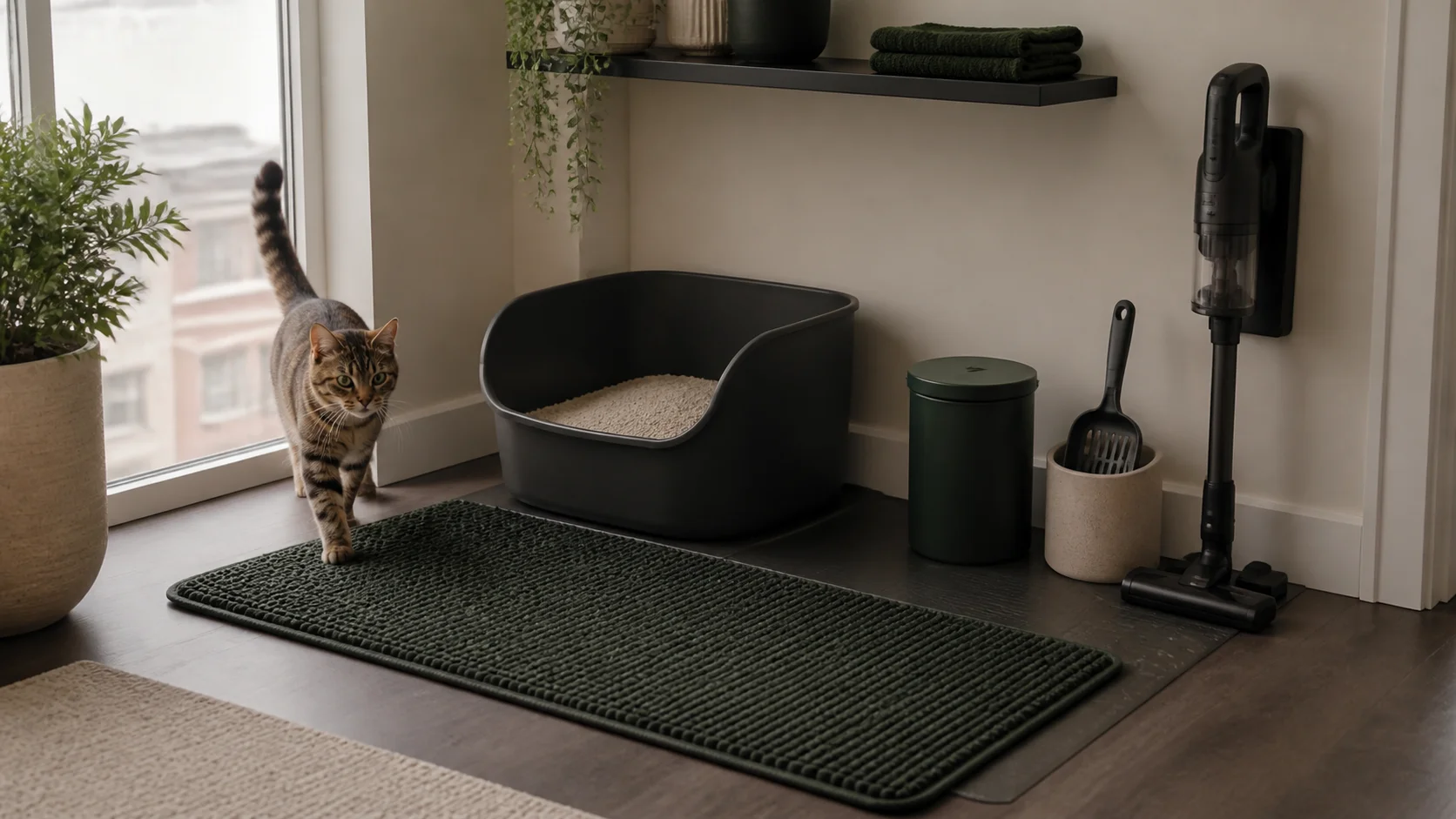
Cat home & cleaning guide
You clean the floor in the morning. By dinner, litter is back in the hallway.
Most litter mess comes from one of two problems: granules stick to the paws, or digging throws them over the box wall. This guide helps you identify which one you have—and fix it without replacing everything.

Start with a larger box, keep about 2–3 inches of litter in it, place a properly sized textured mat in the cat’s exit path, and scoop at least daily. If granules still travel through the house, test a heavier, lower-dust litter gradually. Keep your cat’s comfort and mobility ahead of a perfectly clean floor.
Tracking and scatter are not the same problem
The distinction matters. A mat can catch tracked granules, but it will not fully contain litter being launched over a low wall. A taller box may stop scatter, but it will not fix dusty litter that sticks between toes.
Find out where the litter first escapes
Before shopping, watch your cat use the box once or twice. You are looking for the first place the litter leaves the setup.
| What you see | Likely problem | Best first change |
|---|---|---|
| Litter shoots over the wall | Scatter | Larger or higher-sided box |
| Granules form a paw-print trail | Tracking | Larger mat and a different litter texture |
| Litter collects near one corner | Exit-path problem | Turn the box or reposition the mat |
| Damp clumps stick to paws | Cleanliness or depth | Scoop more often and check fill depth |
| Long fur carries litter | Fur-related tracking | Safe grooming plus a gentler, heavier litter |
| The mess suddenly gets much worse | Behavior, mobility, or health change | Check your cat and contact a vet if other signs appear |
Why cat litter travels so far
Fine, lightweight particles cling easily
Small granules can settle between toe pads and into fur. Lightweight litter is convenient to carry in a bag, but that does not always mean it will stay in the box. Larger, heavier granules are generally less likely to hitch a ride, although every cat has texture preferences.
Digging and burying are normal
Cats naturally scratch and dig before or after eliminating. Some make two polite swipes. Others excavate as if the bathroom floor contains buried treasure. Give your cat room to dig and use a setup that catches the litter it kicks out.
The box may be too small
When a cat cannot turn and dig comfortably, paws are more likely to hit the sides or send litter over an edge. A cramped box can also make the cat exit abruptly instead of stepping out calmly.
9 ways to reduce tracking and scatter
Map the exit path
Look at the direction your cat naturally leaves the box. Place the longest section of mat along that route. If the cat always exits to the left, a perfectly centered mat may leave half the useful surface in the wrong place.
Use a mat large enough for several steps
A practical mat should extend beyond the entry, not merely sit under the front lip. Look for a comfortable texture, non-slip backing, low edges, and a surface you can empty without spilling the captured litter again. If your cat jumps over or avoids it, the mat is not helping—regardless of its reviews.
- Several paw contacts
- Comfortable texture
- Non-slip, waterproof backing
- Easy emptying and cleaning
Upgrade to a larger box before a fancier one
A larger footprint gives your cat more room to turn, dig, and choose a clean spot. High sides can help enthusiastic diggers, but kittens, senior cats, and cats with arthritis may still need a low doorway.

- Room to turn comfortably
- Three walls that contain scatter
- A low, accessible doorway
- Easy-to-clean interior corners
Keep litter at a sensible depth
An overfilled box makes it easier for granules to spill, while too little litter may leave energetic diggers scraping the bottom. Many cats do well with roughly 2–3 inches as a starting point, but follow the manufacturer’s directions and observe your cat.
Then adjust for the product and your cat.
More material can spill over the edge.
Scoop at least daily
Regular scooping is not only about odor. It preserves clean, dry places for your cat to put its paws. In a multi-cat home or with a heavily used box, once a day may not be enough. Check whether damp litter collects near the usual entrance.
Test a heavier, lower-dust litter gradually
If you see granules between the toes or a trail far beyond the mat, the litter itself deserves attention. Larger or heavier particles may track less, but “low tracking” on a package is not a guarantee.

- Keep at least one familiar box available.
- Introduce the new litter in a second box, or mix a small amount only if the maker permits it.
- Watch which box your cat chooses and whether bathroom habits remain normal.
- Increase the new litter only if the cat accepts it.
Create a litter landing zone
When space allows, place the box so your cat cannot step directly onto carpet, a bed, or a long hallway. Combine the box, oversized mat, washable floor protector, sealed waste container, and a compact cleaning tool in one accessible area.

Groom paw and leg fur when appropriate
Long fur around the feet can carry fine litter. Regular brushing and basic coat maintenance may help. Do not cut close to paw pads with household scissors. Ask a veterinarian or experienced cat groomer when trimming is needed.
Clean strategically
A small cordless vacuum near the box makes frequent 30-second cleanups realistic. A robot vacuum can collect what escapes, but it should be the final layer—not the whole solution. Confirm that there are no pet accidents before any scheduled robot-vacuum run.
- Strong hard-floor pickup
- A brush that does not scatter granules
- Easy filter and bin cleaning
- Reliable accident avoidance
Save this
9-point litter-tracking checklist
CAT COMFORT COMES FIRST. Change one variable at a time so you know what helped—and what your cat disliked.
What usually does not work
Buying the smallest “anti-tracking” mat
A mat cannot catch paws that never touch it. Coverage and placement usually matter more than a trendy surface pattern.
Filling the box to the top
Extra litter gives energetic digging more material to throw. Maintain a consistent depth instead.
Switching litter overnight
A clean floor is not worth a cat refusing the box. Make changes gradually and preserve a familiar option.
Hiding the box in an inconvenient place
Moving the box to a remote corner may clean one room while creating a much larger bathroom problem. Accessibility, safety, and willingness to use the box come first.
Expecting an automatic litter box to solve everything
Automatic boxes can reduce scooping labor, but their entry design, litter compatibility, cycle timing, and footprint vary. Some still track litter, and some cats need a careful introduction.
A low-cost order of operations
- Observe whether the problem is tracking or scatter.
- Reposition the existing mat and box.
- Adjust litter depth and scooping frequency.
- Add a larger mat or washable floor protector.
- Try a larger or higher-sided box if litter is kicked out.
- Test a heavier, lower-dust litter gradually.
- Consider a vacuum or a different system only after controlling the source.
When the mess may be more than cleaning
Contact your veterinarian if a sudden change appears with straining, repeated trips, crying, blood, urination outside the box, diarrhea, difficulty climbing, or changes in thirst, appetite, urine volume, or grooming. Inability to urinate—especially in a male cat—is an emergency.
The bottom line
Cat litter gets everywhere because particles either stick to the cat or get thrown out during normal digging. Start by watching where the first granules escape. Then improve the exit path, mat coverage, box size, litter depth, and cleaning routine before replacing the entire system.
You may never eliminate every grain. But a setup that respects your cat’s preferences can keep most of the litter near the box—and out of your bed.
Frequently asked questions
What type of cat litter tracks the least?
Larger, heavier granules and pellet-style litters often travel less than very fine, lightweight particles. Results vary with paw shape, fur, box design, and digging behavior. Introduce new litter gradually.
Do litter mats actually work?
They can if the cat takes several steps across the mat and tolerates its texture. Size, placement, grip, and ease of cleaning matter more than appearance.
Are top-entry litter boxes better for tracking?
They can contain scatter and make a cat step across the lid, but they are not suitable for every cat. Kittens, senior cats, large cats, and cats with mobility problems may struggle with top entry.
Why is my cat suddenly kicking out more litter?
The box may be too small or dirty, the litter may have changed, or your cat may be stressed or uncomfortable. Sudden changes with pain, straining, frequent trips, or accidents warrant veterinary advice.
Will a robot vacuum solve litter tracking?
It can collect escaped granules, but it does not correct the source. Fix the box, litter, and exit path first, then use a robot vacuum as a maintenance layer.
Sources and editorial review
- PetMD: Best Cat Litters and Tracking Considerations
- PetMD: Why Cats Kick Litter
- Purina: How to Stop Litter Tracking
- Purina: Litter Box Type Comparison
This guide provides general educational information and does not replace veterinary diagnosis or treatment.