
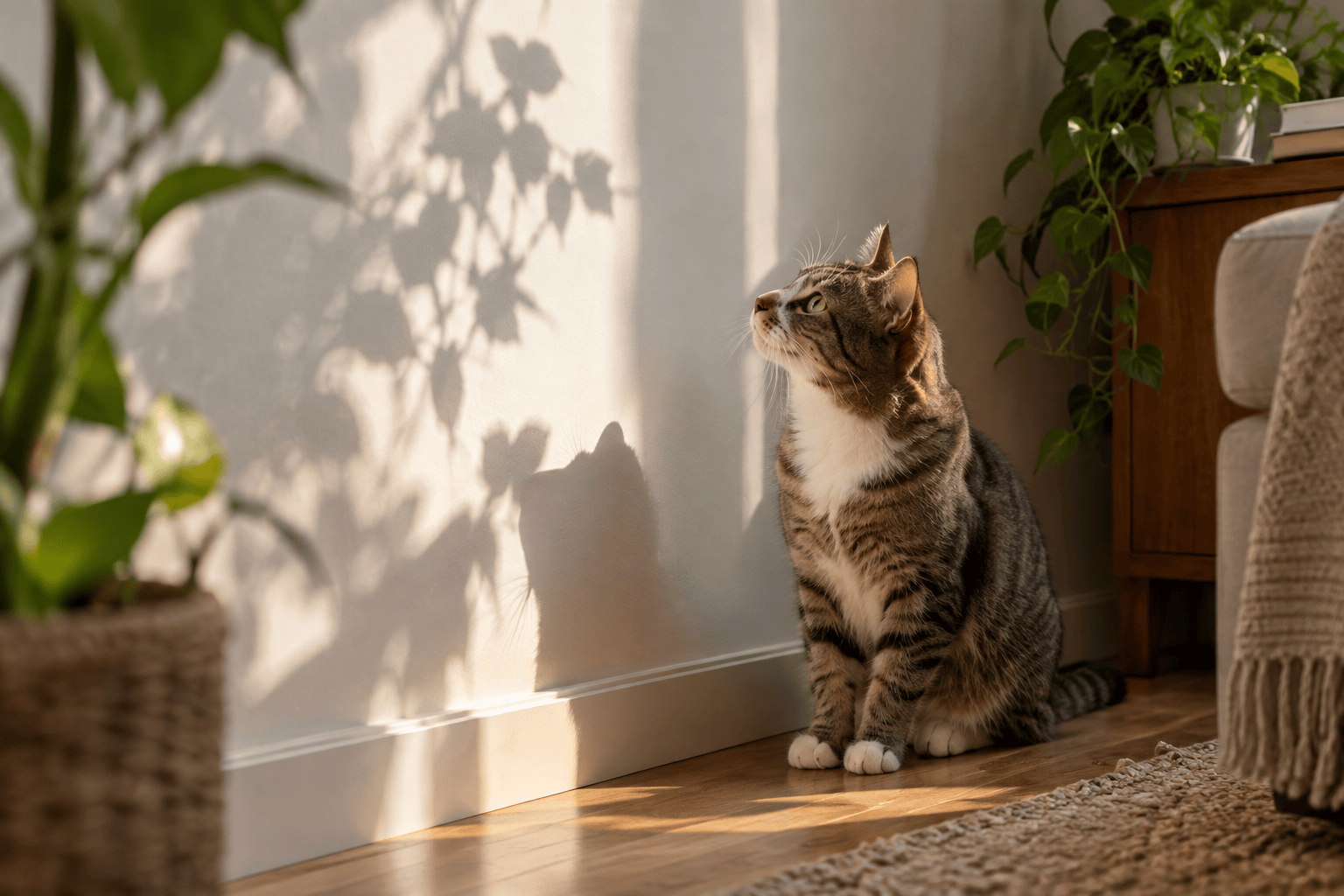
Your cat stops halfway across the room and fixes their eyes on a blank wall. You look. Nothing. They keep looking. Is this a cat thing, or a call-the-vet thing?
Usually, start with the boring explanation: the wall may not be as empty to your cat as it is to you. A small insect, shifting light, or a sound from the other side can hold their attention. VCA Animal Hospitals explains that occasional staring can be harmless. What matters more is whether this is new, prolonged, and accompanied by other changes.
1. Check what might be catching their eye
Look at the exact spot from your cat’s height. A tiny fly or moving speck may be easy to miss from where you stand. If your cat’s eyes follow it, their ears stay alert, and they eventually wander off, you may simply have caught them on bug patrol.

Next, stand still and listen. Pipes, a neighbor, or an animal outside can produce sounds your cat notices first. You do not need to open the wall or assume something is living inside it; just note whether the behavior happens at the same spot or time.

Finally, watch the light for a minute. Reflections from a phone, passing car, or window can move across paint so briefly that you miss them. Do not shine a laser at your cat or use one to test their reaction. A normal toy is a calmer way to see whether they can shift attention.
2. Watch the cat, not only the wall
The most helpful question is not, “How long is too long?” There is no reliable at-home timer that turns staring into a diagnosis. Ask instead: Does your cat still act like themselves afterward?
Are they walking normally, finding their bowl, responding to familiar activity, eating, and using the litter box as usual? Does this happen once, or does it keep recurring? An occasional focused look from an otherwise normal cat is a different situation from an older cat who appears lost in a familiar room.

Offer a familiar wand toy at a comfortable distance. This is not a medical test and a cat may simply choose not to play. But it gives you another ordinary observation: are they able to disengage and carry on, or do they seem confused and unlike themselves?
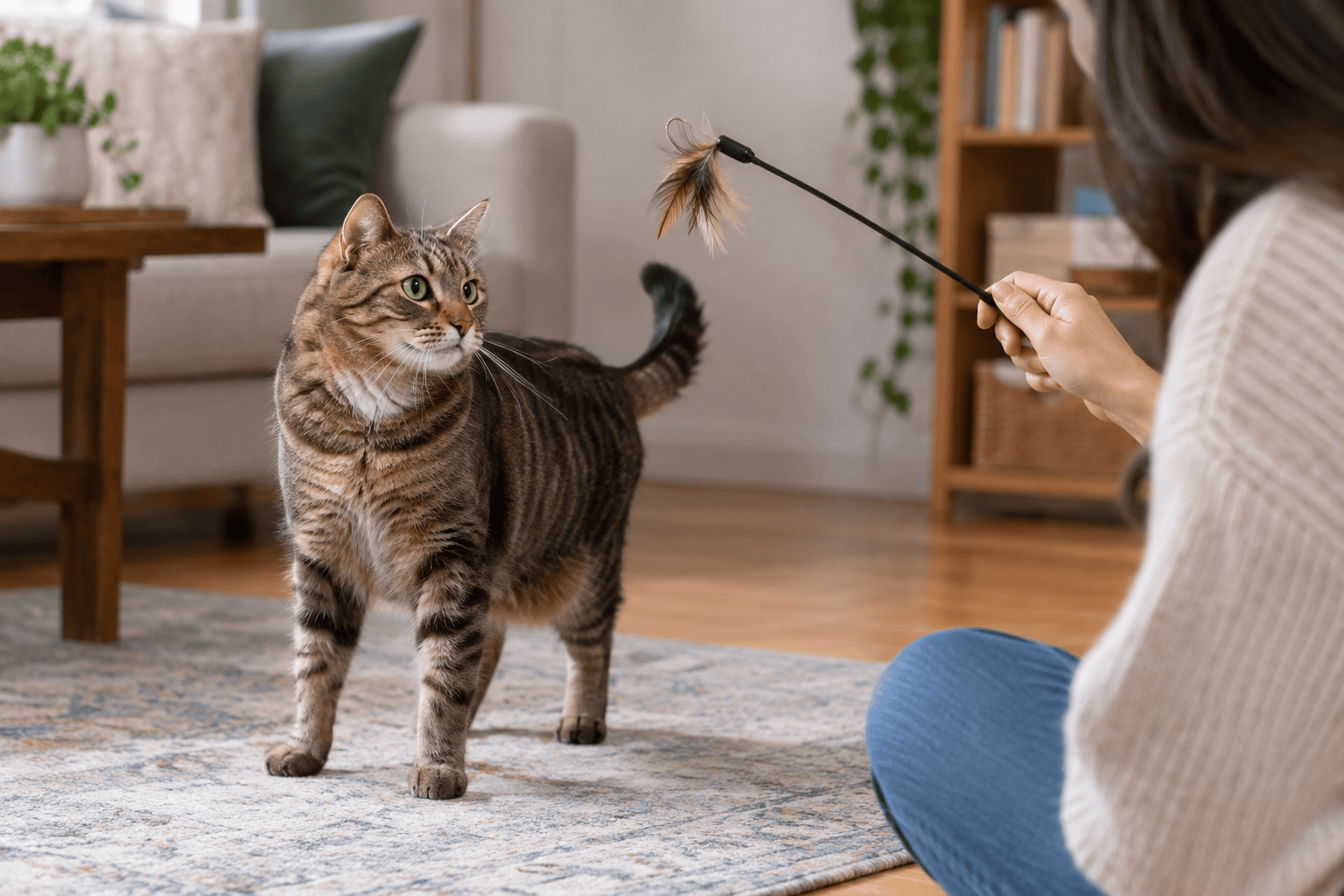
If the moment happens again, take a short video without crowding them. Include the whole body and a little of the room, not just a close-up of the face. Write down when it happened, how long it seemed to last, and what your cat did afterward. That gives your veterinarian something more useful than “they were acting weird.”

3. Know which changes matter
Blank staring in an older cat can occur alongside disorientation, changed sleep, night vocalizing, loss of interest in food or play, or litter-box changes. Cornell’s feline health guidance lists long periods of staring at walls among possible signs of cognitive dysfunction. It also stresses that other medical conditions can look similar. Do not label this dementia from one behavior.

Vision changes deserve attention too. If your cat suddenly bumps into furniture, freezes in unfamiliar spots, seems unable to navigate, or has pupils that look different from each other, contact a veterinarian promptly. Cornell notes that changes in eye appearance and apparent vision should be assessed early. High blood pressure is one possible cause in cats, not something you can confirm at home.
Seek urgent veterinary help now if the staring comes with a seizure, collapse, severe disorientation, difficulty walking, or sudden apparent vision loss. Cornell describes neurologic and visual changes that can accompany serious illness; these signs should not wait for an article’s checklist.
4. Pick the next step
If your cat noticed a visible insect, light, or noise and is otherwise completely normal, observe for now. A vet visit is not automatically required for one brief stare.
If the staring is new, repeated, unusually long, or paired with changes in appetite, sleep, mobility, litter-box habits, or interaction, arrange a veterinary appointment. Bring your video and notes. If you are unsure how quickly to be seen, call your clinic and describe the other signs rather than asking them to interpret staring alone.

For sudden vision or neurologic signs, use urgent care rather than waiting to see whether the wall-staring stops. Keep your cat in a quiet, familiar space while you arrange help; do not give medication or attempt a home diagnosis.

Quick questions
Is my cat seeing something I cannot?
Possibly. Small insects, subtle movement, and sounds are ordinary explanations. You cannot tell which one from staring alone. Check the environment and then watch your cat’s overall behavior.
Does staring at a wall mean my cat has dementia?
No. Cornell lists prolonged blank staring as one possible sign in older cats, but diagnosis requires ruling out other causes. A brief glance at a wall is not the same pattern.
Should I try to distract my cat?
You can offer a familiar toy normally. Do not startle, restrain, or repeatedly test them. If they seem disoriented or unwell, call your veterinarian instead.
The short version: Notice the scene, then notice the cat. A curious, otherwise normal cat may just have found something you missed. A new pattern with confusion, vision trouble, or other changes deserves a veterinary conversation, and sudden neurologic or vision signs deserve urgent care.
Leave a Reply