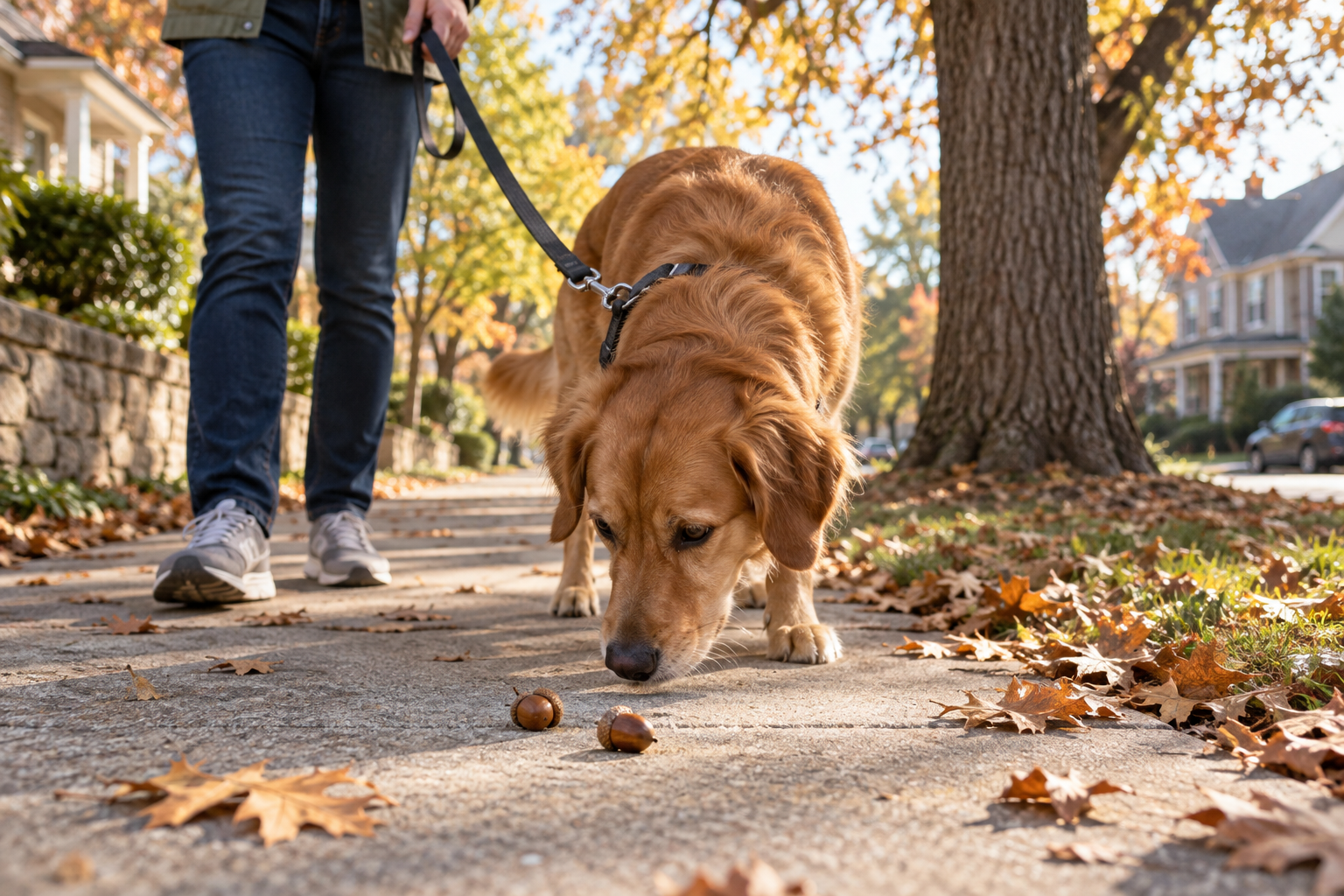
You look down on a fall walk just as your dog crunches something beneath an oak tree. Was that an acorn? Before you search for a dose or a home remedy, move your dog away from the fallen nuts and call your veterinarian or a pet poison service if you think one was swallowed.
The short answer: Acorns are not a dog treat. They can upset a dog's stomach, and a whole acorn or shell may be a choking or blockage concern, especially for a small dog. The risk depends on what was eaten, how much, your dog's size, and whether symptoms are present. The American Kennel Club's veterinarian-reviewed guidance says to contact a veterinarian promptly after suspected ingestion. Do not try to make your dog vomit unless a veterinary professional specifically instructs you to do so.
Jump to the answer you need
If your dog only sniffed or chewed it
First, lead your dog to a clear patch of sidewalk or grass. Look for the acorn or pieces on the ground. If you can safely retrieve a piece without putting fingers in a resisting dog's mouth, keep it or photograph it. A dog that merely sniffed an acorn is not the same as a dog that swallowed one. But if pieces are missing and you cannot tell what happened, treat it as a possible ingestion when you call for advice.

Do not spend several minutes arguing with your dog over an object while more acorns are underfoot. Create distance first. If your dog is choking, struggling to breathe, collapsing, or unresponsive, go to an emergency veterinary clinic immediately. ASPCA emergency guidance treats those as reasons for immediate care.
If you saw an acorn go down
Call your veterinarian now, even if your dog looks completely normal. If the clinic is closed, use an emergency veterinarian or the ASPCA Animal Poison Control Center at (888) 426-4435 in the United States; a consultation fee may apply. A professional can decide whether observation at home, an examination, or another step is appropriate. ASPCA advises asking for help before signs worsen after a potentially hazardous ingestion.

There is no reliable online rule that says one acorn is always harmless or always an emergency. A small dog and a large dog can face different physical risks from the same object. The shell, fragments, and number swallowed matter too. Ask the clinician to assess your particular dog rather than using a generic acorn count.
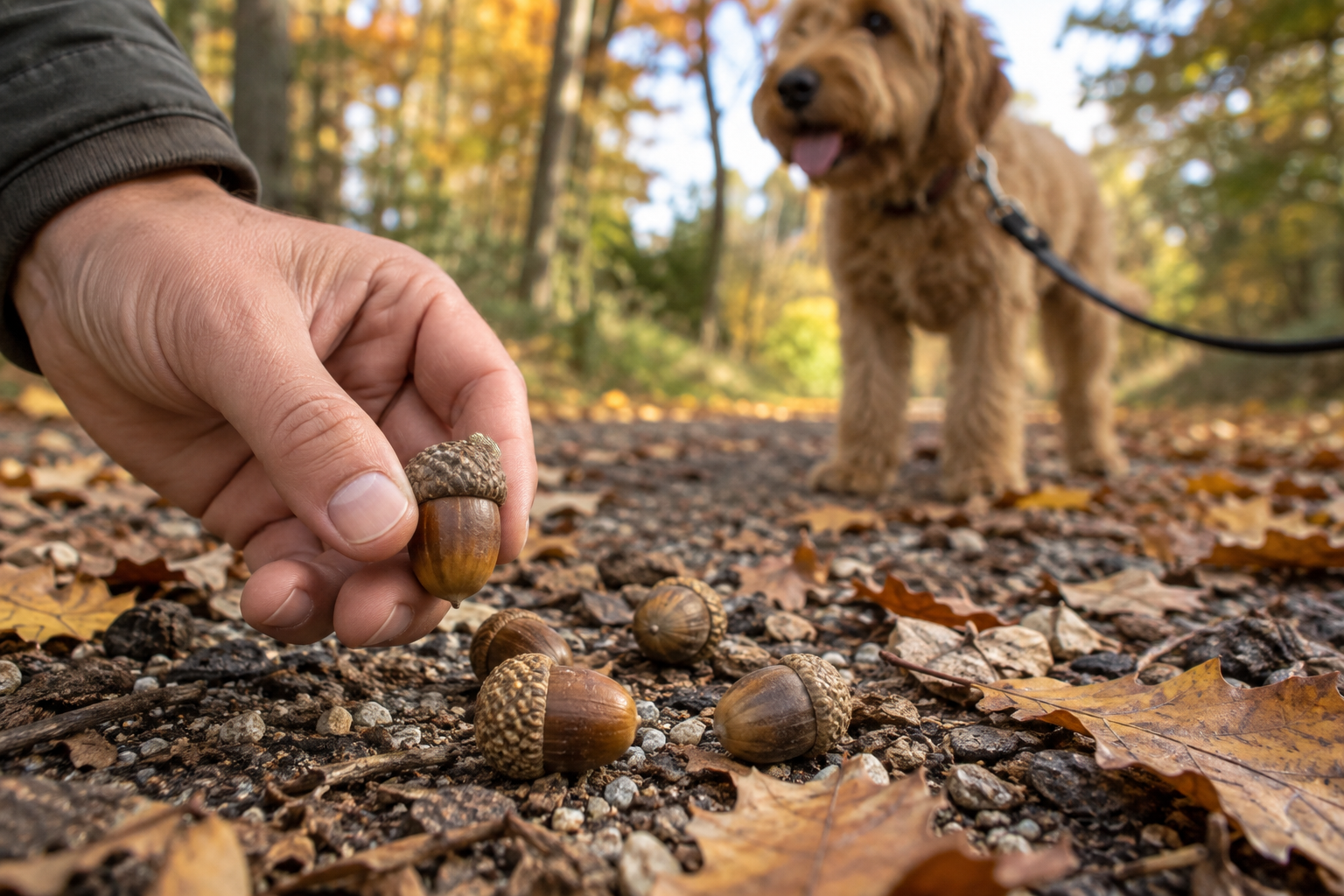
Do not induce vomiting on your own. ASPCA Poison Control warns that at-home attempts can cause harm and that the decision belongs to a professional who knows the exposure and the dog. Do not give salt, oil, medication, or a large meal as a supposed antidote.
What to tell the vet
Have these details ready, even if some answers are estimates:
- Your dog's approximate weight and age.
- The time you saw the chew or swallow.
- Whether the acorn was whole, broken, or only a shell; how many might be missing.
- Any current signs, including coughing, gagging, vomiting, diarrhea, belly discomfort, unusual tiredness, or loss of appetite.
- Any relevant medical conditions and medicines.
If your dog is calm and allows it, you can look at the front of the mouth for a loose piece. Do not force the jaws open, sweep blindly with your fingers, or delay urgent care for a perfect inspection. A photo of the acorns on the ground can be more useful than a guess about their size.

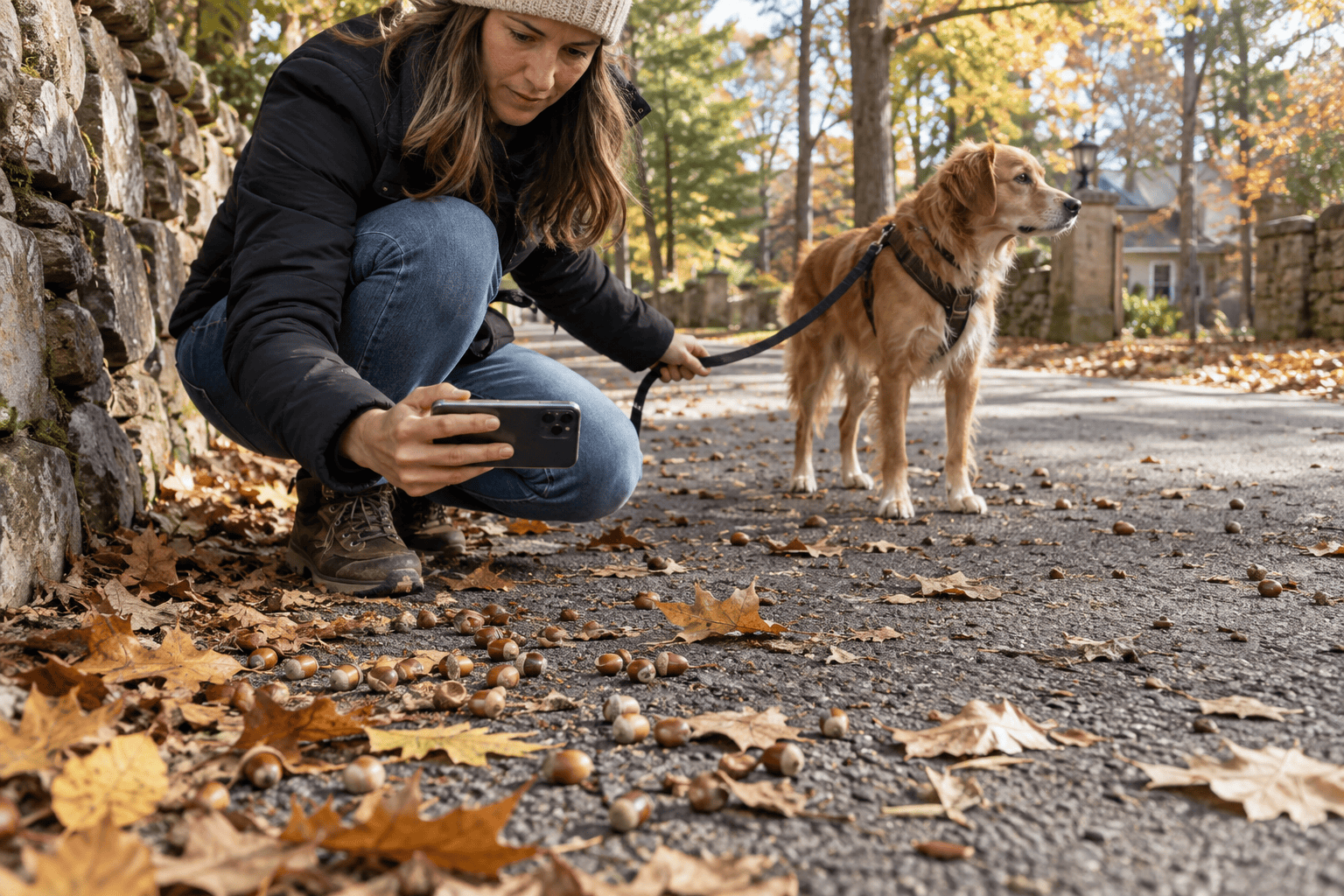
The veterinarian may ask about symptoms and decide whether your dog needs an examination or imaging for a suspected swallowed object. AKC describes gastrointestinal upset and possible blockage as separate concerns. Neither can be ruled in or out from a normal-looking walk home.

Symptoms that change the urgency
Tell your veterinarian promptly if your dog vomits, has diarrhea, seems painful in the abdomen, refuses food, or becomes unusually quiet after the incident. The AKC acorn guide lists these among possible signs. Repeated vomiting, a swollen or painful belly, inability to keep water down, or worsening weakness calls for urgent veterinary assessment. Breathing trouble, collapse, seizure, or unresponsiveness requires emergency care now.

Do not assume that no symptoms in the first few minutes means the acorn passed safely. At the same time, do not diagnose poisoning from one vague sign. Let the professional who takes your call set the observation window and tell you what would trigger a return call.
How to avoid another acorn
For the rest of the walk, choose a clearer route and keep enough leash control to guide your dog past clusters of fallen nuts. At home, pick up acorns in the area your dog uses most often. Fallen tree nuts can also become moldy; do not let your dog forage through piles of damp leaves and nuts. AKC notes this additional fall hazard.
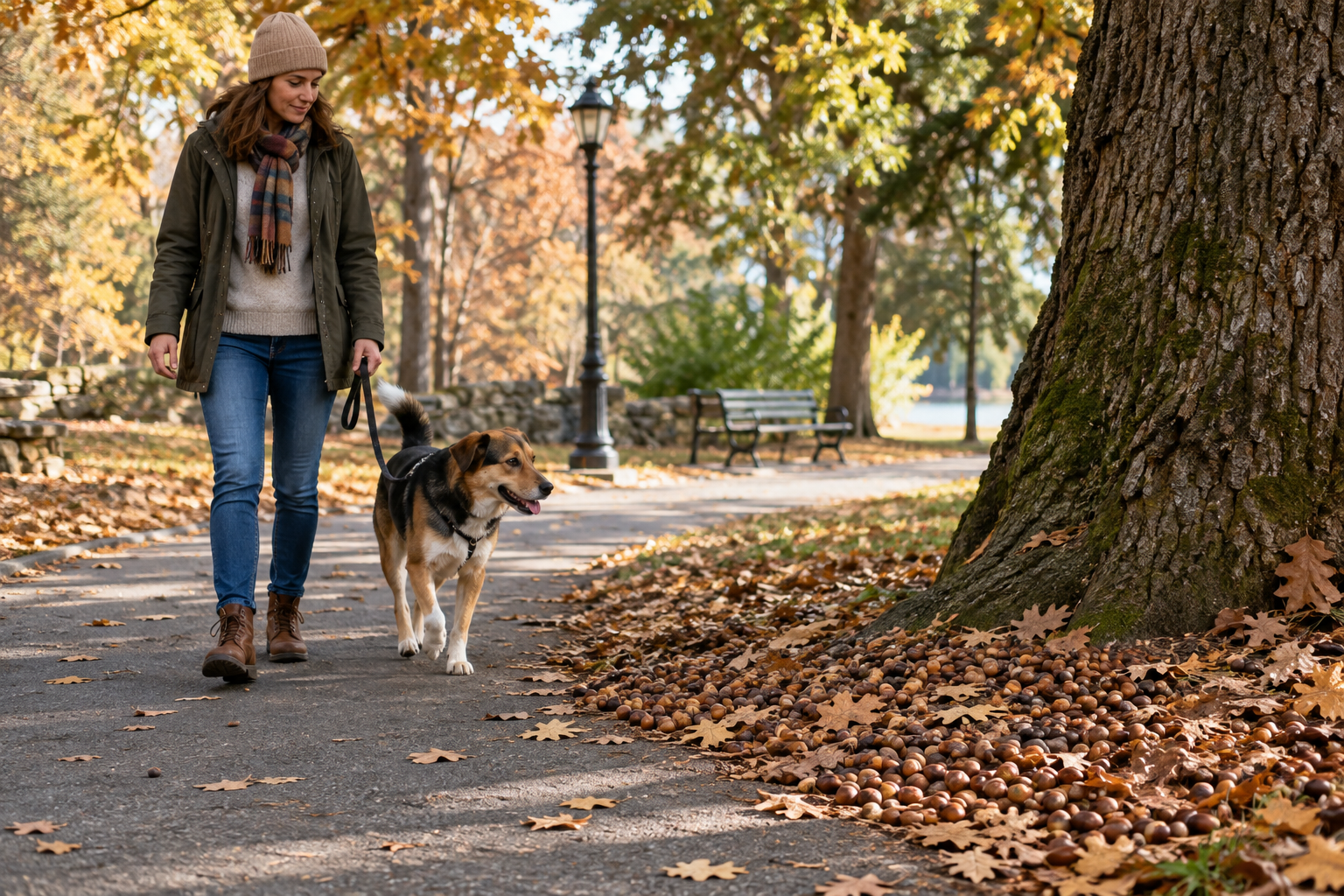
Practice a cheerful "leave it" with ordinary, safe training objects away from the acorn patch. Reward the dog for turning toward you. This is prevention, not a substitute for calling the vet after a suspected swallow. Avoid punishing the dog for picking something up; that can turn a brief mistake into a race to swallow it.

Quick questions
My dog spat it out. Do I still need to call? If you clearly recovered a whole acorn and your dog did not swallow any, the exposure may be different. If you are unsure about missing pieces or your dog shows signs, call.
Can I wait to see if my dog vomits? Do not use vomiting as the decision point. Call after suspected ingestion and follow the individualized advice you receive.
Is an acorn the same as acorn squash? No. An acorn is an oak tree seed; acorn squash is a different plant and a different food question.
Sources reviewed
- American Kennel Club: Can Dogs Eat Acorns and Other Tree Nuts?
- ASPCA: What to Expect When Calling ASPCA Poison Control
- ASPCA: My Pet Ate Something! When Should I Seek Help?
- ASPCA: Is It Ever Safe to Induce Vomiting?
- ASPCA: What to Do if Your Pet Is Poisoned
Research note: This is a source-based safety guide, not a veterinary diagnosis. It does not set a safe acorn quantity or prescribe treatment.
Affiliate disclosure: No product link or affiliate recommendation appears in this article.
Leave a Reply