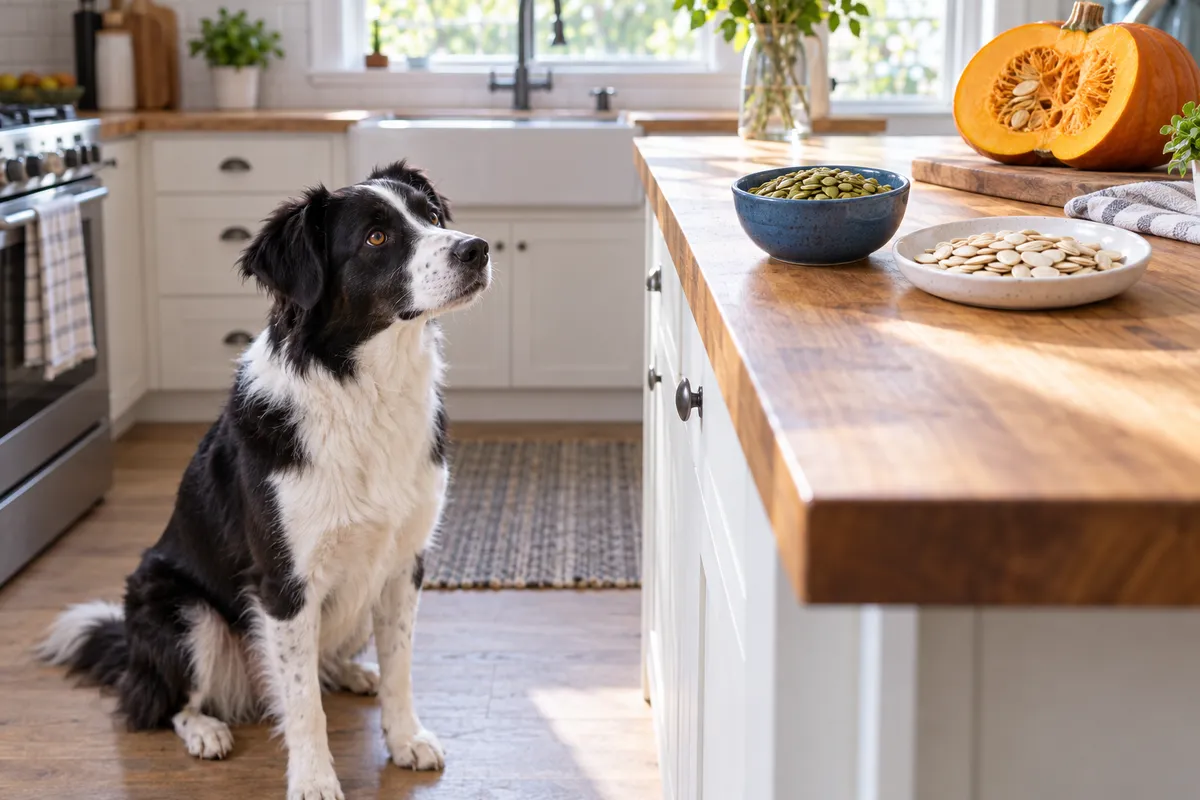
You open a pumpkin, put the seeds in a bowl, and turn around to find your dog investigating the counter. Or you are halfway through a bag of roasted seeds when that familiar face appears beside your knee.
Dogs can eat some plain pumpkin seeds, but whole seeds in their shells are not the easiest choice to offer. PetMD says pumpkin seeds can be eaten with or without shells and recommends roasting and grinding them to make chewing and swallowing easier. That is not permission to share a salted snack mix or let a small dog gulp a handful. Read the veterinary-reviewed guidance.
Already eaten something? If your dog is struggling to breathe, collapsing, or having seizures, seek emergency veterinary care now. Suspected xylitol or chocolate exposure also needs an immediate veterinary call; do not wait for symptoms. Otherwise, start by identifying exactly what was eaten, not just the word "pumpkin."
First, which kind of seed is it?
The pale, flat seeds scooped from a pumpkin and the little green kernels in a grocery bag look different. Both may be sold as pumpkin seeds. A bowl of seeds from carving, a plain bag of pepitas, and a spicy roasted snack are three different situations, even if the front of every package says pumpkin.

For a planned treat, decide on the preparation before the dog arrives. Do not let a hopeful face turn a handful of people snacks into an unplanned dietary change.

Then check the coating. Salt, oil, seasoning, a sweet coating, and ingredients in a mixed snack all change the question. Do not assume a product made for people is suitable because its main ingredient is a seed. The ASPCA's people-food guidance flags excess salt, fatty foods, onion and garlic, chocolate, and xylitol among food hazards. Risk depends on the ingredient and the amount; a seasoned seed is not automatically a poisoning diagnosis.
If you cannot find an ingredient list, do not share it. Your dog does not need this particular snack.
Your dog already ate some. What now?
Put the bowl or bag away and keep your dog from eating more. Save the package, or take a clear photo of its ingredients. If the food came from pumpkin carving, note whether seeds, stringy pulp, rind, or something else was in the bowl. Those details give your clinic a better starting point than "my dog ate pumpkin."

When you call, have these details ready:
- Your dog's approximate weight, age, and any important health conditions.
- What the food was, including seasoning, coatings, and other ingredients.
- Roughly how much is missing. Say you do not know if you do not know.
- When it happened, and whether your dog swallowed packaging too.
- What your dog is doing now: breathing, alertness, vomiting, appetite, and any signs of discomfort.

A known, small amount of plain seeds in an otherwise normal adult dog is different from an unknown quantity in a tiny dog or a whole bag with seasoning. If the amount is substantial or uncertain, your dog is very small, has a relevant medical condition, or has any symptoms, call your veterinarian for individual advice. There is no universal seed count in this article that clears every dog for home observation.
Call promptly for repeated vomiting, loss of appetite, unusual lethargy, abdominal pain, or straining with little stool. These signs do not prove the seeds caused a blockage. VCA's foreign-body guidance explains why similar signs need veterinary assessment after an ingestion, especially if packaging or other objects were swallowed.
If the label includes xylitol, also called birch sugar or wood sugar, contact a vet or emergency clinic immediately. The FDA warns that signs can be delayed, so looking normal does not rule out danger. Suspected chocolate ingestion needs an immediate call too, as the FDA explains in its holiday food guidance.
Do not try to make your dog vomit or give salt, oil, peroxide, or another home remedy unless a veterinary professional specifically directs you. The ASPCA explains why home vomiting attempts can be dangerous. In the United States, ASPCA Poison Control is available at 888-426-4435; a consultation fee may apply. Outside the U.S., use your local emergency veterinary service.
If you want to offer seeds, keep it simple
Start with the boring version: plain seeds, no snack coating. For this guide, removing the shells before the recommended roasting and grinding is a conservative editorial choice, not a claim that intact shells are toxic. Let the preparation cool before offering it.

The dishes shown in these illustrations are not serving-size recommendations.
Grinding is about making the food easier to manage, not turning it into medicine. Avoid leaving large hard pieces in the mixture, and supervise any feeding. If your dog has swallowing difficulties, a prescription diet, food sensitivities, or a history that makes dietary changes risky, ask your veterinarian before adding anything new.

Keep it an occasional extra rather than a new meal. Your dog's regular, complete food remains the main diet. There is no need to add seeds just because a post calls them a superfood. If you want a specific serving amount for your dog, ask your clinic; body size alone is not the only consideration.
Do not use pumpkin seeds in place of parasite testing or prescribed deworming. The AKC's deworming guidance describes veterinary testing and treatment plans. A kitchen ingredient is not an equivalent treatment plan.

Pumpkin seeds are not pumpkin puree
If your real question is about loose stool, do not substitute a handful of seeds for advice about pumpkin flesh. Plain cooked pumpkin, canned puree, seeds, and pumpkin pie filling are different foods. VCA's treat guidance distinguishes cooked pumpkin from pie filling. The AKC's diarrhea guide says the cause of diarrhea matters and serious or persistent signs need a veterinarian, not a pantry experiment.

The same goes for pumpkin spice. It refers to a spice blend and is not another name for plain pumpkin. The AKC's pumpkin-spice guidance advises against sharing spiced foods and drinks; their other ingredients can be a bigger problem than the pumpkin theme.
The easiest household rule is to keep the carving bowl and people snacks out of reach. If you decide to offer a treat, prepare it separately. That way you are not trying to work out what your dog swallowed while scraping a tray into the sink.

Quick questions
Are pumpkin seed shells poisonous to dogs?
Shells are not established as a poison in the guidance reviewed here. That does not settle an accidental ingestion: describe the food, amount, and symptoms to your clinic if you are unsure.
Can a small dog have whole pumpkin seeds?
Do not use a generic "yes" as an individual safety clearance. If you want to add a new treat to a small dog's diet, ask your clinic about a suitable preparation and amount.
What about salted or flavored seeds?
Do not deliberately share them. Check every ingredient after an accidental ingestion and ask your clinic about the amount involved. Suspected xylitol or chocolate exposure calls for immediate advice even if your dog looks fine.
Do I need to give my dog pumpkin seeds?
No. Skipping them is a reasonable answer. A complete diet and an existing well-tolerated treat are enough; there is no requirement to add an autumn ingredient.
The useful distinction: a plain, carefully prepared optional treat is not the same as a whole bowl of carving scraps or a flavored snack bag. Before sharing, check the food. After an accidental ingestion, check the food and the dog, then get help when the details or symptoms call for it.
Related guides
If the food came from a walk rather than the kitchen, use our dog ate an acorn guide; an oak seed is not interchangeable with an edible pumpkin seed. If the problem is the hopeful face beside your dinner, our guide to staring and begging at meals covers the behavior rather than ingredient safety.
Research note
Reviewed September 27, 2026. This is a research-based reader guide, not a veterinary diagnosis, a product test, or a veterinarian-authored treatment plan. Individual advice takes priority. All images are generated editorial illustrations, not photographs of a clinical case. No affiliate product links are included in this article; see our editorial policy and affiliate disclosure.
Leave a Reply