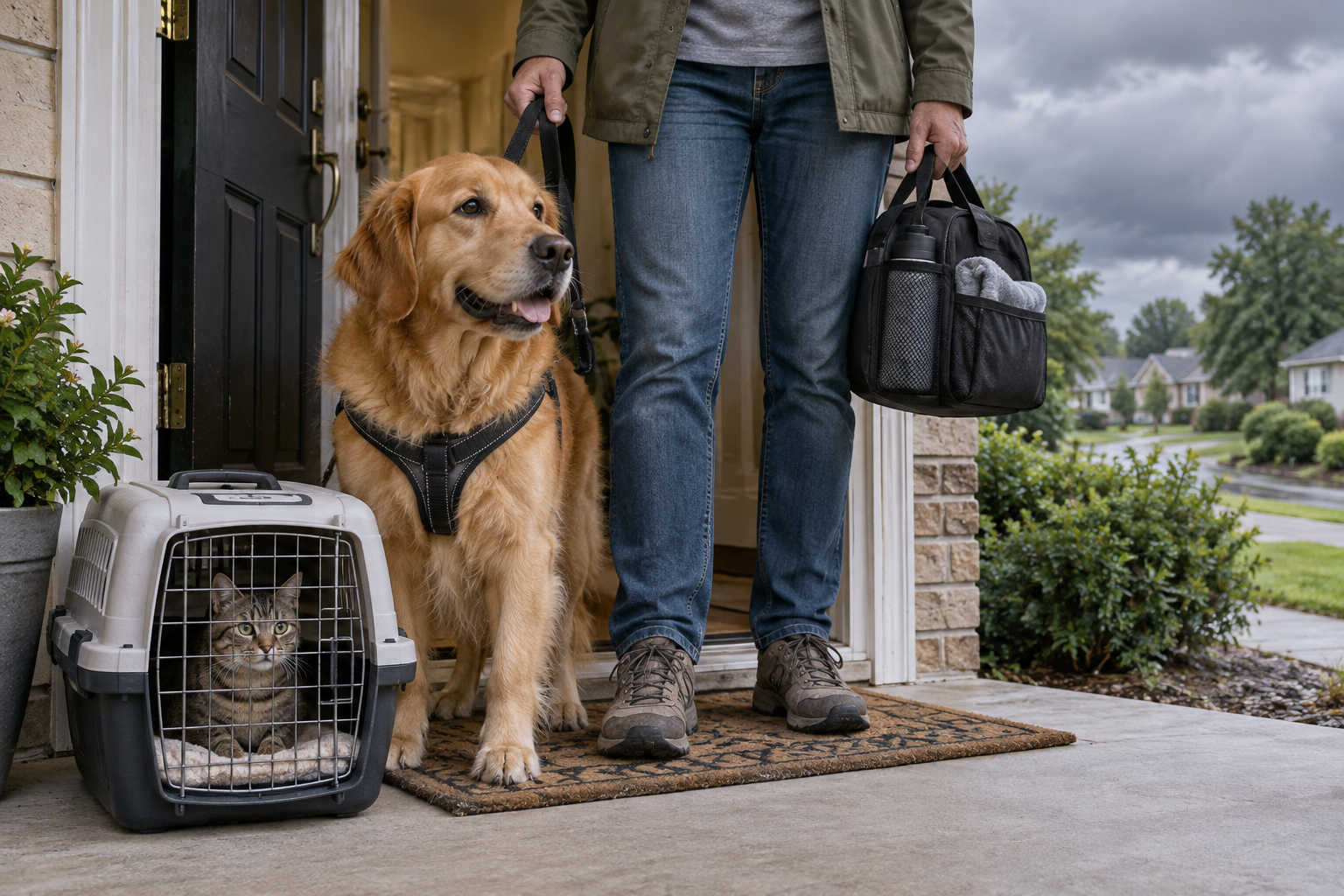
Tag: dog safety

  • Can You Bring Your Pet to a Hurricane Shelter? What to Check Before You Leave

    Can You Bring Your Pet to a Hurricane Shelter? What to Check Before You Leave

    The storm alert is on your phone. Your dog’s leash is by the door. The cat, somehow, has disappeared under the bed. Then comes the question that can stall the whole departure: Will the shelter take them?

    Maybe. Some emergency shelters can accommodate pets, sometimes in a separate area or through an animal-welfare partner. Others cannot. Do not drive to an unconfirmed address assuming your dog or cat can come inside. Check the current local shelter arrangement, keep a second destination ready, and follow evacuation instructions from local officials. Service animals are treated differently from pets.

    This is a planning guide, not a live shelter directory or a storm forecast. If authorities tell you to evacuate, follow their instructions rather than waiting for an online checklist to feel complete.

    If you may need to leave soon: Put every pet in a secure carrier or on a leash; take medications, food, water and records; call your local emergency management office or the listed shelter to confirm its animal arrangements; and have a pet-friendly hotel, friend or boarding option outside the affected area as backup. Never leave a pet tied outside a shelter.

    Jump to what you need

    Can pets come to an emergency shelter?

    There is no single national yes-or-no answer for household pets. The arrangement can change by location, building and incident. The American Red Cross says its shelters work with animal rescue groups in many communities; when possible, domestic pets may be accommodated, but they may need to stay in a different location. Service animals are welcome in Red Cross emergency shelters and are not treated as pets.

    The CDC also cautions that many evacuation centers do not admit pets. Its advice is practical: identify a place for your animals before you need one. Neither organization gives you permission to assume the nearest school gym will have pet space tonight.

    Before leaving, check the local emergency management page or call its public information number. If a specific shelter is listed, ask:

    1. Are household pets accepted at this location right now?
    2. Do owners and pets stay together, or is there a separate pet area?
    3. Are carriers, vaccination records or other supplies required?
    4. Is there a pet capacity limit or a different intake address?
    5. What should I do if I have no car or my pet needs medication?

    If you cannot get through, do not delay an ordered evacuation for a perfect answer. Use official routes and ask local emergency staff for the current pet arrangement as you leave. Shelter rules can change during a disaster.

    Owner checks current shelter information while pets wait safely nearby
    Confirm the specific shelter’s current policy, not a general pet-friendly label from an old search result. AI-generated illustration.

    Make a second destination before you need it

    Your backup does not have to be fancy. It has to be reachable and willing to take your actual animals. The CDC suggests an out-of-area friend or relative, a pet-friendly hotel along an evacuation route, a veterinary clinic, a boarding facility or an animal shelter. Call rather than assuming a listing is current. Ask about species, number of pets, size limits, fees and whether the place is outside the likely hazard area.

    If you have multiple pets, write down which carrier and supplies belong to each one. A hotel that allows one dog may not be a workable plan for two dogs and a cat. If your pet requires refrigerated medicine or special care, raise that before travel. Keep two possible destinations and their phone numbers on paper in case your phone battery or data service fails.

    Pet owner reviews two possible evacuation destinations
    A confirmed backup matters more than a long list of unverified places. AI-generated illustration.

    Check identity before you close the door

    A collar tag should carry an up-to-date contact number. Confirm the microchip registration, not just the chip itself. Keep a recent photo of your pet and one showing you together. The CDC and FEMA recommend these steps because pets can be separated from people when routines and surroundings change.

    Put copies of vaccination information, prescriptions, medical history and your veterinarian’s contact details in a waterproof pouch; keep a digital copy you can access offline if possible. Label carriers with your name, pet’s name and contact number. Do not put a private home address into a public social post while seeking shelter.

    Dog owner checks collar identification before departure
    Update the tag and microchip record while there is still time. AI-generated illustration.

    Pack the pet go-bag first

    The essentials are the things that let you move, identify and care for your pet without borrowing supplies from an overwhelmed shelter. FEMA’s pet disaster checklist and the CDC recommend a sturdy carrier or crate, leash and collar, food, water, bowls, medicine, records, sanitation supplies and familiar items. Set quantities to your pet’s needs and the instructions from local authorities; do not assume a shelter will stock your pet’s food or medication.

    Take nowEasy to forget
    Carrier or crate for each pet, leash or harnessSpare collar and current ID tag
    Food, water and portable bowlsCan opener if the food needs one
    Medication and dosing instructionsWaterproof veterinary records and prescriptions
    Waste bags, litter and a compact litter boxCleaning wipes or paper towels
    Recent photos and emergency contactsFamiliar blanket or small toy
    Phone, charger and backup powerPaper copy of addresses and phone numbers

    Keep the bag by the exit, but store medication as its label requires and rotate food and water before they expire. A pet first-aid kit can help with minor needs; it does not replace veterinary care.

    Pet emergency bag with food water medicine records and sanitation items
    Pack the items your own pet uses, not just a generic checklist. AI-generated illustration.

    The cat-under-the-bed problem

    Do not wait until the car is loaded to look for a frightened cat. Bring cats indoors early when a storm threatens. Keep a carrier near an accessible room and practice short, positive carrier sessions on ordinary days. The CDC recommends learning where a pet hides under stress and rehearsing an evacuation with the whole household.

    If a pet panics, focus on safe containment and your own safety. Do not chase an animal into rising water, a damaged structure or an unsafe road. Ask emergency responders or animal control for help when necessary.

    Tabby cat practices entering carrier with owner nearby
    A practiced carrier routine is easier than a last-minute search under furniture. AI-generated illustration.

    Leaving with pets: the first hour

    Put the pet into its carrier or secure harness before opening the exterior door. Keep cats contained through the drive and at every stop. For dogs, use a leash before opening the vehicle door. The CDC notes that even normally friendly animals can act differently under disaster stress. Avoid introductions to unfamiliar animals in crowded areas.

    Follow routes recommended by emergency officials. Do not drive through floodwater or take a shortcut around a road closure. If you do not have a vehicle, tell local emergency management that you need transport with a pet; do not assume ordinary public transport will be available or accept animals during an emergency.

    Dog and cat travel securely in parked evacuation vehicle
    Contain pets before the door opens, including during fuel and rest stops. AI-generated illustration.

    At a hotel or temporary shelter, keep the dog leashed and the cat contained until the room is secure. Ask where pets may relieve themselves and where waste should go. Put out water first. Keep medications on schedule as directed by your veterinarian. If your pet is ill or injured, call a veterinarian rather than assuming stress explains every symptom. If you need to step out later, check the hotel’s rule on leaving a dog alone in the room first.

    Owner arrives at a pet-friendly temporary lodging with dog and cat
    Confirm the property’s actual pet rules before treating it as your backup. AI-generated illustration.
    Dog rests on leash and cat remains in carrier in temporary shelter
    Give stressed animals space from unfamiliar pets and people. AI-generated illustration.

    The trip home is not the end of the plan

    Wait for local authorities to say it is safe to return. At home, check for exposed wiring, spilled chemicals, broken glass and damaged fencing before letting a pet roam. After flooding, keep pets away from standing water and debris. The CDC warns that familiar scents and landmarks may have changed, so keep dogs on leash and cats in carriers until the area is secure.

    If your pet was separated from you, contact local animal control and shelters and use the recent photos and microchip information you prepared. If you notice injury, unusual breathing, repeated vomiting, marked lethargy or other concerning illness, contact a veterinarian promptly.

    Owner checks a safe dry walking area with a leashed dog after storm
    Check the environment before giving a pet normal freedom again. AI-generated illustration.

    Quick answers

    Will a Red Cross shelter take my dog or cat?

    Do not assume yes or no from the organization name alone. The Red Cross says pet arrangements vary, and animals may be housed separately with local partners. Confirm the specific shelter’s current instructions. Service animals have a different status.

    Should I stay home if the shelter will not take my pet?

    No. Follow official evacuation orders. Ask local emergency management about pet accommodation, transport or an animal-welfare partner, and use your prearranged alternative destination. Leaving a pet behind can be dangerous for the animal and for people who later try to rescue it.

    Can a microchip replace a collar tag?

    Use both. A readable tag can give a finder a quick contact number, while a registered microchip provides a second identification route. Check that your contact information is current.

    Is a pet camera or GPS tracker enough if I cannot take my pet?

    No. A device cannot provide food, water, safe shelter or rescue during an evacuation, and power or connectivity may fail. Plan for a person and a safe destination. Technology is a backup aid, not an evacuation plan.

    Sources and review note

    Reviewed September 24, 2026. This article uses CDC pet emergency guidance, CDC hurricane preparation advice, CDC guidance for pets in evacuation centers, FEMA’s pet disaster checklist, and American Red Cross shelter guidance. Local orders and the current shelter operator always take priority over this general guide. Images are AI-generated illustrations, not documentary photos of a real shelter or storm.
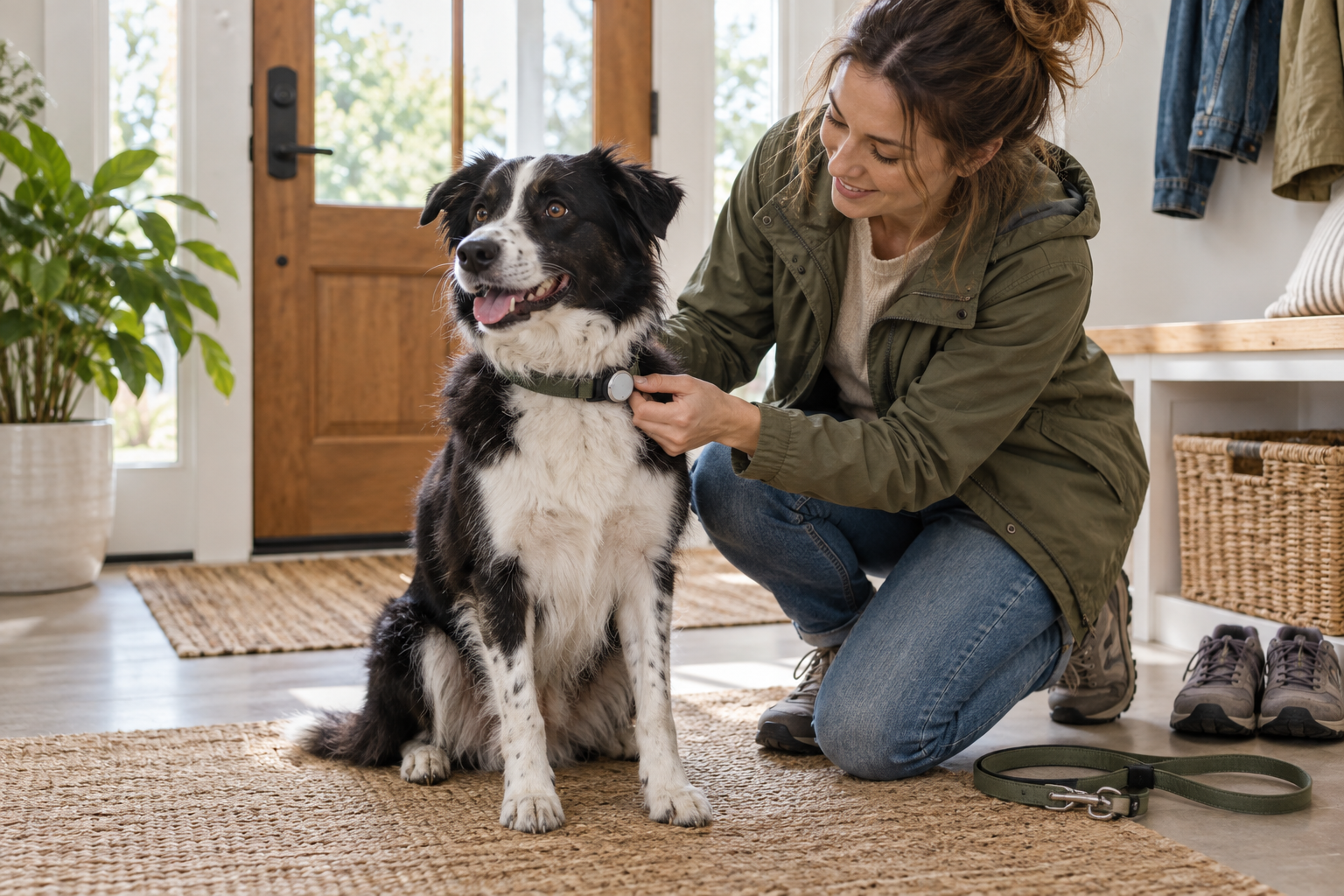
  • Can You Use an AirTag to Track a Dog? 7 Limits Before You Trust It

    Can You Use an AirTag to Track a Dog? 7 Limits Before You Trust It

    An AirTag on a collar can feel like an inexpensive answer to a frightening question: if your dog gets loose, can you open your phone and follow them home?

    Not reliably. An AirTag may provide a useful location clue when the Find My network detects it, and it can help you search when you are already nearby. It is not a continuous pet GPS tracker. Apple says AirTag is designed for objects, not pets.

    Quick answer: Use an AirTag only as an extra recovery layer if you accept delayed or missing updates. Choose a dedicated pet GPS product when you need frequent remote location reports, movement history, geofences, or escape alerts. In either case, keep a visible ID tag and registered microchip current.

    A 30-second decision before you attach one

    Your priority Better fit Why
    An occasional clue if the collar reaches the Find My network AirTag as backup Low-maintenance item finding, but updates can be delayed or absent
    Frequent remote position updates while the dog is moving Dedicated pet GPS Designed around location reporting, usually with cellular service and a subscription
    Helping a finder contact you immediately Visible ID tag No app, scanner, or account lookup is needed
    Identifying the dog if the collar is gone Registered microchip Permanent identification after a shelter or clinic scans it; not GPS
    Dog beside a phone, visible collar tag, and registered microchip paperwork
    The strongest plan uses several recovery layers instead of asking one device to do every job.

    1. An AirTag does not send its own GPS location

    AirTag uses Bluetooth for proximity finding. When it is away from your phone, a nearby device participating in Apple’s Find My network may detect it and securely relay an approximate location. The AirTag itself is not making a cellular data connection and continuously broadcasting a GPS route.

    That makes location availability dependent on the surroundings. A dog passing people and phones in a busy neighborhood may create more opportunities for a network sighting than a dog moving through an empty field, mountain trail, or sparsely populated road.

    Dog on a quiet rural trail while its owner checks a phone with no people nearby
    Find My network coverage depends on nearby participating devices, so an empty area changes the odds.

    2. A map point is not a live moving route

    The Find My app can show a reported location, but that point may not update continuously as a dog runs. It can be useful evidence, yet it may represent where the AirTag was detected rather than where the dog is at this second.

    Apple’s nearby finding tools help when a compatible iPhone is already close enough to connect. Environmental factors such as walls and objects can affect performance. That is different from a dedicated cellular pet GPS service designed to send repeated remote updates.

    Owner using a phone to search nearby for a dog in a public park
    Nearby finding can help at the end of a search; it should not be confused with a continuously updating route.

    3. The collar can disappear before the dog is found

    Any collar-mounted device depends on the collar and holder staying attached. A loose enclosure can rotate, snag, break, or fall away. A dangling tracker may also become a chew target.

    Choose a secure, low-profile holder made for the collar’s width. Check that it does not press into the neck, interfere with leash hardware, or tempt the dog to mouth it. Inspect the holder before walks and after rough play. Never overtighten a collar merely to protect a tracker.

    Low-profile enclosed item tracker holder secured flat against a dark green dog collar
    A secure holder matters, but the dog’s comfort and collar fit come first.

    4. Water resistance is not permanent protection

    Apple lists controlled IP67 test conditions for AirTag and also warns that splash, water, and dust resistance can decrease with normal wear. A rating earned in a laboratory is not a promise that a collar device will survive every swim, muddy roll, impact, damaged holder, or opened battery cover.

    After a wet outing, remove the holder, dry the equipment, and inspect the case and seal. If the unit has been damaged, do not assume that it retains its original resistance.

    Owner drying and inspecting a muddy dog collar and enclosed item tracker after a walk
    Rain and mud make inspection a routine, not a one-time setup step.

    5. The battery creates a maintenance job

    AirTag uses a replaceable CR2032 coin-cell battery. Apple notes that battery life varies with use, environmental conditions, and the replacement battery. A low-battery warning is a reason to replace and retest, not a guarantee that a specific number of tracking hours remains.

    Add the tracker to a monthly collar-equipment check. Confirm that it appears in Find My, test the sound and nearby connection, examine the holder, and replace a weak battery before a trip. Store loose coin cells where pets and children cannot reach them.

    Owner checking a coin-cell battery and recording a monthly dog tracker equipment check
    A tracker that is not checked until the dog is missing is not a dependable recovery layer.

    6. Anti-stalking protections can affect the experience

    AirTag includes protections against unwanted tracking. Apple explains that an owner-separated tracker moving with another person may trigger an alert on that person’s phone or emit a sound after a period of separation. Cross-platform alerts are a necessary safety feature, not a defect.

    For pet owners, this means the device should not be treated like a silent professional beacon. A person transporting or finding the dog may receive a tracker warning. If Lost Mode is enabled, an NFC-capable phone can display the owner’s contact message when the AirTag is tapped.

    Adult noticing a generic tracker safety alert on a phone near a calm dog
    Unwanted-tracking alerts protect people and can shape what a finder experiences.

    7. It cannot replace identification

    An AirTag can detach, lose power, or fail to receive a useful network sighting. A readable tag lets a finder call you without installing an app or visiting a clinic. A registered microchip provides a durable identification route when the collar is missing.

    The American Veterinary Medical Association is explicit that a microchip is not GPS. Its number connects the animal to owner information in a registry after scanning, which is why registration and current contact details matter.

    AirTag versus a dedicated pet GPS tracker

    Question AirTag Dedicated pet GPS
    How is a remote location produced? Find My network sighting by nearby participating devices Usually GPS plus cellular or another service; verify the exact model
    Continuous moving route? Do not assume it Often offered, but update rate and coverage vary
    Nearby direction finding? Available with compatible Apple hardware and conditions Varies by model
    Escape or geofence alerts? Not a pet escape system Common category feature; verify timing and setup
    Ongoing fee? No tracking subscription Often requires a plan
    Designed for pets? No; Apple says it is for objects Yes for purpose-built pet products, though fit and quality vary
    Owner comparing a small item tracker with a larger dedicated pet GPS collar device
    Choose by the failure you need to prevent, not by purchase price alone.

    Build a stronger lost-dog setup

    1. Prevent the escape: check gates, doors, harness fit, leash clips, and known fear triggers.
    2. Use readable identification: put a current phone number on the collar.
    3. Register the microchip: confirm the registry has current contact information.
    4. Keep current photos: save clear full-body and face images that show markings.
    5. Test the technology: practice Find My or the GPS app before an emergency.
    6. Assign roles: decide who searches, calls shelters, posts notices, and stays near home.
    7. Do not chase blindly: a frightened dog may keep moving; use local animal-control or recovery guidance when needed.
    Recent dog photo, leash, visible ID tag, phone, and neighborhood map prepared for a lost-dog plan
    A recovery plan works faster when photos, contact details, and roles are ready before an escape.
    Practical answer: An AirTag can be a backup clue, especially in places with active Find My network coverage, but it is not a live pet GPS service and Apple does not design it for pets. Use it only as one layer behind prevention, visible ID, a registered microchip, and a practiced recovery plan.

    FAQs

    Can an AirTag tell me exactly where my dog is?

    It can show a reported Find My location and assist with nearby finding, but detection and environmental conditions affect the result. Do not treat the map as a guaranteed continuous live route.

    Will an AirTag work in the countryside?

    It may produce a location when a participating device detects it, but sparse areas can create fewer opportunities for network sightings. This is one of the strongest reasons to consider dedicated GPS when remote tracking is important.

    Is an AirTag waterproof enough for a dog that swims?

    Apple lists IP67 under controlled test conditions and states that resistance is not permanent. Repeated swimming, wear, damage, mud, and the holder introduce variables the rating does not remove.

    Does an AirTag replace a microchip?

    No. A registered microchip is identification after scanning, not GPS. A collar tracker can detach; a microchip remains a separate recovery layer.

    Should I buy an AirTag or a GPS collar?

    If an occasional network clue is enough, an item tracker may serve as a backup. If you need frequent remote updates, movement history, or escape alerts, compare dedicated pet GPS products and verify coverage, battery, fit, app reliability, and subscription cost.

    Sources reviewed

    Research note: Pet Tech Compass did not perform hands-on testing for this article. Product behavior can vary by hardware generation, phone compatibility, software, coverage, surroundings, and accessory condition.

    Affiliate disclosure: This article does not currently contain affiliate product links.

  • Why Do Dogs Eat Grass? 5 Common Reasons – and 4 Times to Call the Vet

    Why Do Dogs Eat Grass? 5 Common Reasons – and 4 Times to Call the Vet

    A leashed dog calmly sniffing and nibbling untreated grass beside its owner
    Occasional grass eating can be common, but where the grass came from matters.

    Seeing your dog stop mid-walk to chew grass can look alarming, especially if they later gag or vomit. The useful question is not whether every blade is a problem. It is whether this is occasional, calm grazing in a safe place, or a new pattern with symptoms or a risky lawn.

    The short answer

    Many dogs eat grass sometimes, and the reason is not always clear. It can be ordinary curiosity, taste, scavenging behavior, or something that fills an otherwise quiet moment. It is not reliable evidence that a dog is trying to vomit or missing a nutrient. The bigger risks are treated grass, unknown plants, repeated frantic eating, and any illness that comes with the behavior.

    Use this 30-second check

    What you see Most useful next move
    A dog occasionally nibbles untreated grass and stays bright and normal Observe, redirect if you prefer, and keep the walk moving.
    The lawn may have herbicide, pesticide, fertilizer, or unknown plants Do not allow access; choose another route or area.
    The dog suddenly gulps grass, vomits repeatedly, or seems uncomfortable Contact a veterinarian for guidance.
    Grass eating comes with lethargy, diarrhea, belly pain, blood, fever, or appetite changes Seek veterinary advice promptly.
    A visual showing observe, stop access, and call a veterinarian decisions
    Start with the pattern, the environment, and any symptoms you can observe.

    1. Some dogs simply like the texture, scent, or routine

    Dogs investigate the world with their mouths as well as their noses. Fresh or damp grass has a strong smell and a texture some dogs seem to enjoy. A dog that takes a few bites on the same part of a normal walk and then moves on may simply have built the habit into its routine.

    That does not mean you have to allow it everywhere. A calm habit is still worth redirecting around roadsides, shared dog areas, gardens, and any lawn whose treatment history you do not know.

    A relaxed dog sniffing short grass in a clean yard
    A quiet nibble from a bright, well dog is different from a sudden, urgent new behavior.

    2. It may be part of normal scavenging behavior

    Dogs are not strict carnivores, and plant eating is observed in canids. VCA Animal Hospitals describes grass eating as common and notes that it can reflect scavenging behavior rather than an illness. That is why two healthy dogs on the same balanced food can behave differently around grass.

    The important distinction is ordinary interest versus loss of control. A dog that can turn away when you cue them is a different situation from a dog urgently gulping grass on every outing.

    A concerned owner redirecting a dog away from repeated grass eating
    Redirect calmly when the behavior is repetitive or the area is not known to be safe.

    3. Boredom or a low-stimulation walk can make grass available entertainment

    Some dogs eat grass when they are waiting in a yard or moving slowly through a familiar route. That does not prove boredom, but it is a useful pattern to test. Try a more active walk, brief sniffing games, or a calm change of direction. If grass eating fades when the walk becomes more engaging, the routine may be part of the answer.

    Avoid turning the moment into a chase or scolding event. A quiet cue such as “let’s go,” followed by movement and a reward for coming with you, is more useful.

    Owner cueing a dog to turn away from grass during a walk
    A small turn-away cue is more useful than a chase or scolding moment.

    4. Stomach discomfort can be part of the picture, but grass is not a diagnosis

    Some dogs that feel nauseated do eat grass, and some vomit afterward. The order matters: a dog may vomit because they already felt unwell, or after eating the grass. VCA notes that most grass-eating dogs are not ill beforehand and do not vomit afterward, so the behavior alone does not tell you which explanation applies.

    Do not use grass eating as a reason to start supplements, add fiber, or change food on your own. Look at the whole picture instead: appetite, stool, energy, timing, frequency, and whether the behavior is new.

    Owner making notes while a dog rests comfortably nearby
    Frequency, timing, appetite, stool, and energy provide more useful context than grass eating alone.

    5. The environment may be the real issue

    The grass itself is often less concerning than what is on it. Herbicides, pesticides, fertilizer, animal waste, and unknown plants can create avoidable risk. Treat every lawn as unknown unless you know how it has been maintained and whether it is safe for your dog to enter.

    Keep your dog on leash around community landscaping, neighbors’ lawns, parking strips, and gardens. After a walk, wipe paws if the route may have been treated and provide fresh water at home.

    A dog on a leash walking past a generic lawn-treatment warning sign
    Unknown lawn treatment is a reason to choose another route, not a reason to guess.
    Dog drinking fresh water after a walk
    Keep the return home routine simple: fresh water, a normal meal schedule, and observation.

    Four times not to wait and see

    Contact a veterinarian promptly when grass eating is paired with one or more of these patterns:

    1. Repeated vomiting, vomiting that continues, or blood in vomit.
    2. Lethargy, a painful or bloated-looking abdomen, fever, diarrhea, or refusal of food or water.
    3. Sudden frantic or compulsive eating of grass, dirt, rocks, fabric, or other non-food material.
    4. Possible exposure to a treated lawn, toxic plant, or another substance you cannot identify.

    Cornell’s canine vomiting guidance advises veterinary attention for blood in vomit, vomiting that persists, lethargy, a painful abdomen, or fever. One isolated vomit is different from a pattern that keeps returning.

    Veterinarian listening to an owner while a calm dog sits beside them
    A short timeline and a clear description of symptoms can make a veterinary conversation more useful.

    What to do on the next walk

    1. Watch the first few minutes rather than assuming the reason.
    2. Use a leash and redirect before your dog reaches a risky lawn.
    3. Reward a turn-away or recall with a treat, praise, or forward movement.
    4. Note the time, location, amount eaten, and any vomiting or stool change.
    5. Save a short video only if it is safe and useful for a veterinarian.
    Owner checking a backyard before allowing a dog outside
    Checking the environment first prevents the easiest avoidable exposure.

    Bottom line

    An occasional nibble of untreated grass from an otherwise well dog is common. It is not proof that your dog needs to vomit or has a dietary deficiency. The decision changes when the behavior is intense, new, paired with illness, or happens where the grass or nearby plants may be treated. In those cases, prevent access and ask a veterinarian what to do next.

    Research note: This article is educational information, not veterinary diagnosis. Sources reviewed include VCA Animal Hospitals, Cornell University College of Veterinary Medicine, and American Kennel Club. Affiliate disclosure: Pet Tech Compass may earn a commission from qualifying links, at no extra cost to you. This article does not recommend a product.