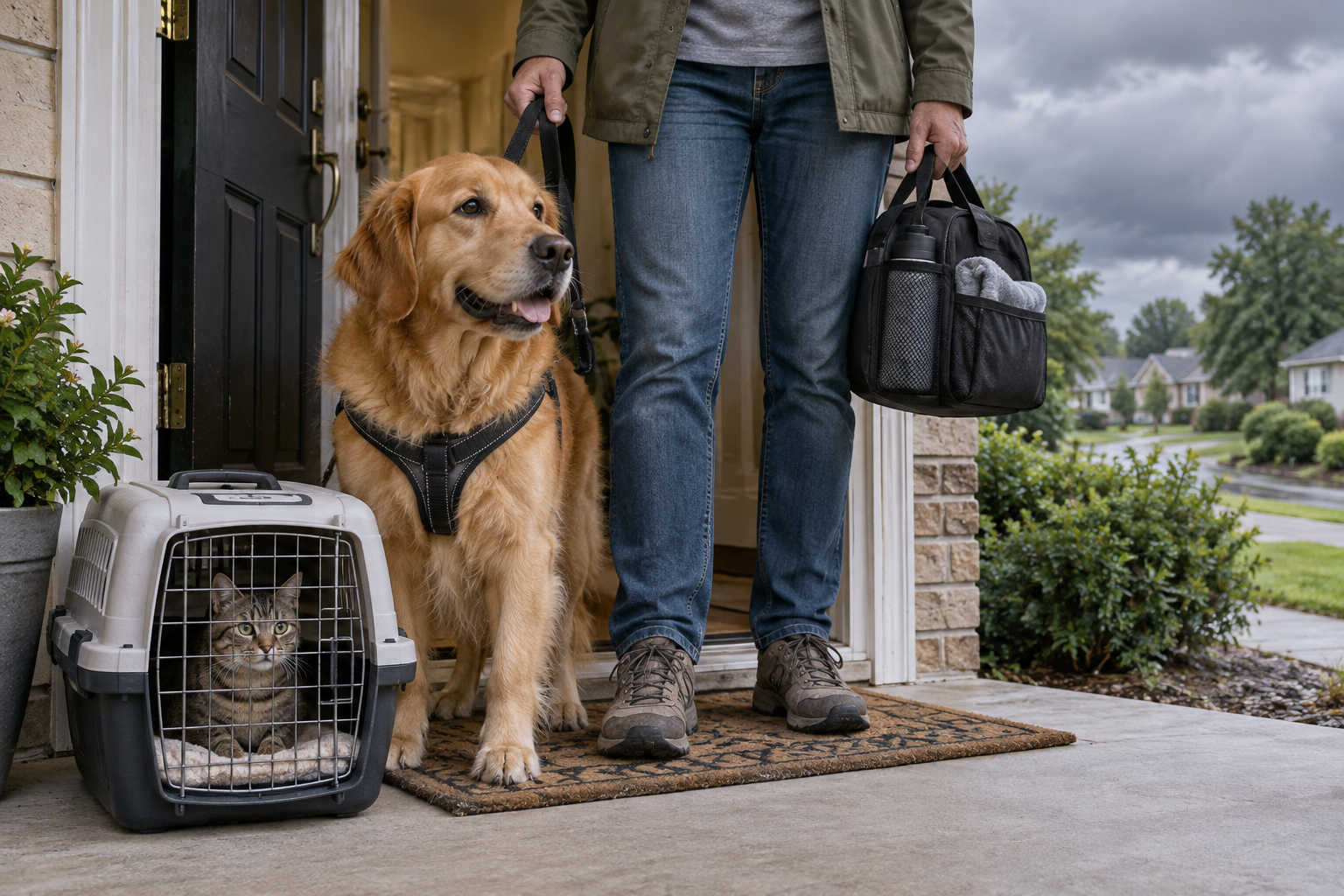
The storm alert is on your phone. Your dog’s leash is by the door. The cat, somehow, has disappeared under the bed. Then comes the question that can stall the whole departure: Will the shelter take them?
Maybe. Some emergency shelters can accommodate pets, sometimes in a separate area or through an animal-welfare partner. Others cannot. Do not drive to an unconfirmed address assuming your dog or cat can come inside. Check the current local shelter arrangement, keep a second destination ready, and follow evacuation instructions from local officials. Service animals are treated differently from pets.
This is a planning guide, not a live shelter directory or a storm forecast. If authorities tell you to evacuate, follow their instructions rather than waiting for an online checklist to feel complete.
If you may need to leave soon: Put every pet in a secure carrier or on a leash; take medications, food, water and records; call your local emergency management office or the listed shelter to confirm its animal arrangements; and have a pet-friendly hotel, friend or boarding option outside the affected area as backup. Never leave a pet tied outside a shelter.
Jump to what you need
Can pets come to an emergency shelter?
There is no single national yes-or-no answer for household pets. The arrangement can change by location, building and incident. The American Red Cross says its shelters work with animal rescue groups in many communities; when possible, domestic pets may be accommodated, but they may need to stay in a different location. Service animals are welcome in Red Cross emergency shelters and are not treated as pets.
The CDC also cautions that many evacuation centers do not admit pets. Its advice is practical: identify a place for your animals before you need one. Neither organization gives you permission to assume the nearest school gym will have pet space tonight.
Before leaving, check the local emergency management page or call its public information number. If a specific shelter is listed, ask:
- Are household pets accepted at this location right now?
- Do owners and pets stay together, or is there a separate pet area?
- Are carriers, vaccination records or other supplies required?
- Is there a pet capacity limit or a different intake address?
- What should I do if I have no car or my pet needs medication?
If you cannot get through, do not delay an ordered evacuation for a perfect answer. Use official routes and ask local emergency staff for the current pet arrangement as you leave. Shelter rules can change during a disaster.

Make a second destination before you need it
Your backup does not have to be fancy. It has to be reachable and willing to take your actual animals. The CDC suggests an out-of-area friend or relative, a pet-friendly hotel along an evacuation route, a veterinary clinic, a boarding facility or an animal shelter. Call rather than assuming a listing is current. Ask about species, number of pets, size limits, fees and whether the place is outside the likely hazard area.
If you have multiple pets, write down which carrier and supplies belong to each one. A hotel that allows one dog may not be a workable plan for two dogs and a cat. If your pet requires refrigerated medicine or special care, raise that before travel. Keep two possible destinations and their phone numbers on paper in case your phone battery or data service fails.

Check identity before you close the door
A collar tag should carry an up-to-date contact number. Confirm the microchip registration, not just the chip itself. Keep a recent photo of your pet and one showing you together. The CDC and FEMA recommend these steps because pets can be separated from people when routines and surroundings change.
Put copies of vaccination information, prescriptions, medical history and your veterinarian’s contact details in a waterproof pouch; keep a digital copy you can access offline if possible. Label carriers with your name, pet’s name and contact number. Do not put a private home address into a public social post while seeking shelter.

Pack the pet go-bag first
The essentials are the things that let you move, identify and care for your pet without borrowing supplies from an overwhelmed shelter. FEMA’s pet disaster checklist and the CDC recommend a sturdy carrier or crate, leash and collar, food, water, bowls, medicine, records, sanitation supplies and familiar items. Set quantities to your pet’s needs and the instructions from local authorities; do not assume a shelter will stock your pet’s food or medication.
| Take now | Easy to forget |
|---|---|
| Carrier or crate for each pet, leash or harness | Spare collar and current ID tag |
| Food, water and portable bowls | Can opener if the food needs one |
| Medication and dosing instructions | Waterproof veterinary records and prescriptions |
| Waste bags, litter and a compact litter box | Cleaning wipes or paper towels |
| Recent photos and emergency contacts | Familiar blanket or small toy |
| Phone, charger and backup power | Paper copy of addresses and phone numbers |
Keep the bag by the exit, but store medication as its label requires and rotate food and water before they expire. A pet first-aid kit can help with minor needs; it does not replace veterinary care.

The cat-under-the-bed problem
Do not wait until the car is loaded to look for a frightened cat. Bring cats indoors early when a storm threatens. Keep a carrier near an accessible room and practice short, positive carrier sessions on ordinary days. The CDC recommends learning where a pet hides under stress and rehearsing an evacuation with the whole household.
If a pet panics, focus on safe containment and your own safety. Do not chase an animal into rising water, a damaged structure or an unsafe road. Ask emergency responders or animal control for help when necessary.

Leaving with pets: the first hour
Put the pet into its carrier or secure harness before opening the exterior door. Keep cats contained through the drive and at every stop. For dogs, use a leash before opening the vehicle door. The CDC notes that even normally friendly animals can act differently under disaster stress. Avoid introductions to unfamiliar animals in crowded areas.
Follow routes recommended by emergency officials. Do not drive through floodwater or take a shortcut around a road closure. If you do not have a vehicle, tell local emergency management that you need transport with a pet; do not assume ordinary public transport will be available or accept animals during an emergency.

At a hotel or temporary shelter, keep the dog leashed and the cat contained until the room is secure. Ask where pets may relieve themselves and where waste should go. Put out water first. Keep medications on schedule as directed by your veterinarian. If your pet is ill or injured, call a veterinarian rather than assuming stress explains every symptom. If you need to step out later, check the hotel’s rule on leaving a dog alone in the room first.


The trip home is not the end of the plan
Wait for local authorities to say it is safe to return. At home, check for exposed wiring, spilled chemicals, broken glass and damaged fencing before letting a pet roam. After flooding, keep pets away from standing water and debris. The CDC warns that familiar scents and landmarks may have changed, so keep dogs on leash and cats in carriers until the area is secure.
If your pet was separated from you, contact local animal control and shelters and use the recent photos and microchip information you prepared. If you notice injury, unusual breathing, repeated vomiting, marked lethargy or other concerning illness, contact a veterinarian promptly.

Quick answers
Will a Red Cross shelter take my dog or cat?
Do not assume yes or no from the organization name alone. The Red Cross says pet arrangements vary, and animals may be housed separately with local partners. Confirm the specific shelter’s current instructions. Service animals have a different status.
Should I stay home if the shelter will not take my pet?
No. Follow official evacuation orders. Ask local emergency management about pet accommodation, transport or an animal-welfare partner, and use your prearranged alternative destination. Leaving a pet behind can be dangerous for the animal and for people who later try to rescue it.
Can a microchip replace a collar tag?
Use both. A readable tag can give a finder a quick contact number, while a registered microchip provides a second identification route. Check that your contact information is current.
Is a pet camera or GPS tracker enough if I cannot take my pet?
No. A device cannot provide food, water, safe shelter or rescue during an evacuation, and power or connectivity may fail. Plan for a person and a safe destination. Technology is a backup aid, not an evacuation plan.
Sources and review note
Reviewed September 24, 2026. This article uses CDC pet emergency guidance, CDC hurricane preparation advice, CDC guidance for pets in evacuation centers, FEMA’s pet disaster checklist, and American Red Cross shelter guidance. Local orders and the current shelter operator always take priority over this general guide. Images are AI-generated illustrations, not documentary photos of a real shelter or storm.
Leave a Reply