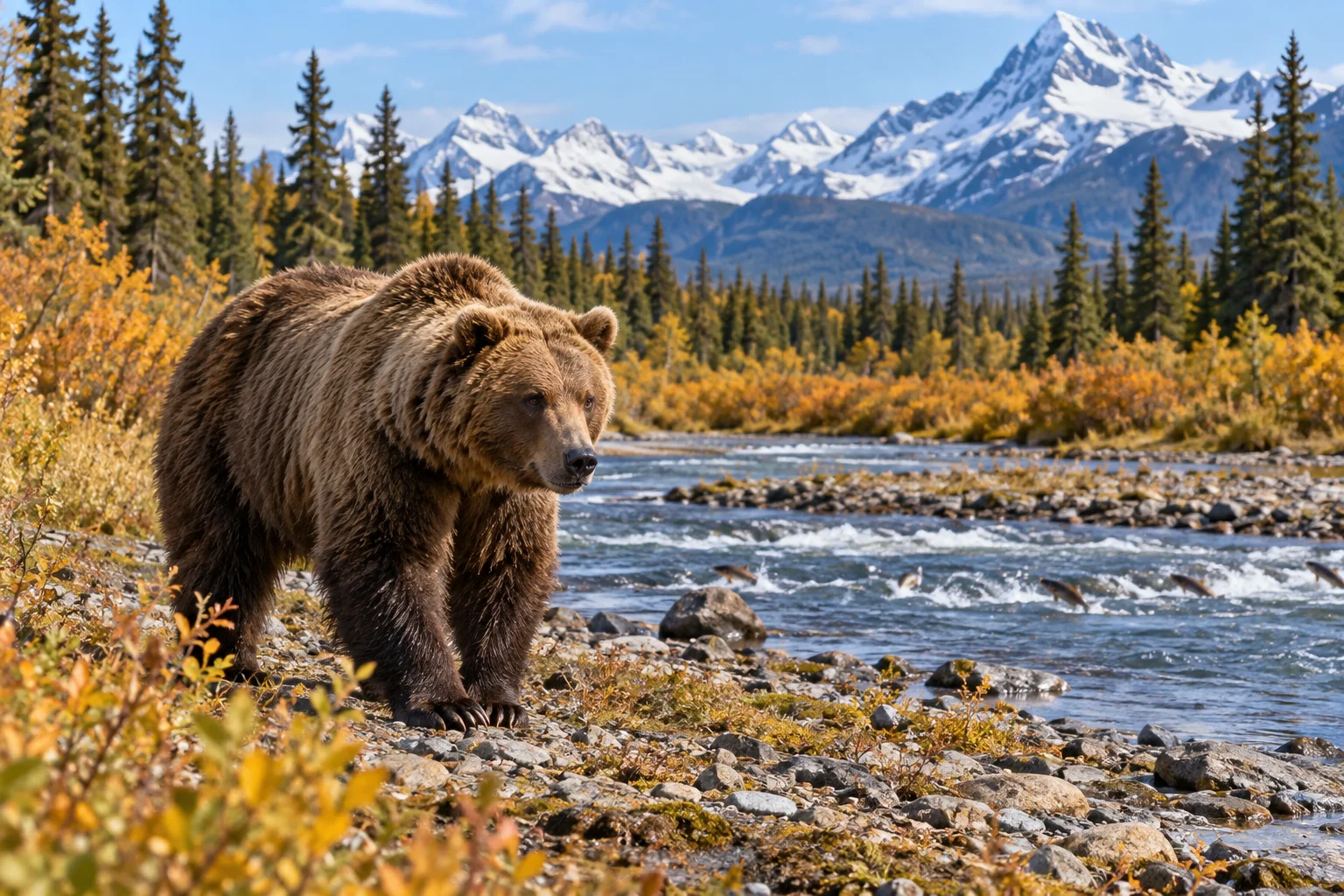
There’s a bear tournament happening in Alaska, and you can follow it from your couch. If you came for the voting link, here it is: explore.org/fat-bear-week. If you came because you’re planning a trip with your dog, read the Brooks Camp rule before making any bookings.
Quick answer: Fat Bear Week runs September 22-29, 2026. Voting is open on scheduled matchup days from noon to 9 p.m. Eastern, with no voting September 26 or 27. Watch the bears through Explore.org’s live cams. Pets, including service animals under the park’s published rule, are not permitted in the Brooks Camp Developed Area from May 1 through October 31. That area includes the famous Brooks Falls viewing location. A live stream is the straightforward way to enjoy the event with your pet beside you.
Jump to what you need
How to vote in Fat Bear Week 2026
The event isn’t a single popularity poll. It is a bracket: two bears meet in a matchup, the public votes, and the winner moves on. The final is scheduled for September 29. The park and its partner Explore.org run the event to celebrate brown bears putting on the fat they need before winter, not to rank which bear is cutest.
Go to the official voting page during an active voting window. Explore.org says to enter an email address above each poll, look at the before-and-after photos, choose a bear, then hit Submit. You can repeat that for the day’s other matchups. If a poll is missing or closed, check the schedule before assuming the site is broken.
The posted daily window is 12-9 p.m. Eastern / 9 a.m.-6 p.m. Pacific / 8 a.m.-5 p.m. Alaska time. There is no voting on September 26-27. Times, matchups and results can change on the live event page, so use it for the current bracket rather than a screenshot circulating on social media.

Which bear should you pick?
Look beyond who appears biggest in one frame. Explore.org offers before-and-after photos and information on the bears’ lives. A mother feeding cubs or a younger bear growing through its first difficult seasons has a different story from a dominant adult with access to a prime fishing spot. There is no official measurement you have to calculate at home; the vote is subjective.
That makes this unusually fun to watch with a friend. Compare the photos, choose your bracket, and see whether the next round changes your mind. Avoid sharing a winner as fact until the organizers post the final result.

Where to watch the bears live
The Explore.org Fat Bear Week hub links the event, bear profiles and live nature cams. A live camera is not guaranteed to show a bear every second. A quiet river frame is normal; these are wild animals, not performers on a timetable.
The camera view can be more revealing than a viral before-and-after image. You may see a bear fishing, waiting, or moving away from another bear. It also makes the central point of the event easier to grasp: salmon and access to food shape how these bears prepare for winter. Katmai’s explanation of the event is about the bears’ survival and the ecosystem that supports them.

Why the bears get so big
For a Katmai brown bear, autumn fat is fuel. Bears feed heavily during the warmer months, often on salmon, before a long winter in the den. Explore.org notes that hibernating bears do not eat or drink and may lose a substantial share of their body weight. Fat Bear Week turns that ecological story into a public event, but the bears are not being fed or staged for the contest.
This is also why the photos can look so dramatic. A leaner early-season image and a rounder late-season image show months of feeding, not a one-week transformation. If you share a clip, link the official live cam or bear profile so people can see the context.

Can you bring your dog to Brooks Camp?
No, not during Fat Bear Week. The National Park Service’s 2026 Katmai compendium says the Brooks Camp Developed Area is closed to pets, including service animals, under the park-specific rule. NPS’s visitor page describes that area as a 1.5-mile radius from the Brooks Falls Platform and lists the restriction from May 1 through October 31. Fat Bear Week falls squarely inside that period.
The distinction matters because you may also read that pets are allowed elsewhere in Katmai’s backcountry if physically controlled. That does not make Brooks Camp or the falls platform dog-friendly. Nor is leaving a dog tied up or unattended a workaround: the 2026 compendium prohibits leaving pets unattended and tied to an object.
If you travel with a service animal, contact Katmai directly before planning transport or accommodation. The park’s published rule explicitly includes service animals in the Brooks Camp closure, and accessibility arrangements are too important to infer from a general national-park FAQ.

“What if we stay outside the developed area?”
That is a different, higher-stakes trip, not a shortcut to the famous viewing platforms. NPS says pets in the backcountry must be physically controlled. It also prohibits approaching bears or other large mammals within 50 yards. Remote travel, transport operators, lodging and changing local conditions all require direct confirmation. Do not bring a pet into bear habitat to recreate a social-media moment.
The low-effort, low-risk option is honestly the better one for most pet owners: watch from home. Your dog can nap beside you while the wild bears stay wild.

If you want to see Katmai in person
Start with the park, not a viral itinerary. Check Katmai’s current alerts and park pages, the official maps, and the rules for your exact destination and season. Confirm transport, lodging and any closures with the operator and NPS. A place shown in a reel may be inside a restricted zone or inaccessible on your dates.
At Brooks Camp, bear safety instructions are part of the visit. NPS requires visitors to maintain distance from bears and follow the park’s orientation and food rules. Those requirements exist because a close bear encounter is a serious safety event, not an upgrade to your photo opportunity.

If the trip has to include your pet, choose a destination that actually accommodates them instead of trying to fit a pet into Brooks Camp. If the trip is for the bears, arrange appropriate care for your pet at home. Either plan is more coherent than arriving in Alaska and discovering the animal cannot enter the place you came to see.

If the pet restrictions change your vacation plan, our Shenandoah fall guide for dog owners offers a different national-park trip to investigate. Check that park’s own trail and pet rules; Katmai’s rules do not transfer to it.
The short version
Vote at the official Explore.org page during the posted daily window; there is no voting September 26-27 and the final is scheduled for September 29. Use the same hub for bear profiles and live cams. If you are thinking of taking your dog to the Brooks Falls area, stop at the park rule: the Brooks Camp Developed Area is closed to pets and service animals during this event. Verify current conditions with Katmai before any in-person trip.

Sources and update note
Checked September 24, 2026: NPS Fat Bear Week announcement, Explore.org event and voting schedule, NPS 2026 superintendent’s compendium, and NPS backcountry pet guidance. The event schedule and park access can change; check the linked official pages before acting.
Leave a Reply