Tag: pet travel

  • Can Dogs Get Jet Lag? 7 Signs and How to Reset Their Routine

    Can Dogs Get Jet Lag? 7 Signs and How to Reset Their Routine

    Your dog cannot read the clock, but their body still notices when morning, meals, walks, and sleep suddenly arrive at unfamiliar times.

    After a long trip, a dog may wake before sunrise, ask for dinner in the afternoon, sleep through the evening, or need a bathroom break at the wrong hour. People often call this "dog jet lag." That is a useful shorthand, but it is not a diagnosis. The same behavior can also come from travel stress, motion sickness, dehydration, a changed diet, pain, or illness.

    Quick answer

    Dogs can have temporary sleep and routine disruption after crossing time zones. Light, food, activity, stress, and the social schedule around them all help set daily rhythms. Most mild changes improve as the dog follows a predictable local routine. Repeated vomiting, breathing difficulty, collapse, severe diarrhea, obvious pain, or a dog that will not drink needs veterinary attention rather than a jet-lag plan.

    1. Waking or pacing at the old time

    A dog that normally wakes at 6 a.m. may still become alert when its body expects that routine, even when the destination clock says 3 a.m. It may pace, stare at you, visit the door, or settle and wake again.

    Keep the overnight response quiet and boring. Take the dog out if a bathroom break is genuinely needed, then return to the sleeping area without turning the moment into breakfast or playtime. In the morning, use daylight and a normal walk to make the new local schedule clearer.

    Dog awake near a hotel room door before dawn after crossing time zones
    A dog may wake when the old routine says morning.

    2. Asking for meals hours too early

    Regular feeding times create strong expectations. A dog may hover near the bowl, follow you into the kitchen, or become restless when the old mealtime arrives.

    Do not double-feed because the dog appears hungry twice. Keep track of the full daily amount and move meals toward local time in small steps when possible. Dogs with diabetes, reflux, medications tied to food, very young puppies, or other medical needs require an individual schedule from a veterinarian.

    Traveler measuring a dog daily food portion while shifting meal time after travel
    Shift meal timing without accidentally increasing the daily amount.

    3. Sleeping through the active part of the day

    Some dogs arrive tired after an early airport departure, a noisy cabin, a long drive, or hours of vigilance in unfamiliar places. They may sleep heavily once they finally reach a quiet room.

    Allow recovery, but provide gentle anchors: daylight, a short sniff walk, water, a familiar resting place, and calm interaction. Do not try to "wear the dog out" with an intense hike on arrival day. Exhaustion and overstimulation can make settling harder.

    Traveler and dog taking a gentle morning walk in local daylight after arrival
    Local morning light and gentle activity provide clear daytime cues.

    4. Bathroom timing changes

    Meals, water, activity, stress, and opportunity all affect elimination. A dog may ask to go out during the night, skip a usual bowel movement, or have an accident in an unfamiliar room.

    Offer more frequent, low-pressure bathroom breaks for the first day or two. Use a leash even for a dog that is reliable at home, because an unfamiliar location adds escape risk and may make it harder to focus. Reward the normal bathroom routine without scolding an accident.

    Leashed dog taking a calm bathroom break in an unfamiliar safe outdoor area
    Offer more frequent low-pressure bathroom opportunities after arrival.

    5. A temporary appetite change

    Travel can alter appetite, energy, and behavior. A dog may ignore one meal because it is tired or unsettled, but poor appetite should not automatically be blamed on a time-zone change.

    Offer the dog’s familiar food in a quiet place and keep fresh water available. Avoid introducing a rich vacation meal, multiple new treats, or a sudden food change while the stomach is already adjusting. Contact a veterinarian when appetite loss continues, the dog also seems listless, or there is vomiting, diarrhea, pain, abnormal thirst, or another concerning change.

    Familiar dog food and fresh water offered in a quiet travel room
    Familiar food in a quiet place makes appetite easier to assess.

    6. Clinginess, scanning, or difficulty settling

    A new hotel, rental, or family home contains unfamiliar sounds and scents. Following you closely, startling at hallway noise, panting, vocalizing, refusing treats, or repeatedly changing position may reflect stress rather than a shifted body clock.

    Give the dog a predictable base with its usual bed, blanket, carrier, or mat. Keep the first evening simple. A familiar cue such as "settle" can help when it has already been taught at home. If confinement causes frantic scratching, heavy panting, drooling, or escape attempts, do not force the dog to stay in that setup.

    Dog resting in a familiar bed with blanket carrier and toy in a rental room
    A familiar base reduces the number of new things the dog must process.

    7. Being ready to play when everyone else is asleep

    When the old schedule says daytime, a rested dog may bring a toy, solicit attention, or become noisy at the destination’s bedtime.

    Use a calm walk and toilet break before bed, then lower light and activity. Avoid a late, high-energy game that teaches the dog that 2 a.m. is now entertainment time. Expect adjustment to be gradual rather than perfect on the first night.
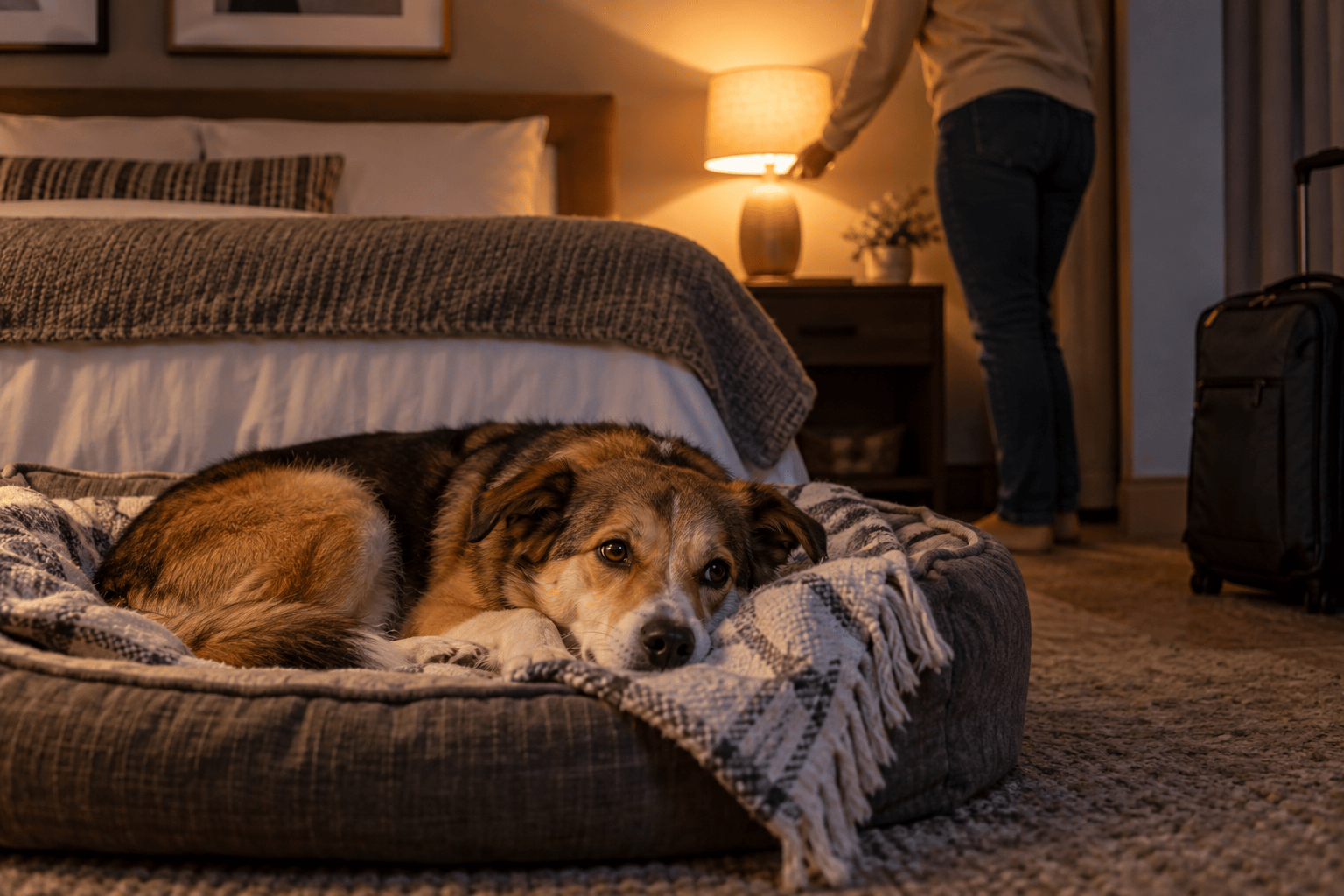
    Dog settling calmly for bedtime while a traveler lowers the room lights
    Keep nighttime light and activity low instead of starting a new play period.

    A simple reset plan for the first 48 hours

    Use local daylight

    Morning outdoor light and normal daytime activity help distinguish day from night. Keep nighttime lighting and interaction low when it is safe to do so.

    Keep four anchors predictable

    Choose stable local times for waking, meals, walks, and bedtime. Keep the order of familiar events even if the exact clock time changes.

    Shift meals without changing the total

    Move feeding toward the local schedule while preserving the normal daily amount. For a large time difference, smaller temporary shifts may be easier than one abrupt jump.

    Make arrival day deliberately easy

    Prioritize water, bathroom access, a short walk, familiar food, and sleep. Save crowded attractions and long excursions for after the dog is eating, drinking, eliminating, and settling normally.

    Record what is actually changing

    Note sleep, food, water, urine, stool, vomiting, medication, and unusual behavior. A short log helps separate a predictable schedule shift from a worsening medical problem.

    Traveler recording a dog sleep meals water and bathroom events after travel
    A short log reveals whether the overall pattern is improving.

    When it is probably not just jet lag

    Seek urgent veterinary help for collapse, breathing trouble, repeated unproductive retching, a swollen abdomen, uncontrolled bleeding, seizures, severe weakness, or suspected toxin exposure. Contact a veterinarian promptly for repeated vomiting or diarrhea, obvious pain, inability to urinate, marked lethargy, refusal to drink, or appetite loss that concerns you.

    Also reconsider the travel plan when the dog cannot settle, repeatedly tries to escape confinement, or shows escalating distress. A quieter itinerary, a familiar sitter, or veterinary guidance may be safer than pushing through another travel day.

    Traveler consulting a veterinary clinic by phone while observing a resting dog
    Call a veterinarian when the pattern is not mild, temporary, or improving.

    Before the return trip

    Do not wait until the final night to reverse the routine. If practical, begin moving meals and walks toward home time in small increments. Keep medication timing consistent with the veterinarian’s instructions, and confirm how to handle a major time-zone change before departure.

    Pack the same familiar food, leash, identification, medication, bedding, and travel restraint used on the outbound trip. The return journey is still a new transition even though the destination is home.

    The bottom line

    Dogs can show a temporary pattern that looks like jet lag: waking at the old time, early hunger, daytime sleepiness, changed bathroom timing, or nighttime energy. The most useful response is not to force sleep. Use local daylight, familiar routines, measured meals, gentle activity, and close observation.

    The label matters less than the trend. A dog that improves while eating, drinking, and acting comfortably is different from a dog whose appetite, energy, breathing, stomach, or behavior is getting worse. When the pattern does not look mild or temporary, call a veterinarian.

    Sources reviewed

    Research note: "Dog jet lag" is used here as plain-language shorthand for temporary schedule disruption after travel, not as a veterinary diagnosis. This article does not replace individualized veterinary care.
  • Does a Dog Count as a Carry-On? 8 Airline Rules to Check Before You Book

    Does a Dog Count as a Carry-On? 8 Airline Rules to Check Before You Book

    The short answer is often yes, but not always in the way travelers expect.

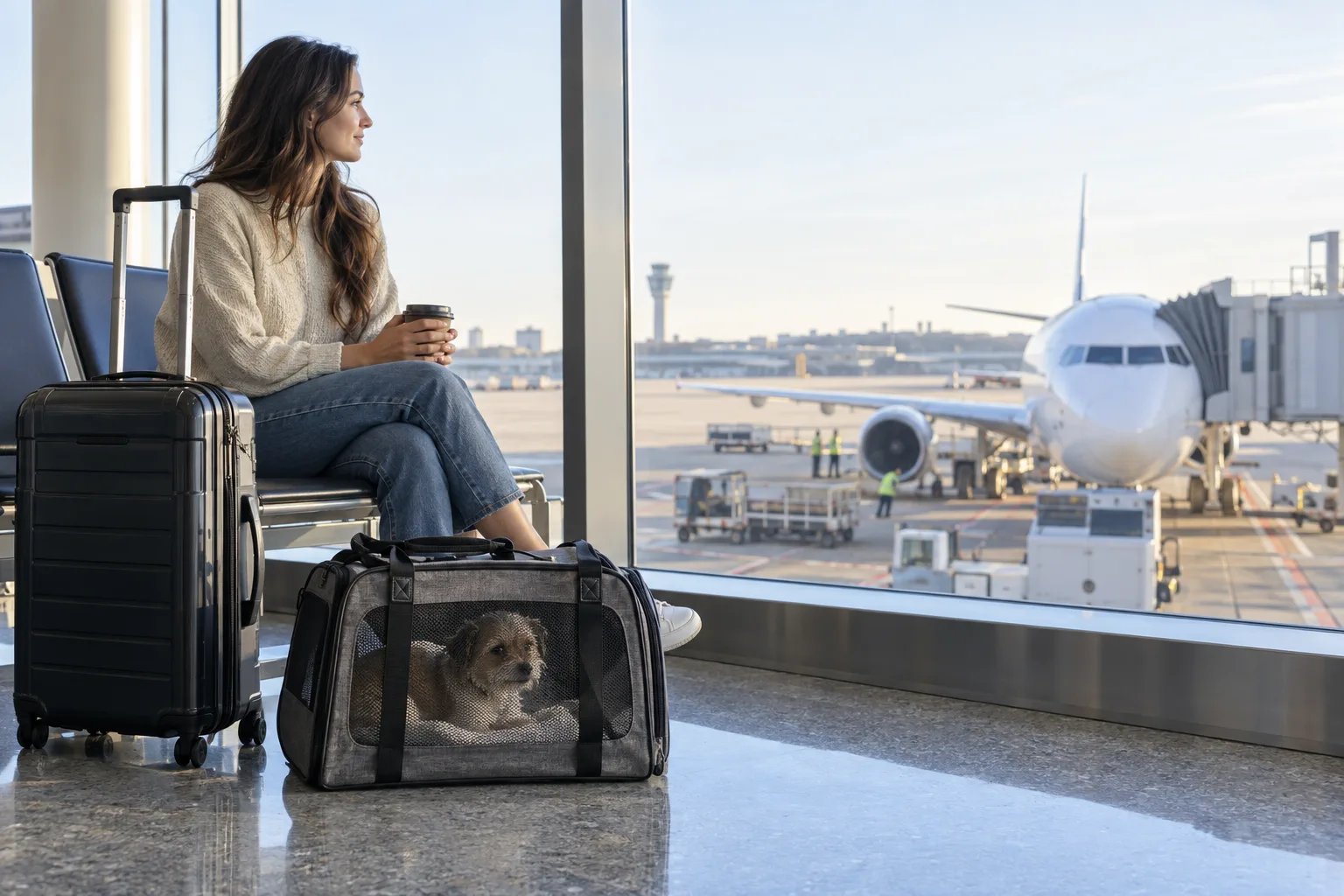
    On many airlines, a dog traveling in the cabin must stay inside a carrier under the seat, and that carrier may count as your carry-on item or personal item. Other airlines charge a separate pet fee but still limit what else you can bring into the cabin. There is no single rule that applies to every airline, aircraft, route, or fare.

    That means the safest time to solve the luggage question is before you buy the ticket, not while you are standing at the gate with a suitcase, a carrier, and no room to rearrange either one.

    Quick answer

    Assume your dog’s carrier will use one of your cabin-bag allowances until your airline confirms otherwise in writing. Then check the pet reservation, carrier dimensions, seat restrictions, documents, and destination rules for the exact itinerary.

    1. A pet fee does not automatically buy an extra bag

    Paying to bring a dog does not necessarily give you an additional carry-on allowance. The U.S. Department of Transportation notes that airlines handle pet charges differently: a carrier may count the pet toward a baggage allowance, apply a baggage charge, or collect a separate pet fee.

    Those are billing categories, not a promise that you can bring a roller bag, a backpack, and a pet carrier. Read the airline’s cabin-pet page and the baggage rules attached to your fare. If the wording is vague, ask one direct question: “With an in-cabin pet, may I also bring a carry-on bag and a personal item?”

    Save the answer with your confirmation. Airport staff will apply the airline’s current policy, and a screenshot is much more useful than remembering what a search result seemed to say.

    Traveler comparing an airline pet fee with carry-on baggage rules before booking
    A pet fee and a cabin-bag allowance answer two different questions.

    2. Your dog needs a reservation even when you already have a seat

    A confirmed passenger ticket does not confirm space for a pet. Airlines may limit the number of in-cabin animals on each flight, and the available pet spaces can disappear before the passenger cabin sells out.

    Do not buy a nonrefundable itinerary and assume you can add the dog later. Check whether the airline wants you to call before booking, add the pet during checkout, or contact it immediately after purchasing. Record the pet confirmation number or note on the reservation.

    This matters even more on a trip with a connection. A pet must be accepted on every flight segment, including a short regional leg operated by a different carrier or aircraft.

    Dog owner confirming limited in-cabin pet space for every flight segment
    Your seat can be confirmed while the pet is still missing from the reservation.

    3. “Fits under the seat” is an aircraft rule, not a marketing label

    A carrier advertised as airline approved is not automatically approved for your flight. Airlines publish their own maximum dimensions, and usable space can change with aircraft type and seat location.

    Measure the carrier from its true outer edges after it is packed. Include wheels, rigid frames, pockets, handles, and any section that does not compress safely. Then compare those measurements with the airline’s current limit for the exact aircraft when that information is available.

    Your dog also needs enough room to remain in a natural position. For cargo transport, USDA guidance emphasizes a kennel that lets the animal stand, turn around, sit erect, and lie down naturally. Cabin carriers are governed by airline rules, but squeezing a dog into an undersized soft bag is not a reasonable workaround.

    Traveler measuring the outside dimensions of a packed soft-sided dog carrier
    Measure the loaded carrier, including the parts that do not safely compress.

    4. The carrier usually stays closed and under the seat

    An in-cabin pet is not the same as a dog riding in a purchased passenger seat. Most pet policies require the dog to remain in the closed carrier under the seat for the flight.

    That creates two practical tests before booking. First, can your dog settle inside the carrier without frantic scratching, sustained barking, overheating, or trying to force the zipper? Second, can you tolerate losing the legroom and under-seat storage that the carrier occupies?

    Practice at home in short, calm sessions. The first long confinement should not begin after boarding. If your dog cannot rest in the carrier on the ground, a busy airport and unfamiliar aircraft are unlikely to make that easier.

    Small dog calmly practicing inside an airline carrier at home before a flight
    Carrier practice should happen in calm, short sessions before travel day.

    5. Your seat assignment can make the pet reservation fail

    The Department of Transportation says airlines may restrict passengers with pets from bulkhead and emergency-exit-row seats. Some premium or lie-flat seats also lack usable under-seat space.

    Check the seat map only after the pet is attached to the reservation. If the airline changes the aircraft or your seat, confirm that the replacement still permits an in-cabin pet. On a connection, repeat that check for every segment rather than assuming the first seat decision applies to the whole trip.

    Traveling with another person can help, but do not assume two pets can share one carrier or that each traveler can automatically bring one. Pet count, carrier count, and passenger-age rules are airline-specific.

    Airline seat map and under-seat pet carrier space being checked before selection
    A permitted seat needs usable under-seat space for the carrier.

    6. TSA screening temporarily separates the dog from the carrier

    At a U.S. security checkpoint, TSA says small pets may pass through, but the empty carrying case goes through the X-ray machine. You remove the dog, maintain control with a leash, remove the leash when carrying the animal through the metal detector, and follow the officer’s directions. The carrier may receive visual or physical inspection.

    Plan for this before joining the line. Use secure, well-fitted walking gear and keep metal accessories simple. If removing your dog in the open checkpoint feels unsafe, ask an officer about a private screening option rather than opening the carrier and hoping for the best.

    Wet pet food in a carry-on is subject to TSA’s liquids rule; solid dry or moist food is treated as solid food but may need to be separated for screening. Pack only what you need for the travel window and keep it easy to inspect.

    Traveler securely holding a small dog while its empty carrier is screened at an airport
    Prepare for the moment when the carrier is screened separately.

    7. Domestic does not mean document-free

    The airline may require a health record, and the destination may impose its own animal-health requirements. USDA APHIS says requirements for movement between U.S. states and territories are set by the receiving jurisdiction; they may include a health certificate, current vaccinations, testing, or treatment.

    Start with three checks:

    1. the operating airline’s pet-document page;
    2. the destination state or territory’s current animal-entry rules; and
    3. your veterinarian, with enough lead time to complete any required exam or certificate.

    International travel adds destination-country import rules and may add transit-country requirements. Do not treat a domestic airline approval as permission to enter another country.

    Dog travel folder containing veterinary health and vaccination documents
    Airline approval and destination entry documents are separate checks.

    8. Airline permission does not prove that flying is right for your dog

    The final decision is not just whether the reservation system accepts the pet. The Department of Transportation notes that carriers may impose restrictions based on size, weight, age, behavior, breed, weather, and kennel type. USDA APHIS warns that short-nosed dogs can face increased breathing and heat risks during air travel.

    Discuss the trip with your veterinarian when your dog is very young, older, short-nosed, medically fragile, highly distressed by confinement, or taking medication. Do not sedate a dog for a flight unless a veterinarian specifically evaluates and directs that plan.

    A road trip, sitter, boarding arrangement, or a different itinerary may be the better decision. Changing the plan is not a failure if the original plan asks the dog to tolerate conditions it cannot handle safely.

    Veterinarian discussing whether a dog is healthy and calm enough for air travel
    Permission to fly is different from readiness to fly.

    A five-minute check before you pay

    Open the exact flight and confirm all eight items:

    • the pet is allowed on every operating carrier and segment;
    • pet space is available and can be reserved;
    • the total pet charge is clear;
    • the carrier’s true measurements fit the published limit;
    • your remaining cabin-bag allowance is clear;
    • your seat type permits an under-seat carrier;
    • health and destination documents can be completed on time; and
    • your dog can remain safely and calmly in the carrier.

    If one answer is missing, pause the purchase. A flexible fare or a refundable hold can be worth more than a cheaper ticket that leaves the dog’s place unconfirmed.

    Dog owner completing an eight-item airline pet checklist before paying for a flight
    Do not pay until every flight segment and pet requirement has an answer.

    The bottom line

    A dog carrier often counts toward what you may bring into the cabin, even when the airline also charges a pet fee. The exact calculation belongs to the airline, while the destination controls any animal-entry requirements.

    Confirm the pet first, measure the loaded carrier, protect the seat assignment, and keep the policy with your itinerary. That turns a vague “pet-friendly flight” into a reservation you can actually use.

    Sources reviewed: U.S. Department of Transportation; USDA APHIS air-travel guidance; USDA APHIS interstate requirements; TSA What Can I Bring?. Reviewed September 18, 2026.

    Research note: Airline policies, aircraft assignments, fees, and destination rules can change. This article explains a verification process and does not replace the airline’s current contract of carriage, destination regulations, or veterinary advice.

    Affiliate disclosure: Pet Tech Compass may use affiliate links in some articles. That does not change our source-selection or safety standards. This draft contains no product recommendation.

  • Can You Leave a Dog Alone in a Pet-Friendly Hotel Room? 7 Rules to Check

    Can You Leave a Dog Alone in a Pet-Friendly Hotel Room? 7 Rules to Check

    A hotel can call itself pet-friendly and still prohibit you from leaving your dog alone in the room. Another property may allow it only when the dog is crated. A third may leave the decision to the front desk.

    That variation is the answer: do not assume that pet-friendly means unattended pets are allowed. Check the exact property’s written policy, confirm it at check-in, and decide separately whether your dog can actually cope with a strange room.

    Quick answer

    You may leave a dog alone in some pet-friendly hotel rooms, but only when that specific property permits it and your dog can remain calm and safe. If the rule is unclear, treat it as not allowed until the hotel confirms otherwise. A crate, camera, or door tag does not override a no-unattended-pets policy.

    1. Read the property policy, not just the pet-friendly filter

    The word pet-friendly describes admission, not every part of the stay. Marriott states that policies can vary by property, including fees, size or weight limits, number of pets, and length-of-stay rules. Unattended-room rules vary too. Some published Hyatt policies prohibit leaving a pet alone at any time, while an individual Marriott property says an unattended pet must be crated.

    Open the hotel’s own page and your rate details. Look for an unattended-pet rule, crate requirement, maximum absence, noise procedure, housekeeping procedure, restricted spaces, pet count, weight limit, and additional damage or disturbance charges. A third-party booking badge is not enough.

    Traveler reviewing the pet policy for a hotel reservation before bringing a dog
    Read the individual property’s rules, not only the pet-friendly search label.

    2. Get a clear answer from the actual hotel

    If the web page does not answer the question, call the property before the cancellation deadline. Ask one precise question: “May my dog remain alone in the room, and if so, under what conditions?”

    Record the employee’s name, date, and answer in your trip notes. At check-in, confirm it again because local practices can change. Ask what the hotel does if a dog barks, how staff will contact you, and whether housekeeping or maintenance can enter while the dog is present.

    Do not describe a pet as a service animal to avoid a pet rule. Service animals are governed by different legal standards and are not the same as pets.

    Dog owner confirming unattended-pet rules with hotel front desk staff
    Ask the property directly what is allowed and what happens if staff need to enter.

    3. Separate hotel permission from your dog’s readiness

    Permission does not prove that the plan is suitable for your dog. A dog that sleeps quietly at home may react to elevator bells, voices in the hallway, unfamiliar smells, doors closing, or people passing outside.

    Warning signs include persistent barking or howling, pacing, panting, drooling, scratching at the door, destructive chewing, indoor accidents, or frantic attempts to escape confinement. These behaviors can reflect distress rather than disobedience. A dog with known separation anxiety should not be used for a hotel-room experiment. Discuss the travel plan with your veterinarian or a qualified behavior professional before the trip.

    Comparison of a calm resting dog and a distressed pacing dog in a hotel room
    Quiet resting and repeated pacing are very different responses to the same room.

    4. Use a crate only when both the hotel and the dog allow it

    A hotel may require a crate, but a crate is safe only for a dog that has already learned to rest in it calmly. Do not introduce confinement for the first time after check-in. A panicked dog can injure teeth, nails, or paws trying to escape.

    Bring the familiar crate or carrier, mat, and bedding used at home. Place it away from the room door, cords, curtains, food, medications, and items the dog could pull inside. Keep the room at a safe temperature and provide water as appropriate for the dog’s normal routine.

    Never use a crate to extend an absence beyond what your dog can comfortably manage. The crate is a management tool, not permission to ignore exercise, bathroom breaks, or distress.

    Familiar dog crate and bedding arranged safely inside a hotel room
    A hotel stay is not the time to introduce a crate for the first time.

    5. Run a short departure test before making plans

    After exercise, a bathroom break, water, and time to settle, step into the hallway for a very short test. Listen near the door or monitor remotely. Return before the dog becomes distressed. A successful two-minute test does not guarantee a quiet two-hour absence, so increase time cautiously rather than making one large jump.

    If the dog immediately barks, scratches, pants, paces, or cannot settle, change the plan. Use takeout or room service, choose an activity that allows dogs, arrange a reputable local sitter, or have one traveler remain with the dog. The cost of changing dinner plans is smaller than the cost of an escape, injury, complaint, or forced removal from the hotel.

    Traveler performing a short monitored departure test outside a hotel room
    Start with minutes, not an entire meal or evening away.

    6. Control staff access and hallway surprises

    Tell the front desk that a dog is in the room. Use the hotel’s pet-in-room tag if provided, and use the do-not-disturb control as directed. Do not rely on a homemade sign as a substitute for notifying staff.

    Schedule housekeeping while you and the dog are out of the room. Confirm how maintenance, room service, or an emergency inspection will be handled. Keep the dog leashed or otherwise secured when opening the door. A startled dog can slip into a hallway in seconds.

    Minimize predictable barking triggers. Close curtains if the dog reacts to outdoor movement, use quiet background sound if that is already familiar, and choose a room away from elevators or ice machines when possible. Do not use an unfamiliar anti-bark device as a last-minute fix.

    Pet-in-room door notice and planned housekeeping access at a hotel
    Coordinate room access with the front desk before leaving.

    7. Stay close, monitor, and have a return plan

    If the property permits a short absence and your dog passes the test, remain close enough to return promptly. Keep your phone audible and make sure the hotel has the correct number. A pet camera can help you notice pacing or barking, but hotel Wi-Fi may use a login page that some cameras cannot join. Test the connection while you are still in the room.

    Do not use a camera as proof that a distressed dog can stay alone. If you see sustained barking, escape attempts, heavy panting, or repeated pacing, return. Know the nearest 24-hour veterinary clinic and carry your dog’s medication list, identification, and emergency contact information.

    Dog owner testing a pet camera and phone connection in a hotel room
    Test the camera on the actual hotel network before relying on it.
    Travel folder with veterinarian contact details, dog identification, and hotel information
    Keep the hotel, emergency clinic, identification, and medication details together.

    A hotel-room checklist before you close the door

    1. The exact property permits an unattended dog.
    2. You confirmed whether a crate is required.
    3. Your dog has already shown calm alone behavior in unfamiliar places.
    4. Exercise, bathroom, water, and settling needs are met.
    5. The front desk knows a dog is in the room.
    6. Housekeeping and maintenance access are controlled.
    7. Your phone is on and you can return quickly.

    If any answer is no, do not leave yet.

    Frequently asked questions

    Does pet-friendly mean my dog can stay alone?

    No. It means the property accepts pets under its rules. The rules may prohibit unattended pets or require a crate, a door tag, a reachable owner, or another condition.

    Is a crate always required?

    No. Requirements vary by property. Even when required, a crate is appropriate only for a dog that is already comfortable using it.

    Can I rely on a pet camera?

    A camera can support monitoring but cannot replace permission, preparation, or a rapid return plan. Confirm that it connects to the hotel’s network and that recording does not capture other guests or shared spaces.

    What if my dog barks after I leave?

    Return promptly. Do not wait for multiple complaints. Persistent barking can signal distress and may trigger hotel charges or a request to remove the dog.

    What is the safest alternative?

    Stay with the dog, choose dog-inclusive activities, use takeout, arrange a vetted sitter, or select lodging whose written policy and room setup match your dog’s needs.

    Bottom line

    The correct question is not simply whether a hotel is pet-friendly. It is whether this property permits an unattended dog, whether your individual dog can remain calm in this unfamiliar room, and whether you can respond immediately if that changes.

    Check the written rule, confirm it with the hotel, test a very short absence, control staff access, and keep a return plan. When either the policy or the dog’s behavior says no, change the human itinerary.

    Relaxed dog greeting its owner after a short successful hotel-room test
    A calm return follows a permitted, short, and carefully monitored test.

    Official sources reviewed

    Research note: Policies differ by hotel and can change. Pet Tech Compass reviewed the cited pages on September 17, 2026. Readers should verify the actual property and reservation terms before travel.

    Affiliate disclosure: Pet Tech Compass has no affiliate relationship with the hotel brands or veterinary organizations cited in this article.