
Your dog cannot read the clock, but their body still notices when morning, meals, walks, and sleep suddenly arrive at unfamiliar times.
After a long trip, a dog may wake before sunrise, ask for dinner in the afternoon, sleep through the evening, or need a bathroom break at the wrong hour. People often call this "dog jet lag." That is a useful shorthand, but it is not a diagnosis. The same behavior can also come from travel stress, motion sickness, dehydration, a changed diet, pain, or illness.
Quick answer
Dogs can have temporary sleep and routine disruption after crossing time zones. Light, food, activity, stress, and the social schedule around them all help set daily rhythms. Most mild changes improve as the dog follows a predictable local routine. Repeated vomiting, breathing difficulty, collapse, severe diarrhea, obvious pain, or a dog that will not drink needs veterinary attention rather than a jet-lag plan.
1. Waking or pacing at the old time
A dog that normally wakes at 6 a.m. may still become alert when its body expects that routine, even when the destination clock says 3 a.m. It may pace, stare at you, visit the door, or settle and wake again.
Keep the overnight response quiet and boring. Take the dog out if a bathroom break is genuinely needed, then return to the sleeping area without turning the moment into breakfast or playtime. In the morning, use daylight and a normal walk to make the new local schedule clearer.

2. Asking for meals hours too early
Regular feeding times create strong expectations. A dog may hover near the bowl, follow you into the kitchen, or become restless when the old mealtime arrives.
Do not double-feed because the dog appears hungry twice. Keep track of the full daily amount and move meals toward local time in small steps when possible. Dogs with diabetes, reflux, medications tied to food, very young puppies, or other medical needs require an individual schedule from a veterinarian.

3. Sleeping through the active part of the day
Some dogs arrive tired after an early airport departure, a noisy cabin, a long drive, or hours of vigilance in unfamiliar places. They may sleep heavily once they finally reach a quiet room.
Allow recovery, but provide gentle anchors: daylight, a short sniff walk, water, a familiar resting place, and calm interaction. Do not try to "wear the dog out" with an intense hike on arrival day. Exhaustion and overstimulation can make settling harder.

4. Bathroom timing changes
Meals, water, activity, stress, and opportunity all affect elimination. A dog may ask to go out during the night, skip a usual bowel movement, or have an accident in an unfamiliar room.
Offer more frequent, low-pressure bathroom breaks for the first day or two. Use a leash even for a dog that is reliable at home, because an unfamiliar location adds escape risk and may make it harder to focus. Reward the normal bathroom routine without scolding an accident.

5. A temporary appetite change
Travel can alter appetite, energy, and behavior. A dog may ignore one meal because it is tired or unsettled, but poor appetite should not automatically be blamed on a time-zone change.
Offer the dog’s familiar food in a quiet place and keep fresh water available. Avoid introducing a rich vacation meal, multiple new treats, or a sudden food change while the stomach is already adjusting. Contact a veterinarian when appetite loss continues, the dog also seems listless, or there is vomiting, diarrhea, pain, abnormal thirst, or another concerning change.

6. Clinginess, scanning, or difficulty settling
A new hotel, rental, or family home contains unfamiliar sounds and scents. Following you closely, startling at hallway noise, panting, vocalizing, refusing treats, or repeatedly changing position may reflect stress rather than a shifted body clock.
Give the dog a predictable base with its usual bed, blanket, carrier, or mat. Keep the first evening simple. A familiar cue such as "settle" can help when it has already been taught at home. If confinement causes frantic scratching, heavy panting, drooling, or escape attempts, do not force the dog to stay in that setup.

7. Being ready to play when everyone else is asleep
When the old schedule says daytime, a rested dog may bring a toy, solicit attention, or become noisy at the destination’s bedtime.
Use a calm walk and toilet break before bed, then lower light and activity. Avoid a late, high-energy game that teaches the dog that 2 a.m. is now entertainment time. Expect adjustment to be gradual rather than perfect on the first night.
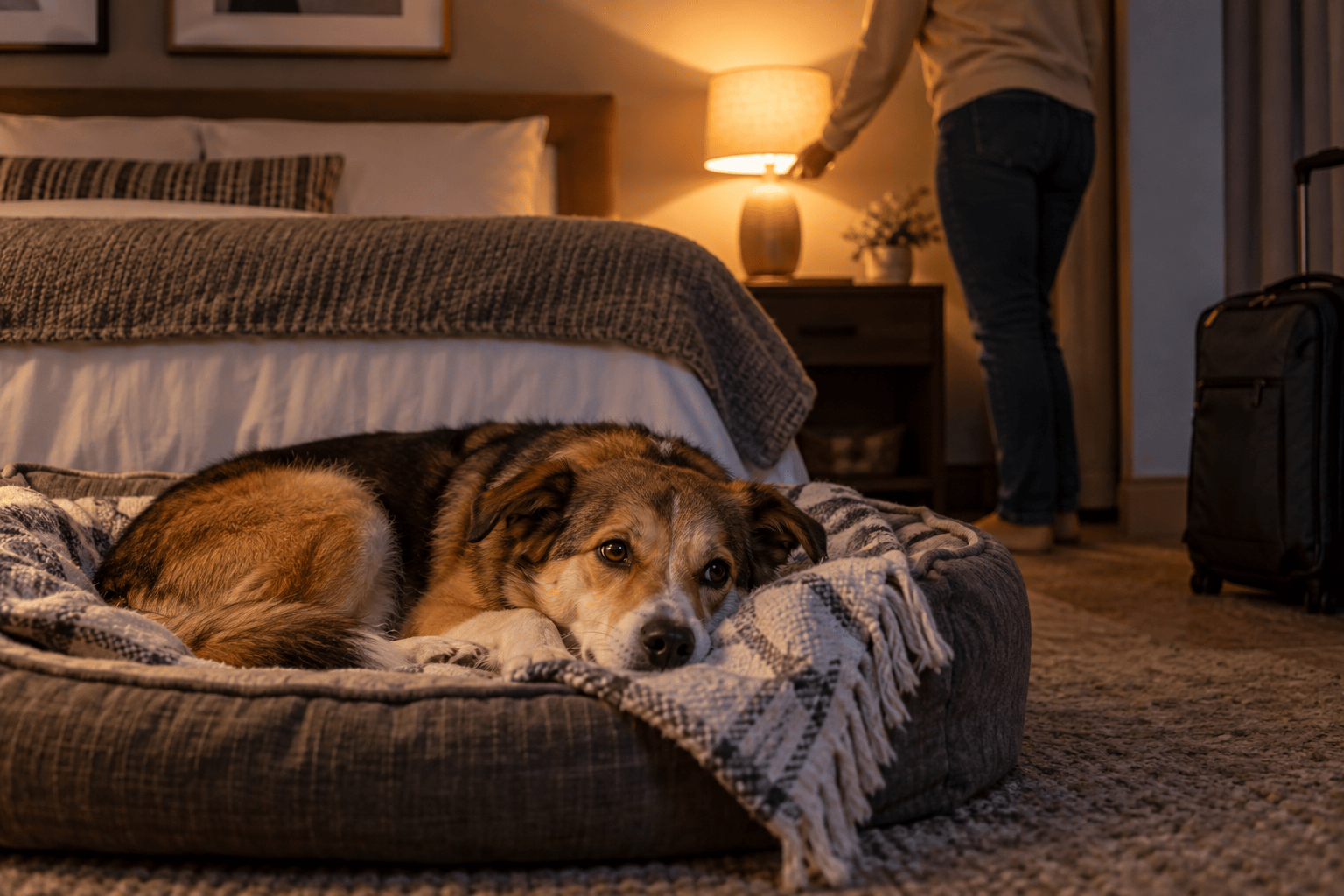
A simple reset plan for the first 48 hours
Use local daylight
Morning outdoor light and normal daytime activity help distinguish day from night. Keep nighttime lighting and interaction low when it is safe to do so.
Keep four anchors predictable
Choose stable local times for waking, meals, walks, and bedtime. Keep the order of familiar events even if the exact clock time changes.
Shift meals without changing the total
Move feeding toward the local schedule while preserving the normal daily amount. For a large time difference, smaller temporary shifts may be easier than one abrupt jump.
Make arrival day deliberately easy
Prioritize water, bathroom access, a short walk, familiar food, and sleep. Save crowded attractions and long excursions for after the dog is eating, drinking, eliminating, and settling normally.
Record what is actually changing
Note sleep, food, water, urine, stool, vomiting, medication, and unusual behavior. A short log helps separate a predictable schedule shift from a worsening medical problem.

When it is probably not just jet lag
Seek urgent veterinary help for collapse, breathing trouble, repeated unproductive retching, a swollen abdomen, uncontrolled bleeding, seizures, severe weakness, or suspected toxin exposure. Contact a veterinarian promptly for repeated vomiting or diarrhea, obvious pain, inability to urinate, marked lethargy, refusal to drink, or appetite loss that concerns you.
Also reconsider the travel plan when the dog cannot settle, repeatedly tries to escape confinement, or shows escalating distress. A quieter itinerary, a familiar sitter, or veterinary guidance may be safer than pushing through another travel day.

Before the return trip
Do not wait until the final night to reverse the routine. If practical, begin moving meals and walks toward home time in small increments. Keep medication timing consistent with the veterinarian’s instructions, and confirm how to handle a major time-zone change before departure.
Pack the same familiar food, leash, identification, medication, bedding, and travel restraint used on the outbound trip. The return journey is still a new transition even though the destination is home.
The bottom line
Dogs can show a temporary pattern that looks like jet lag: waking at the old time, early hunger, daytime sleepiness, changed bathroom timing, or nighttime energy. The most useful response is not to force sleep. Use local daylight, familiar routines, measured meals, gentle activity, and close observation.
The label matters less than the trend. A dog that improves while eating, drinking, and acting comfortably is different from a dog whose appetite, energy, breathing, stomach, or behavior is getting worse. When the pattern does not look mild or temporary, call a veterinarian.
Sources reviewed
- National Institute of General Medical Sciences, Circadian Rhythms: https://www.nigms.nih.gov/education/fact-sheets/Pages/circadian-rhythms
- American Veterinary Medical Association, Traveling With Your Pet: https://ebusiness.avma.org/files/ProductDownloads/mcm-client-brochures-travel-with-pet-2023.pdf
- American Kennel Club, How Daylight Saving Time Affects Your Dog’s Routine: https://www.akc.org/expert-advice/home-living/daylight-savings-time-affect-dogs/
- American Kennel Club, How to Change Your Dog’s Routine: https://www.akc.org/expert-advice/advice/how-to-change-your-dog-s-routine/
- VCA Animal Hospitals, Signs Your Dog Is Stressed and How to Relieve It: https://vcahospitals.com/know-your-pet/signs-your-dog-is-stressed-and-how-to-relieve-it
- VCA Animal Hospitals, Testing for Decreased Appetite with Listlessness: https://vcahospitals.com/know-your-pet/testing-for-decreased-appetite-with-listlessness
Research note: "Dog jet lag" is used here as plain-language shorthand for temporary schedule disruption after travel, not as a veterinary diagnosis. This article does not replace individualized veterinary care.
Leave a Reply