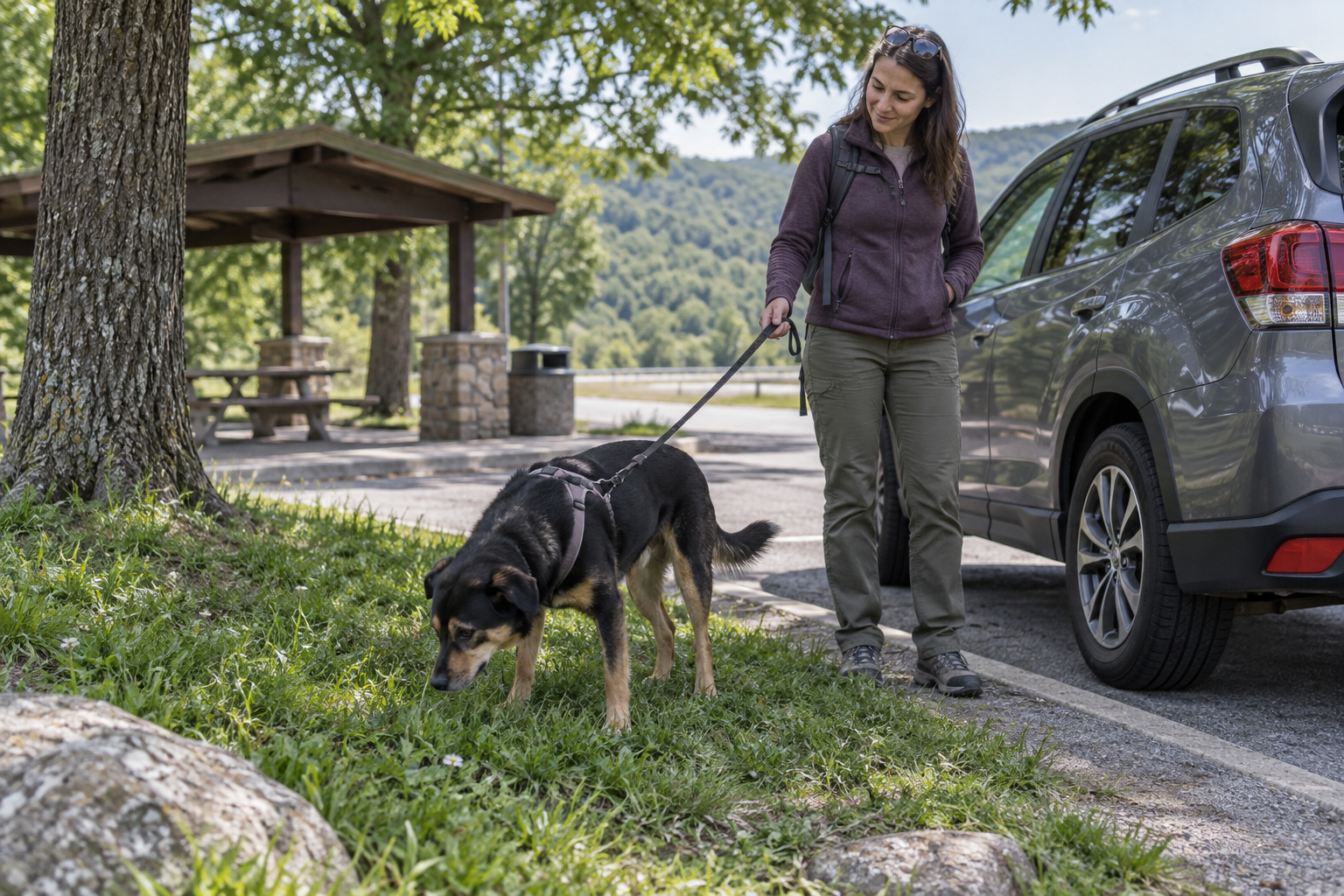
You have stopped twice. Your dog sniffs every blade of grass, watches every passing car, and still will not pee.
That can be a travel problem rather than a bladder problem. Some dogs need privacy, a familiar surface, or more time to settle. But a dog that repeatedly tries and cannot pass urine is showing a very different pattern.
Quick answer
A dog may hold urine while traveling because the place feels unsafe, the surface is unfamiliar, the leash changes the routine, the stop is too stimulating, or the dog has not consumed much water. Move to a quiet area, allow a calm sniffing walk, use the familiar cue, and try again without pressure. Repeated straining, pain, dribbling, a swollen abdomen, vomiting, weakness, or complete inability to urinate needs prompt veterinary care.
First question: is your dog refusing, or trying and failing?
Watch what actually happens.
- Sniffs, looks around, and walks away: reluctance or distraction is plausible.
- Keeps squatting or lifting a leg with little or no urine: urinary difficulty moves higher on the list.
- Passes a normal stream after reaching a quieter place: the setting was probably important.
- Seems painful, weak, restless, or swollen: stop treating it as a training issue.

1. The stop feels too exposed
Busy rest areas combine engines, doors, unfamiliar dogs, people, and new smells. A dog that normally uses a quiet yard may remain too alert to eliminate.
Walk away from traffic when it is safe. Choose a clean, well-lit area with enough distance from other dogs. Keep the leash secure, but avoid hovering or repeating the cue every few seconds.

2. The surface is unfamiliar
Some dogs build a strong preference for grass, mulch, gravel, or one corner of the yard. A paved airport relief area or dry roadside patch may not register as a bathroom.
Practice before the trip on several safe surfaces. Reward after the dog finishes rather than luring the dog into an endless food search.

3. The leash changes the routine
A dog used to wandering freely in a fenced yard may find a short leash and watching owner awkward. The answer is not to unclip the leash beside a road.
Practice at home with the travel leash. Give enough slack to sniff and turn while keeping control. Use the same calm cue you will use on the trip.

4. The dog is too distracted or worried
Scanning, panting, trembling, pulling toward the car, or refusing treats suggests the dog is not settled. A longer, quieter sniffing walk may help more than standing on one patch.
If fear is intense, return to the secure vehicle, cool the cabin, and find a safer stop. Do not punish an accident later; punishment does not teach a nervous dog where to go.

5. The schedule changed
Early departures, skipped walks, different meals, and sleep disruption can shift the usual bathroom pattern. Note the last normal urination, water intake, and attempts rather than relying on the clock alone.
AVMA recommends planned stops about every two hours on long trips. That is a planning interval, not a promise that every dog will urinate at every stop.

6. The dog has consumed less water
Stress, nausea, cool weather, and unfamiliar water can reduce drinking. Carry water from home when possible and offer it during planned breaks. Do not force large amounts into a dog that is nauseated or distressed.
Reduced drinking may explain less urine, but it does not make repeated straining safe to ignore.
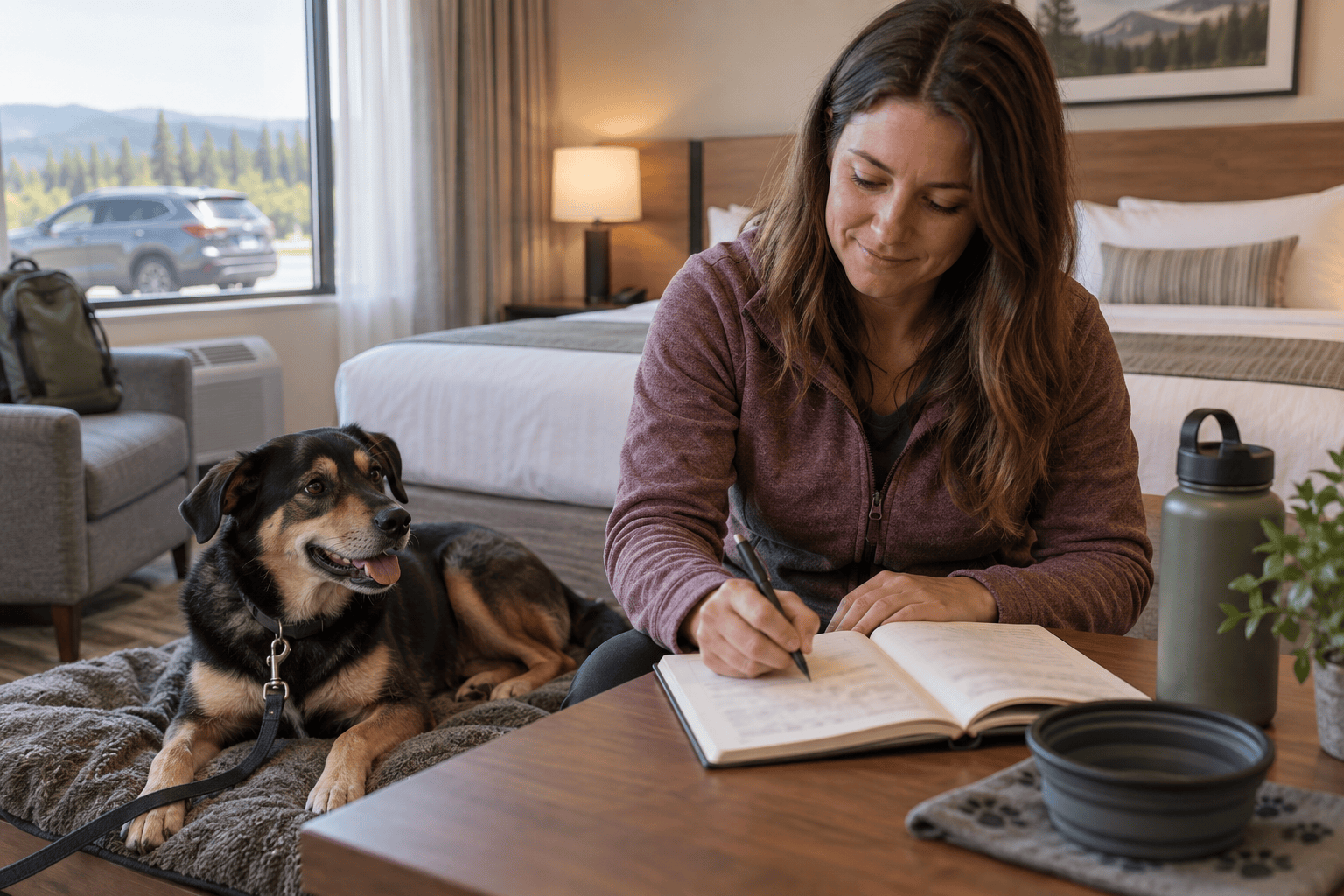
7. Pain or urinary retention is developing
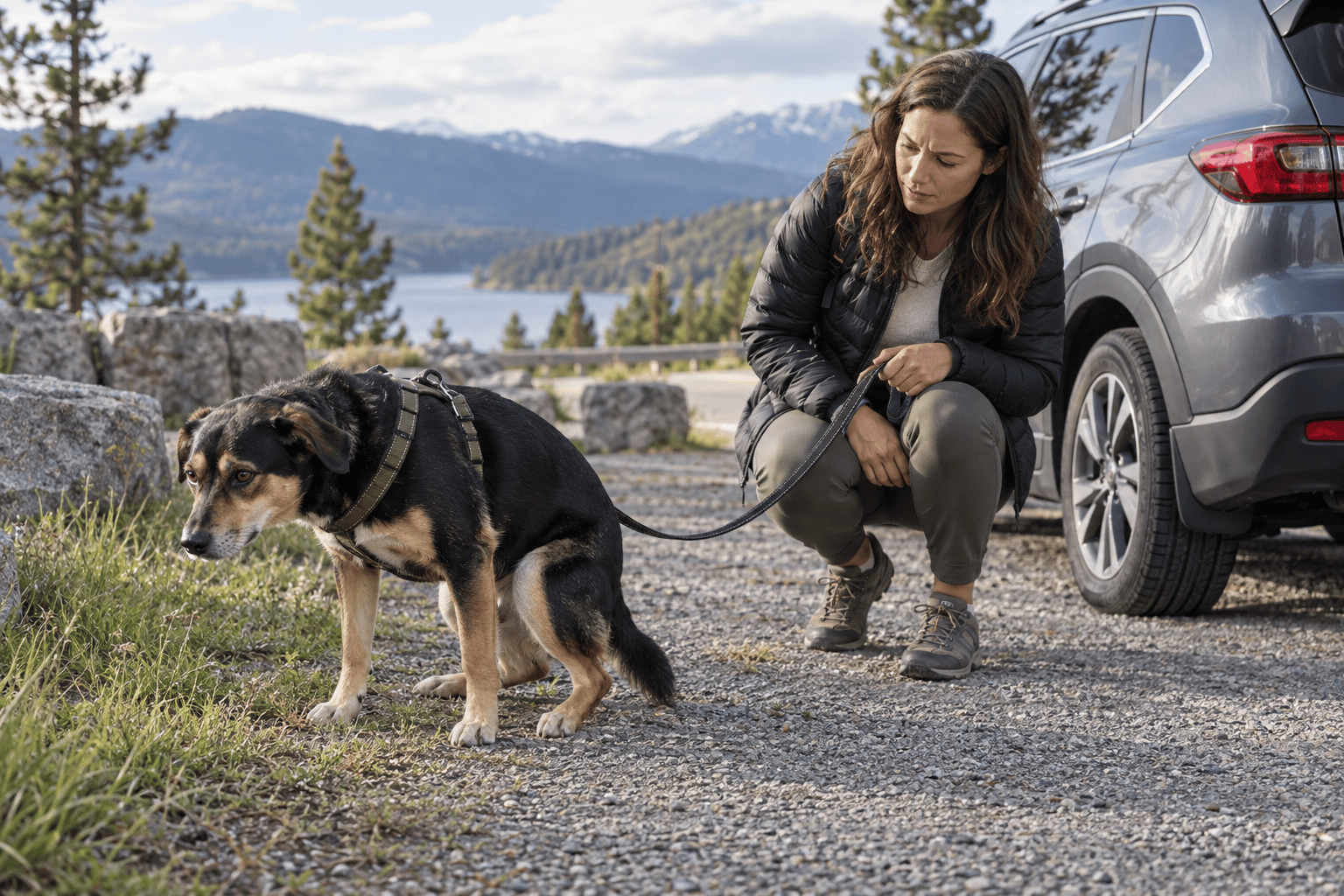
Urinary obstruction and retention can become emergencies. Warning signs include repeated attempts with little output, straining, crying, dribbling, blood, persistent licking, a firm or swollen abdomen, vomiting, weakness, or collapse.
If the dog is trying and cannot produce urine, contact an emergency veterinarian. Do not press the abdomen, try to express the bladder, or give leftover or human medication.
A practical rest-stop reset
- Park safely and attach the leash before opening the door.
- Move away from traffic and unfamiliar dogs.
- Give the dog several quiet minutes to sniff.
- Use the familiar cue once.
- Reward calmly after elimination.
- Record whether urine appeared normal.
- If there are repeated unproductive attempts or pain, call a veterinarian.
What to practice before the next trip
Teach the cue at home by saying it as the dog begins to eliminate, then rewarding after completion. Once the cue is reliable, practice in several safe locations, on short leash, and on different surfaces. Add short drives that end at calm walking areas instead of making every trip lead to a stressful destination.

The bottom line
One missed bathroom opportunity in a noisy new place can be behavioral. Repeated attempts without urine are not the same thing. Change the environment once or twice, watch the stream and the dog’s comfort, and escalate quickly when there is straining, pain, illness, or no urine despite repeated attempts.
This article provides general education and cannot diagnose urinary obstruction, infection, dehydration, pain, or anxiety.
Leave a Reply