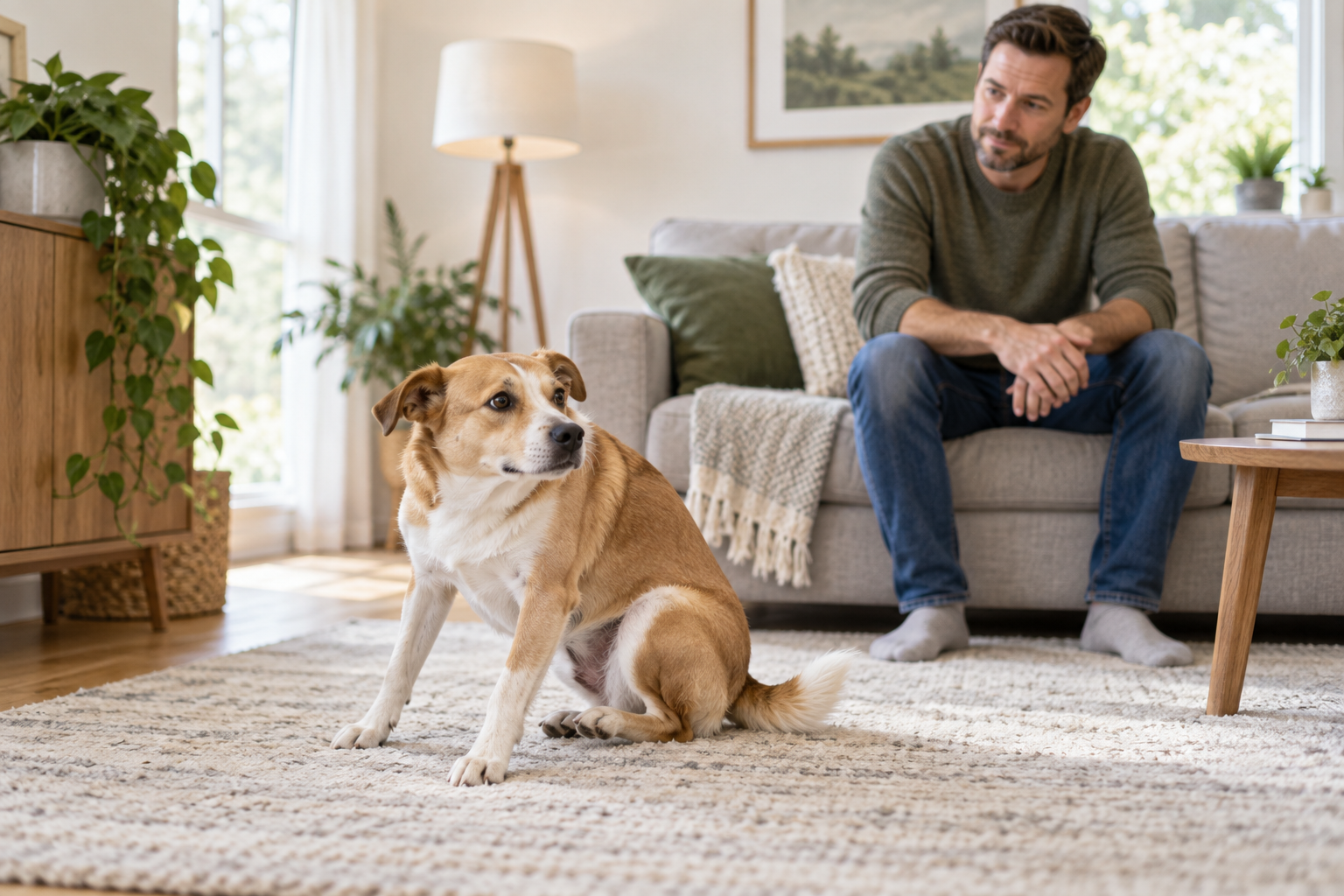
Your dog sits down, pulls forward with the front legs, and leaves you staring at the carpet wondering what just happened.
One quick scoot can be nothing more than a stray bit of debris or a brief itch. When it keeps happening, though, your dog is telling you that the skin or tissue around the rear end feels uncomfortable. The useful question is not “Is it worms?” It is “Is this stopping, or is there a pattern I need to act on?”
Quick answer
Dogs scoot because something around the rear end feels itchy, irritated, pressured, or painful. Common possibilities include dirty or tangled fur, anal-sac trouble, skin allergies, irritation after grooming, soft stool or constipation, and parasites. Call a veterinarian when scooting repeats, your dog seems painful, or you notice swelling, a wound, blood, pus, a strong new odor, straining, or a change in behavior.

First check: one odd moment or a repeating pattern?
Watch before you guess.
- One scoot after a bowel movement, then normal behavior: check for visible debris and monitor.
- Several scoots in a day or repeated licking: irritation is continuing and deserves a veterinary call.
- Straining, crying, guarding the rear, or refusing to sit: treat it as pain, not comedy.
- Swelling, blood, pus, or an open spot beside the anus: arrange prompt veterinary care.
Do not keep touching a painful area. Even a gentle dog may turn or snap when the rear end hurts.

1. Something is caught in the fur
A small piece of stool, matted hair, grass, or damp fur can create a short-lived itch. Long-haired dogs may be more likely to carry debris after a bowel movement.
Look from the side in good light. If a loose piece of debris wipes away easily with a damp cloth and the dog is comfortable, monitor for another episode. Stop if the skin is red, the material is tangled tightly, or your dog resists. Clippers and scissors close to moving skin can cause an injury.

2. The anal sacs are not emptying normally
Anal sacs sit beside the anus and normally release a small amount of fluid during defecation. They can become impacted, inflamed, infected, or abscessed. Scooting, repeated licking, discomfort while sitting, and painful or difficult defecation can occur.
You cannot confirm the cause from scooting alone. A veterinarian usually needs to examine the area and may perform a rectal examination. Do not squeeze the sacs because a video makes it look easy. Unnecessary or forceful expression can hurt irritated tissue, and an infection or mass needs a different response.

3. The skin is itchy from allergies
Allergies can inflame more than the ears and paws. The skin around the rear can itch too, and allergy-related inflammation may accompany anal-sac trouble.
Look for clues elsewhere: paw licking, red skin, recurrent ear trouble, belly itching, or a seasonal pattern. Those clues do not identify the allergen, but they make a whole-skin problem more plausible than a single dirty spot.

4. Grooming products or clipping irritated the area
If scooting began soon after a bath, sanitary trim, or grooming appointment, clipped skin or a product may be irritating the area. Check for mild redness or sensitivity without scrubbing.
Tell the groomer and veterinarian what products were used. Avoid experimenting with human anti-itch cream; a dog may lick it, and the active ingredient may not be appropriate.

5. Stool changes are adding pressure or irritation
Firm stool helps many dogs empty their anal sacs naturally. Repeated soft stool may not provide the same pressure, while constipation and straining can make the entire area uncomfortable.
Record whether stool has become loose, hard, unusually small, bloody, or coated with mucus. Also note appetite, vomiting, and recent food changes. Do not add a large amount of fiber or abruptly replace the diet without veterinary guidance; the right response depends on why the stool changed.

6. Parasites are possible, but not the only answer
Tapeworm segments can irritate the area around the anus. They may look like small cucumber seeds or grains of rice on fresh stool, fur, or bedding. A common dog tapeworm uses fleas in its life cycle, so treatment also needs effective flea control to reduce reinfection.
Not seeing segments does not settle the question, and scooting by itself does not prove worms. Take a clear photo of anything unusual and ask your veterinarian whether to bring a stool sample. Use a veterinary dewormer selected for the parasite rather than a random over-the-counter product.

7. A wound, infection, or mass needs an examination
Less common problems matter because waiting can make them harder to treat. An infected anal sac can form an abscess and rupture through the skin. Older dogs can also develop growths around or within the anal-sac area.
Call promptly if one side looks swollen, the area is discolored, there is blood or pus, the odor is suddenly strong, or your dog is lethargic, feverish, unable to get comfortable, or struggling to defecate. A visible wound or severe pain is not a home-care project.
What you can safely do today
- Note when the scooting happened and whether it repeated.
- Watch one normal bowel movement if possible.
- Look for loose debris, redness, swelling, discharge, or seed-like segments without probing the area.
- Check for other itch clues, including paw licking and irritated ears or skin.
- Photograph anything unusual and record recent grooming, diet, stool, and flea-prevention history.
- Call the veterinary clinic if the behavior repeats or any warning sign appears.
Avoid squeezing anal sacs, inserting anything, scrubbing sore skin, or giving human medication. Cleaning the carpet may solve the mess; it does not solve repeated discomfort.

When should you call the vet?
Arrange a veterinary appointment when the scooting is repeated, lasts beyond a brief isolated episode, or comes with frequent licking or bowel changes. Seek more urgent advice for:
- visible swelling, a wound, blood, or pus;
- obvious pain, crying, snapping, or refusal to sit;
- repeated straining or difficulty passing stool;
- vomiting, weakness, marked lethargy, or loss of appetite;
- a firm new lump or recurring anal-sac problems.
The bottom line
A single scoot may end after a quick visual check and some monitoring. A pattern of scooting means the discomfort is still there. Record what you see, resist the urge to squeeze or medicate the area yourself, and let a veterinarian examine repeated, painful, swollen, or draining problems.
This article provides general education and cannot diagnose anal-sac disease, allergy, infection, parasites, digestive disease, or a mass.
Leave a Reply