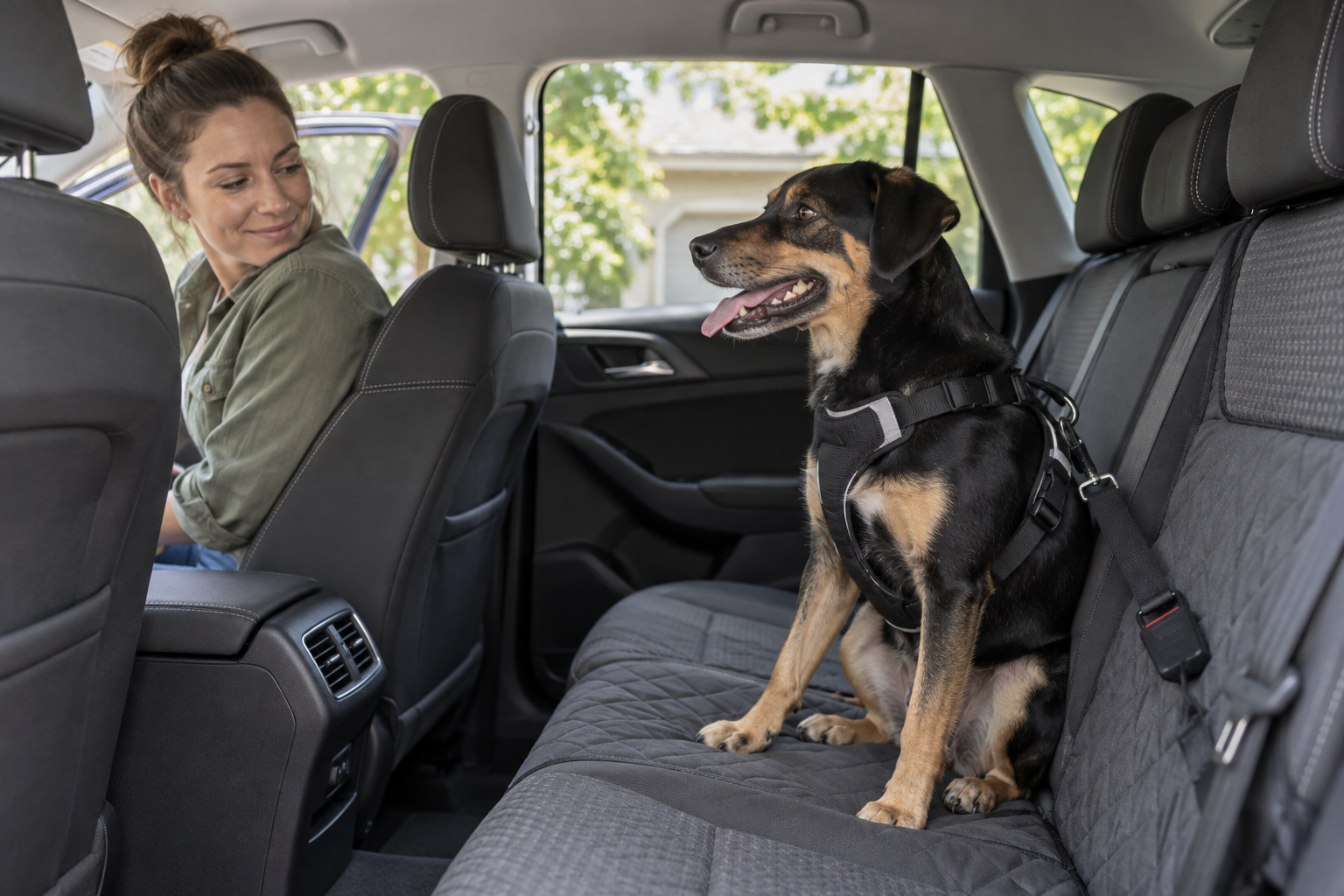
The car is cool. The trip has barely started. Your dog is already panting hard in the back seat.
That can be excitement, but it can also be the first visible clue that the ride feels stressful, nauseating, too warm, painful, or physically difficult. The useful question is not simply, “Is panting normal?” It is: when did it start, what else is happening, and does it improve when the car stops?
First, check the timing
The timing does not diagnose the cause, but it gives you a better starting point.
- Before the engine starts: anticipation, fear, restraint discomfort, or a learned association is more likely.
- Only after the car moves: motion sickness, turns, braking, or road vibration moves higher on the list.
- As the cabin warms: heat and weak airflow become urgent checks.
- After a long stretch: discomfort, pain, thirst, or a bathroom break deserves attention.
- After the trip ends: continued heavy panting matters more than panting that settles promptly.

1. The dog is excited
Some dogs start panting as soon as they hear keys or see a travel harness. They may have a loose body, a wagging tail, bright eyes, and an eagerness to get into the car. The panting often eases once the first burst of activity passes.
Excitement is the least concerning explanation only when the rest of the dog looks comfortable. A dog that is stiff, crouched, trembling, trying to escape, refusing food, or unable to settle is showing a different pattern.

2. The car predicts something stressful
A dog can become worried before the vehicle moves. The trigger may be entering the car, the door closing, the engine sound, restraint, windshield wipers, or a history of rides that ended at the veterinary clinic or with nausea.
Do not force a frightened dog through a long trip to “get used to it.” Build the experience in smaller pieces and finish while the dog is still able to relax.
3. Motion sickness is starting
Panting can appear with nausea, but it is rarely the only clue. VCA lists signs such as whining, pacing, excessive drooling, lip licking, lethargy, vomiting, and defecation. Some dogs experience nausea and anxiety together.
If drooling, repeated swallowing, lip licking, or restlessness builds after the vehicle starts moving, pull over safely. Discuss recurring episodes with a veterinarian before the next long drive. Do not improvise with human motion-sickness medication.

4. The cabin is too warm
Dogs rely heavily on panting to lose heat. A parked or poorly ventilated vehicle can heat rapidly, and a cracked window does not make an unattended car safe. Short-nosed dogs and dogs with health risks may struggle sooner.

5. The restraint or riding position is uncomfortable
A harness can twist, a crate can slide, a blanket can bunch under the dog, or luggage can reduce airflow. A dog that cannot stabilize during turns may brace continuously and pant from effort or distress.
Check the setup only after the vehicle is safely parked. The dog should be secured, able to lie naturally, and separated from shifting bags. A restraint should not press across the throat.

6. The dog needs a break
Long drives stack noise, vibration, vigilance, thirst, a full bladder, and limited movement. Panting that appears after a long quiet stretch may be a request for relief.
Use planned stops. Park safely, attach the leash before opening the door, offer water, allow a bathroom opportunity, and give the dog time to sniff and decompress.

7. Pain or a breathing problem is being exposed
Car entry, balancing, or lying in one position can aggravate pain or another medical problem. Panting may also accompany heart or respiratory disease. A new pattern in a dog that previously rode comfortably deserves more attention than a familiar burst of excitement.
Seek urgent veterinary care for labored or noisy breathing, blue, gray, very pale, or unusually dark-red gums, collapse, severe weakness, a swollen abdomen, repeated unproductive retching, seizures, or a dog that cannot get comfortable.
A 60-second roadside check
- Temperature: Is the rear-seat area genuinely cool?
- Breathing: Is the dog moving air easily?
- Gums: Are they the dog’s normal color?
- Nausea: Is there drooling, lip licking, vomiting, or diarrhea?
- Body language: Is the posture loose or escape-focused?
- Setup: Is the harness twisted or luggage blocking airflow?
- Recovery: Does the dog begin settling after the safe stop?
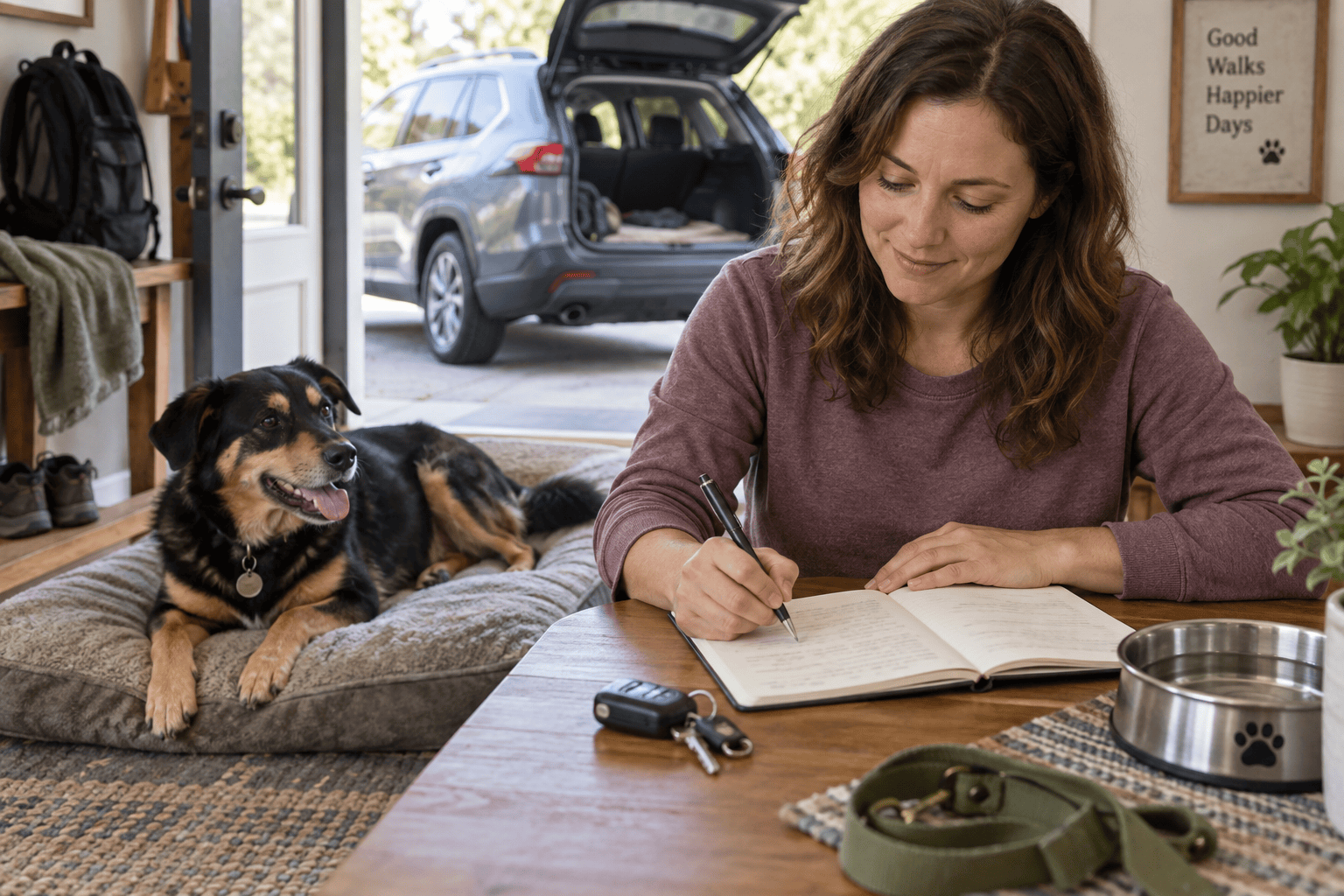
What to change before the next drive
Practice below the dog’s stress threshold
Start with a parked car and progress in small steps. A two-minute calm session is more useful than a forced hour-long ride.

Keep the setup stable and familiar
Use a properly fitted restraint or secured carrier, a familiar blanket, and a clear space without loose luggage. Introduce the setup before travel day.
Plan temperature and stops
Cool the vehicle before loading the dog, confirm airflow reaches the rear area, and choose rest stops before the dog becomes desperate.
Ask about recurring nausea before a long trip
A veterinarian can assess motion sickness, pain, medical conditions, and whether prescription treatment is appropriate. Do not use a universal fasting rule for every dog.

The bottom line
Panting in the car is a sign to read in context, not a diagnosis. Loose posture that settles quickly may fit excitement. Panting before movement may fit anticipation. Drooling and lip licking after movement raise concern for nausea. Rising panting in a warm cabin demands immediate cooling and a safe stop.
When breathing looks difficult, gums look abnormal, the dog becomes weak, collapses, vomits repeatedly, or fails to recover in a cool quiet place, stop treating the problem as travel behavior and contact a veterinarian.
Sources reviewed
- VCA: Air and Car Travel
- VCA: Motion Sickness in Dogs
- AKC: Preventing Anxiety and Motion Sickness
- ASPCA: Traveling With Pets
- AVMA: Pets in Vehicles
Research note: Panting has many possible causes. This article is educational information and cannot diagnose anxiety, motion sickness, heat illness, pain, heart disease, or respiratory disease.
Affiliate disclosure: This article does not contain paid product placement. If future product links are added, Pet Tech Compass may earn a commission without changing the reader’s price.
Leave a Reply