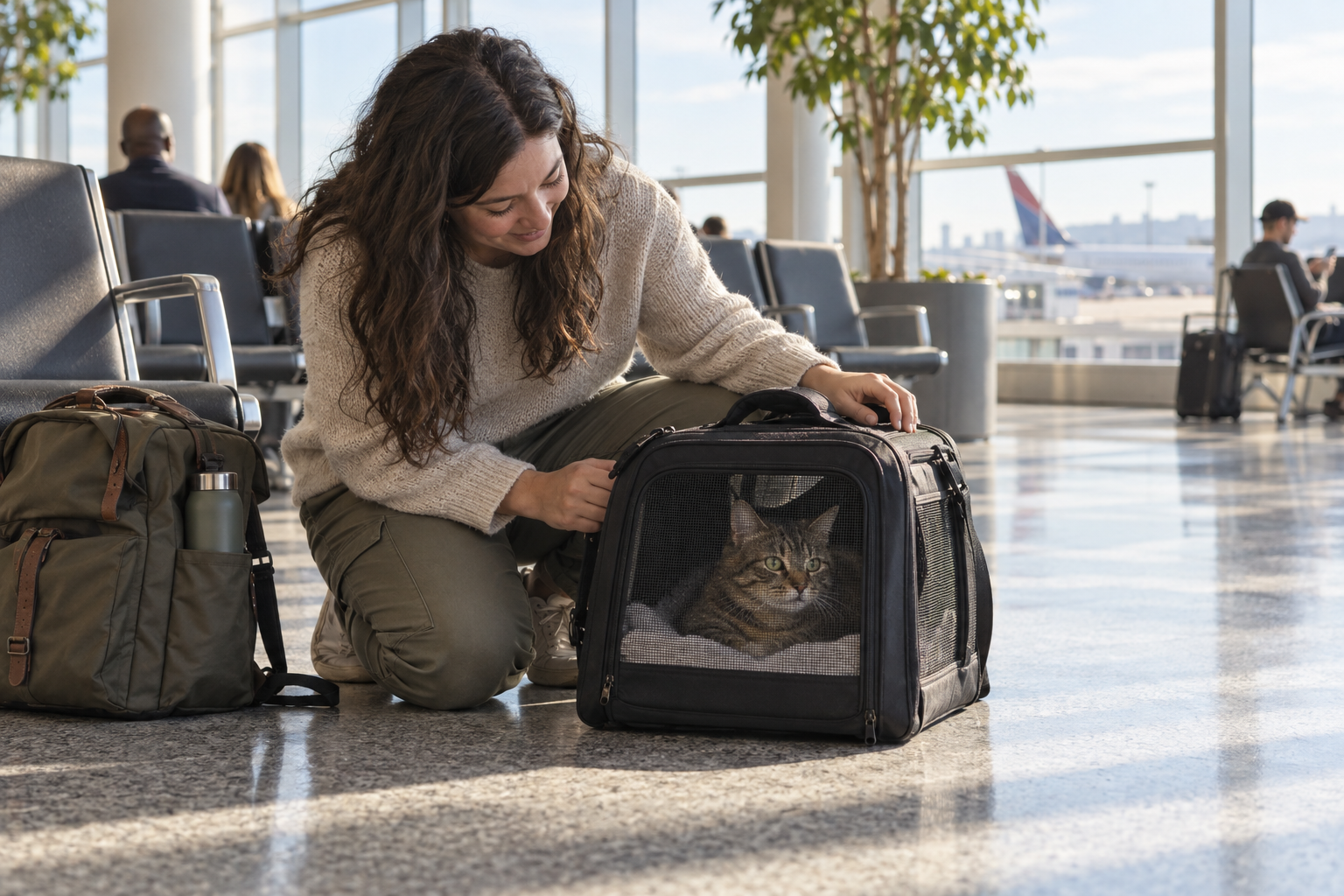
The line is moving. Your cat is in a carrier, your shoes and bags are heading toward the conveyor, and suddenly you're wondering: Does the carrier go through with the cat inside?
No. Take your pet out first. At a U.S. TSA checkpoint, the empty carrier goes through the baggage X-ray. You keep control of your pet while you go through screening. TSA's Small Pets guidance says the carrier can also receive a visual or physical inspection. Do not put an animal on the conveyor.
Jump to what you need
What goes through the X-ray?
Think of the carrier as luggage for screening purposes, but not your pet. The bag scanner examines the empty carrier. You hold or otherwise control the animal as the officer directs you through the passenger screening area. TSA's travel tips say a leash helps you maintain control, and it should be removed when you carry your pet through the metal detector.
That rule is easy to miss if you have been watching news about new 3D bag scanners. The technology used for belongings may change by airport and lane. It does not turn your dog or cat into something that belongs in the baggage machine. The current TSA small-pet instructions are the useful reference for this decision, not a video of a new scanner.

The checkpoint sequence
You do not need to memorize a complicated ritual. You do need a plan for the moment the carrier opens.
1. Secure the pet before opening the carrier
For a cat, fit a secure harness at home and check that it cannot slip over the shoulders. A dog should be under firm control too. This is a practical escape-prevention step, not a claim that TSA requires one specific harness. In a loud, unfamiliar terminal, even a calm pet may move unpredictably.

2. Tell the officer you are traveling with a pet
Before you unzip anything, let the screening officer know. Ask where to stand and when to remove the animal. Checkpoint layouts differ, and officer instructions take priority over any generic online checklist.

3. Remove the pet; send the empty carrier for screening
The TSA guidance says to remove the pet and put the carrying case through the X-ray. Keep the animal with you and under control. Do not set the carrier on the belt until you know it is empty.

4. Go through passenger screening as directed
TSA says to maintain control with a leash and remove the leash when carrying your pet through the metal detector. The exact lane and any additional check are directed by the officers on site. Do not guess that the scanner for bags is also the route for a pet.

5. Re-secure your pet before collecting everything else
Once screening is complete and the officer says you can proceed, put your pet back into the carrier and close every zipper and latch. Then gather your other belongings. That order keeps a loose pet from becoming the next problem in a crowded lane.

If your pet might bolt
The most stressful part is often not the screening machine. It is opening the carrier in a strange place. Before you reach the belt, tell the officer that your pet is frightened or likely to escape and ask how they want you to proceed. Do not open the carrier early, let a leash trail into the equipment, or rely on a stranger to hold the animal.
Some travelers ask about a more private screening arrangement. You can ask the officer what options are available, but do not count on a particular room or procedure without confirmation at that checkpoint. If your pet cannot safely be removed at all, contact TSA and your airline before travel rather than planning to send the occupied carrier through the X-ray.

Before you leave home
Run a 30-second practice at home: harness on, carrier open, lift the pet, carrier empty, pet back inside, zippers checked. Make sure your ID and other essentials are reachable so your hands are free when needed. An absorbent pad and a small cleanup kit can help with delays, but keep the checkpoint setup simple.

Finally, clear up the other rule before you arrive: TSA checkpoint permission is not airline cabin approval. The FAA says each airline sets its own cabin-pet policy. Confirm that your animal and carrier are accepted on your exact flight, including size, reservation and fee rules. Our carry-on guide covers that separate booking decision.

The answer to remember
Pet with you. Empty carrier through the baggage X-ray. Tell the officer you have an animal, follow their directions, and close the carrier again before leaving the lane. If the pet is hard to handle outside the bag, ask for help before you unzip it.
This is a U.S. TSA checkpoint explainer, checked September 25, 2026. Procedures can change and airline rules are separate; verify both before travel.
Leave a Reply