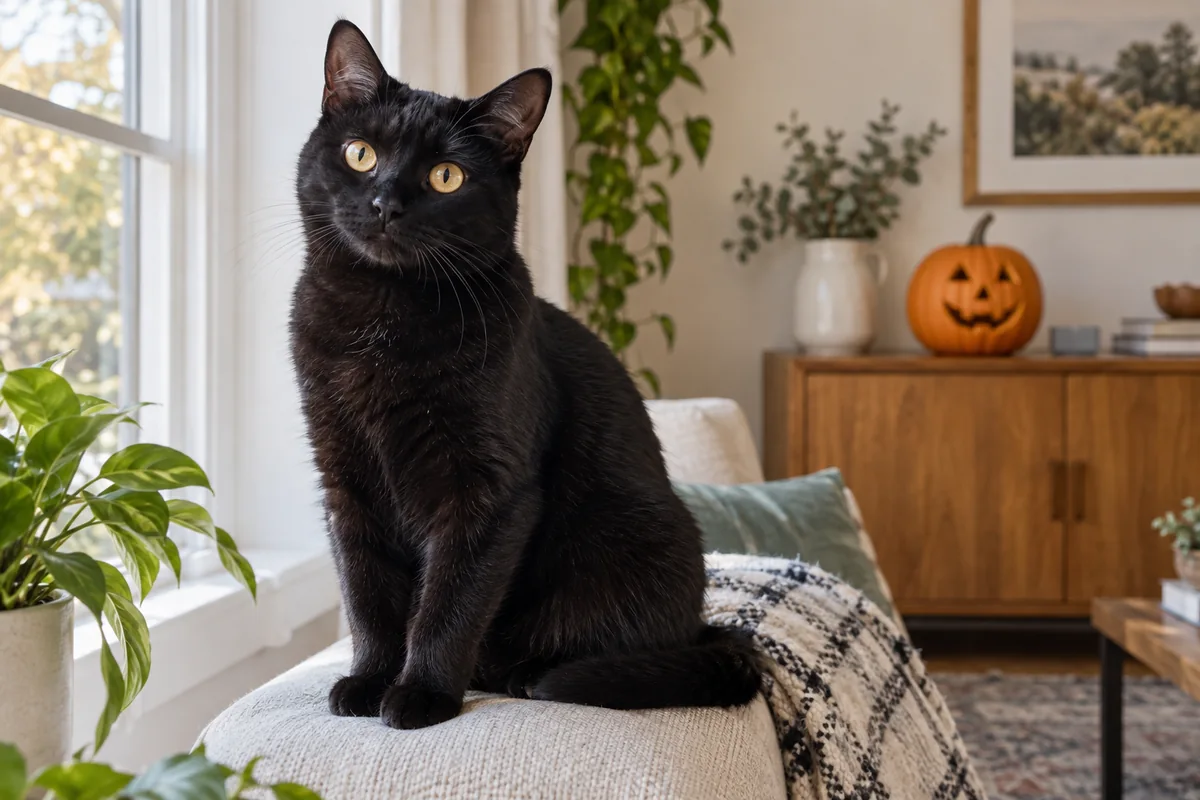
A black cat walks past a pumpkin, and the scene instantly looks like Halloween. Swap in a golden retriever and the mood changes completely. The cat has not done anything different. We have brought a story to the picture.
That is the useful starting point: black cats became Halloween symbols through human beliefs and repeated imagery, not because black fur makes an animal mysterious or dangerous. The interesting question is how that association stayed recognizable long after many people stopped believing the superstition.
The story belongs to people, not the cat
The Library of Congress describes medieval fears about dark cats and later beliefs that cats were supernatural companions to witches. That history helps explain the familiar Halloween pairing. It does not turn those beliefs into biological facts.
Keep the two questions separate: why did people tell this story, and what is a real cat like? A useful answer to the first should not quietly become a claim about the second.

A familiar image can outlive a belief
You do not have to believe a cat causes bad luck to recognize its silhouette on a Halloween invitation. A raised back, a curved tail, and a pair of bright eyes communicate the theme quickly.
That is one way to understand why the image works. A symbol can remain useful after its original meaning becomes something people treat as a joke.

There is no single tidy origin story
It is tempting to attach the whole association to one date, one accusation, or one dramatic decree. The source reviewed here supports a broader historical connection; it does not establish a single moment when every black cat became a Halloween cat.
Be cautious with a timeline that looks too neat. Folklore is passed along, changed, illustrated, and reused. A short social-media caption can hide those differences.

Bad luck is not a coat-color trait
A black coat does not tell you whether a cat wants company, prefers distance, enjoys play, or needs medical care. Those are questions about the individual animal and its circumstances.
The practical test is simple: if you removed the Halloween background, would you interpret the same behavior differently? A cat watching a doorway is still a cat watching a doorway, not a warning about what will happen next.

The costume is optional; the animal is not a prop
If you want an October photo, put the theme in the background. A paper decoration behind the cat can say Halloween without putting something on its head. Let the cat choose whether to stay in the frame.
Check the background props too. Keep small pieces, strings, flames, and anything the cat might chew outside its reach.

Avoid turning an old myth into a new scare
A post saying all black cats face a specific danger on Halloween needs evidence about that danger, place, and time. A historical superstition does not establish how often something happens today.
You can support sensible animal care without repeating an alarming claim as a statistic. Ask for the original source before sharing a screenshot that says shelters everywhere follow the same rule.

Meeting a black cat is an ordinary cat introduction
Give the cat space, let the household explain its preferences, and do not reach into a hiding place for a themed photo. If the animal walks away, that is a reason to change your plan, not a challenge to get the picture.
For someone considering adoption, the worthwhile questions are everyday ones: care needs, household fit, veterinary history, and the time available for a long-term companion.

A better caption changes the story
Try a caption that gives the animal a personality instead of a curse: the cat inspecting your decorations, borrowing the best chair, or waiting for dinner while everyone else gets dressed up.
The point is not to ban playful Halloween imagery. It is to let the joke land on our elaborate traditions rather than on an animal supposedly being bad by nature.

What to remember when you see the silhouette
The black cat works as a Halloween symbol because people recognize the story around it. The real animal does not need to perform that story.
Share the historical explanation if it interests you, and leave the curse out of the care advice. That distinction lets you enjoy the season without carrying an old superstition into a decision about a living cat.

Questions You May Still Have
Are black cats actually unlucky?
No evidence reviewed for this article supports that claim. The association discussed here is folklore.
Should I adopt a cat just for Halloween?
Choose a pet for a long-term household fit, not as a seasonal accessory.
Sources and Research Note
Sources reviewed October 13, 2026. Pet Tech Compass editorial guidance; no firsthand product or venue testing. Images are AI-generated scenes and editorial diagrams, not evidence of real incidents. This seasonal article is not a claim of verified trending search volume.
Leave a Reply