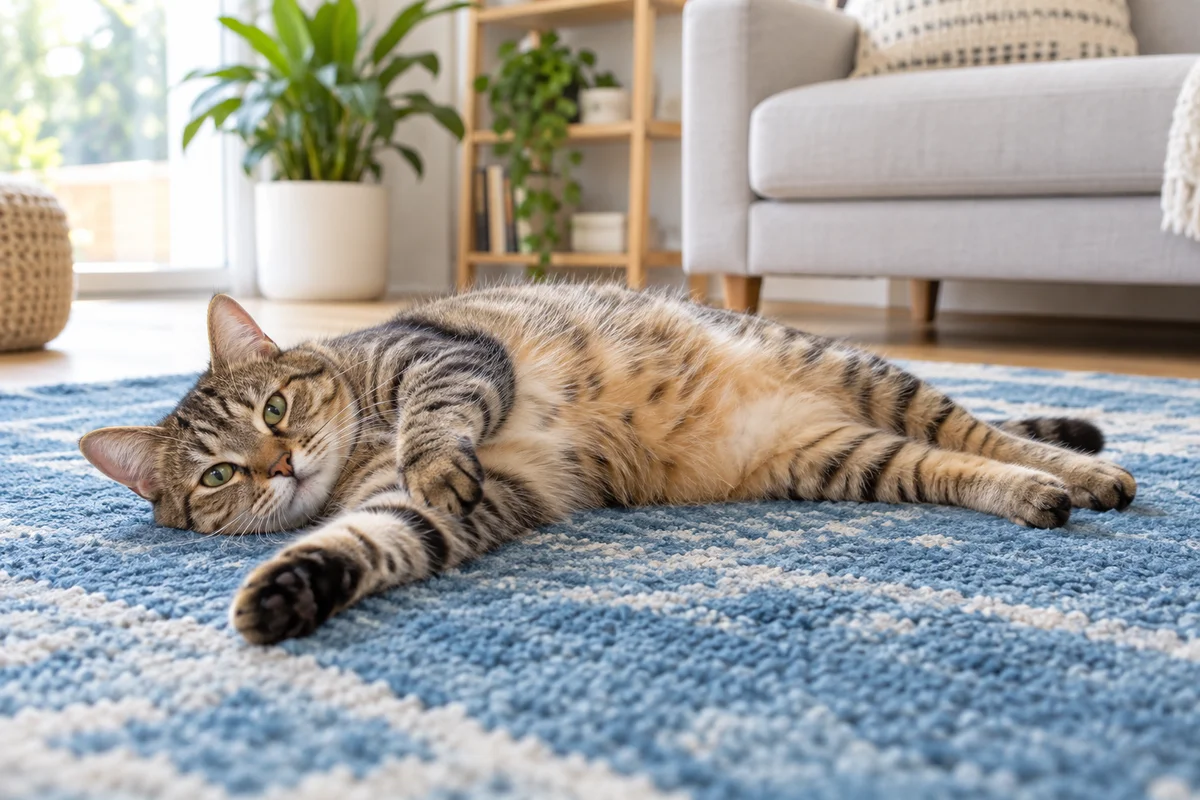
You might notice it when your cat stretches: the belly looks thinner than it used to. Then comes the tempting explanation. A new pet? A busy week? Maybe stress?
New belly fur loss deserves a call to your vet, not a diagnosis from its shape. Cats can remove hair by licking, but the reason for that licking still needs checking. A calm-looking cat and a tidy bald patch don't settle the question.
First, check what actually changed
Start with what you can see without handling your cat. Is this a new patch, a wider patch, or simply an area you haven't looked at before? Has your cat recently had its belly clipped at the clinic? That detail is worth mentioning before assuming unexplained hair loss.
Don't turn your cat over to get a better look. A photo during a natural stretch is enough for a starting record. If your cat objects, leave it alone and tell the clinic you couldn't inspect the area safely.

Look beyond the fur, too. Note changes in eating, movement, litter-box visits, or willingness to be touched. You don't need to solve those changes yourself. You need to pass them on.
Straining to urinate with little or no urine is an emergency. Contact a vet immediately. Belly fur loss alone does not diagnose a urinary problem; this warning applies if urinary signs occur alongside it. Cornell's urinary-health guidance explains why a blockage cannot wait.

Hair falling out and hair being licked off aren't the same
Hair loss can come from a condition affecting the coat, or from a cat repeatedly grooming an area. PDSA's overview of feline hair loss describes both possibilities.
That distinction matters, but it isn't a home diagnosis. You may not catch the licking. You may only find shorter hair or a patch that has become more visible. A photograph can document the change; it cannot tell you why it happened.

Itch is one possibility, even when you don't see fleas
Fleas, allergies, and skin infections belong on the list of possibilities. Not finding a flea doesn't rule out a flea-related problem. Ringworm is a fungal infection, and it doesn't always make a neat ring. Some skin conditions can also spread to people or other animals, so ask your vet rather than relying on an online photo comparison. Cats Protection's skin guide covers these distinctions.
Don't switch foods repeatedly to test an allergy on your own. Bring the current diet details to the appointment and ask whether a supervised investigation is appropriate.
Pain can also draw a cat's attention to an area
Licking is not always about itch. A cat may focus on an uncomfortable area. Cornell's guide to excessive licking describes pain and itch as reasons cats lick, with overlap in the areas affected.
So the location is a clue to discuss, not an answer. Don't press the belly to see whether it hurts.

Stress is possible. It isn't the default explanation
A changed routine or tension between pets may be relevant. But noticing a stressful event doesn't exclude an itchy or painful condition happening at the same time.
VCA's guidance on compulsive grooming emphasizes excluding medical causes before labeling the problem behavioral. Tell your vet about household changes, but keep the medical assessment in the plan.

When should you call the vet?
If the thinning is new or unexplained, contact the clinic and describe it. Mention whether it is spreading and whether the skin looks sore, scabbed, or broken. Also report changes in appetite, thirst, energy, or grooming. PDSA recommends veterinary advice for changes to the coat rather than waiting for a large bald area.
If the skin looks painful or damaged, say so when you call. Let the clinic judge how quickly your cat needs to be seen. Don't wait weeks just to see whether the fur grows back.
You can keep the conversation simple: "I've noticed a new thin patch on the belly. I first saw it on Tuesday. The skin looks intact, but she's licking more than usual. Should I book an appointment, and what should I watch for until then?"
That is a useful report, not a claim that you already know the cause.
Skip the home-treatment experiment
The bare patch can make you want to put something on it. Resist that urge until your vet advises you.
Never apply human hair-regrowth products to your cat. Minoxidil exposure can be life-threatening, including exposure to residues. If exposure may have happened, contact a vet immediately. Cats Protection's minoxidil warning explains the risk.
Don't use a dog's flea treatment on a cat or improvise a dose. The FDA's flea-product safety guidance advises using the correct species-specific product and involving your vet in the choice. Keep the packaging if a product has already been used.

Ask before adding a cream, shampoo, or protective garment. Don't stop a prescribed treatment without checking with the prescribing clinic. Adding several new things at once also makes the history harder to explain.
What to bring to the appointment
A short record is more useful than twenty guesses. Cats Protection's grooming guidance recommends noting behavior and discussing overgrooming with a vet.
Write down:
- When you first noticed the change and whether it has spread.
- Any licking or chewing you have actually seen, including a short video if it happens naturally.
- Changes in eating, drinking, movement, or litter-box use.
- Current food, medications, supplements, and parasite products, with names and dates.
- Recent household changes or tension between pets.

There is no need for an elaborate spreadsheet. A dated photo and a few notes on your phone will do. If you haven't seen extra licking, write that too rather than filling the gap with an assumption.

Keep home life comfortable while you arrange help
Leave familiar resting places available and keep routines reasonably predictable. Give your cat space to choose whether it wants company. These are comfort measures while you arrange advice, not a substitute for checking the cause.

The useful question isn't "Does this look like stress?" It's "What changed, and what does my vet need to know?" Start there. You can help without guessing, touching a sore area, or buying a treatment first.
General information only, not an individual diagnosis. Images are AI-generated illustrations and must not be used to identify skin disease.
Leave a Reply