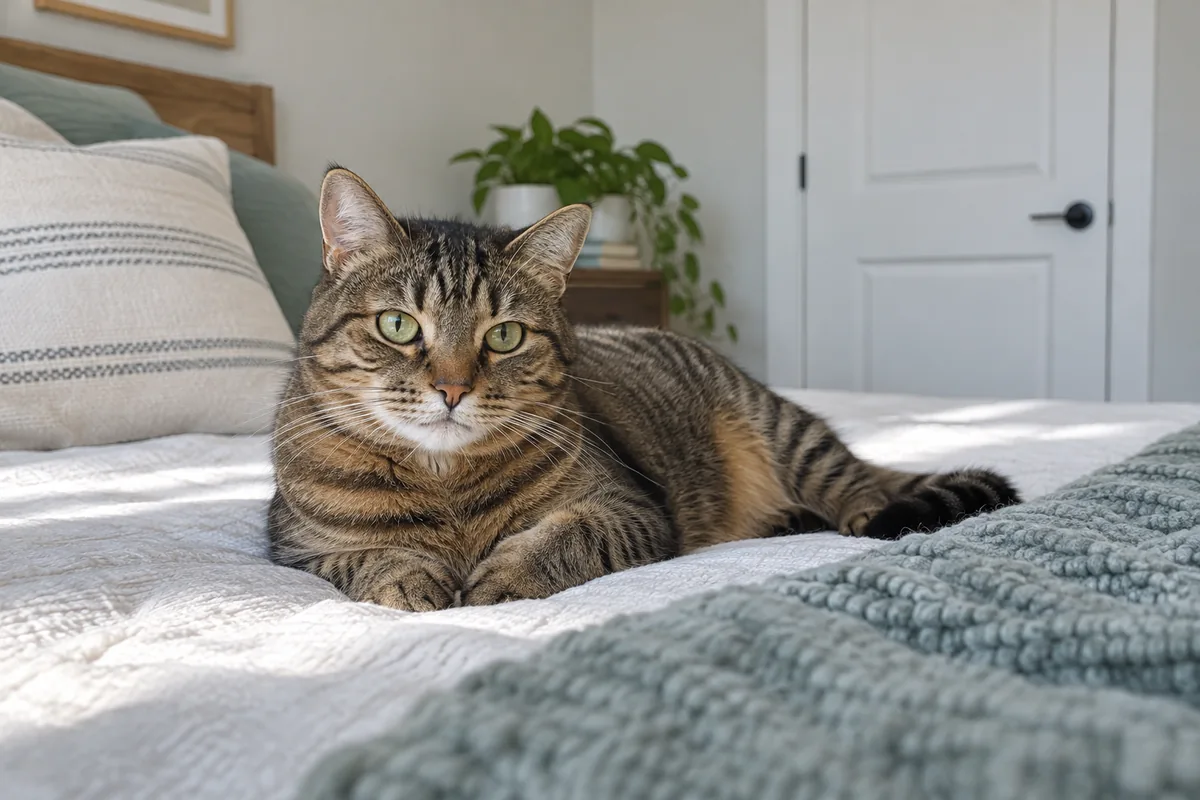
You know where the candy is. Does everyone know where the cat is? That is the question worth settling before the first knock.
Halloween turns the front door into a repeated opening rather than an occasional one. An indoor cat does not need a history of escaping for you to plan around that. The aim is not to make the cat enjoy visitors. It is to keep the evening predictable enough that nobody loses track of access.
Choose the room before the evening starts
Use a place your cat already knows, not the storage room you clear five minutes before guests arrive. Check the room for small costume parts, cleaning supplies, and an open window.
ASPCA recommends a separate comfortable space away from front-door activity for pets that are not comfortable with the bustle. Choose a space that works in your household.

Keep ordinary needs inside the plan
Arrange water, the cat's usual resting or hiding options, and access to a litter box as appropriate for the time spent there. Keep the layout simple rather than filling the room with unfamiliar gadgets.
If your cat has medication, feeding, or supervision needs, include them. A quiet retreat is not a reason to skip care because the rest of the house is busy.

A door rule beats a vague warning
Write a short instruction for household members: the cat is in this room; ask the named adult before opening it. Let guests know the room is not a coat cupboard or bathroom.
The rule helps prevent an accidental chain of open doors while different people assume someone else is watching.

Avoid the last-minute chase
Move the cat into its familiar space before the commotion begins. Do not wait until several visitors are at the entrance and then try to grab a hiding cat.
If the cat resists the setup, simplify and seek an arrangement it tolerates. You may need a different familiar room or an adult managing an alternate entrance. Avoid making separation a wrestling match.

Check the second route out
The front door may not be the only access point. A guest might open a patio door, balcony door, garage entrance, or window. Walk the route a person carrying bags is likely to use.
Ask which doors stay closed and who is responsible for them. A plan built around only the decorated front porch can miss the ordinary side entrance.

Do not retrieve the cat for the photo
A friend asking to see the cat is not a reason to undo the setup. Let the cat stay out of the event, particularly if it is resting or hiding.
A picture earlier in the day is a better option than repeated introductions during a busy evening. The holiday does not require the cat to become a guest attraction.

Keep identification current, without relying on it
Humane World recommends indoor living and identification as ways to protect cats. Identification is useful preparation, but it does not physically prevent an escape.
Check the contact details attached to your cat's identification arrangements. If you use a tracker, remember that a location device is a backup aid, not a substitute for keeping the door plan intact.

If the cat slips out, change from party mode
Stop opening the door unnecessarily and involve a responsible adult. Start with what you know: the last sighting, direction, and time. Avoid turning a crowd of excited guests into an improvised chase.
Contact local shelters or appropriate local lost-pet resources and follow their guidance. This article is a prevention plan, not a complete lost-cat recovery protocol.

End the night deliberately too
Before opening the retreat, check that visitors have left, external doors are closed, and dropped items are picked up. Give the cat the option to emerge rather than carrying it into the cleared living room.
The best door plan is almost boring. The candy changes hands, visitors come and go, and the cat's evening stays separate from all of it.

If a dog in the household reacts to visitors too, see the Halloween doorbell plan.
If you want a seasonal picture, try these costume-free Halloween pet photo ideas before the visitors arrive, rather than bringing your cat back to the busy entrance. Keep glowing accessories out of the room too; a cat biting a glow stick is a separate exposure question.
Questions You May Still Have
Does this apply only to black cats?
No. The practical door and visitor risks are relevant regardless of coat color.
Is a baby gate enough for every cat?
No. Do not assume a cat cannot jump or move past a gate. Choose separation suitable for the individual household.
Sources and Research Note
Sources reviewed October 13, 2026. Pet Tech Compass editorial guidance; no firsthand product or venue testing. Images are AI-generated scenes and editorial diagrams, not evidence of real incidents. This seasonal article is not a claim of verified trending search volume.
Leave a Reply