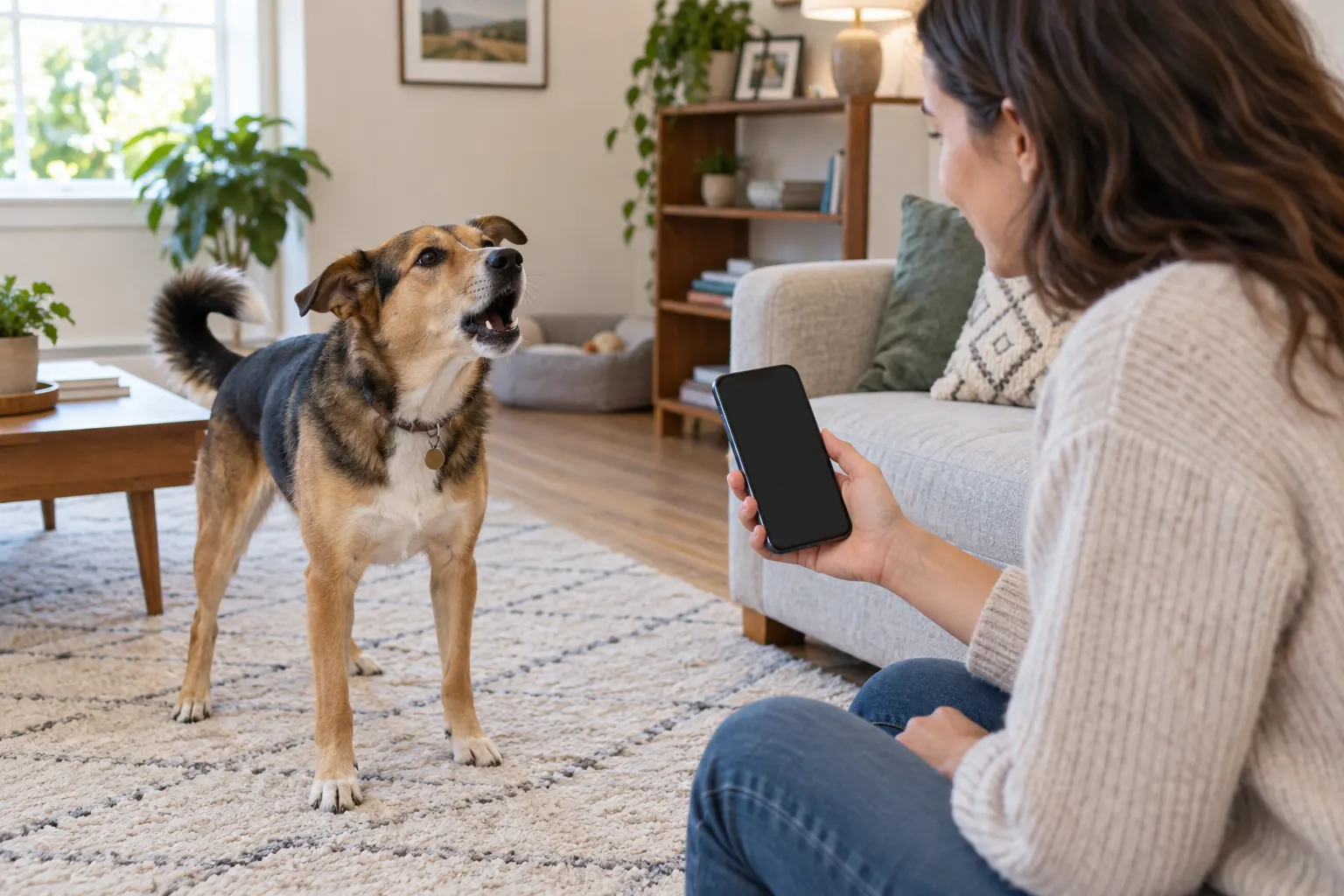
Your dog barks at the window. You hold up a phone, and an app gives you a sentence: “I am protecting you.” It is an entertaining answer. It is not proof of what your dog meant.
What has AI actually learned from barks?
In a 2024 bark-classification study, researchers used a model originally trained on human speech sounds and tested tasks such as identifying individual dogs, breed and the context in which a bark was recorded. The acoustic patterns helped the model outperform simpler baselines on several tasks. That is interesting research, but it is not a universal dog-to-English dictionary.

The study’s context labels came from recordings with known circumstances. Its authors also noted limits: their data covered only domestic dogs and three breeds, and the method relied on annotated examples. A consumer app hearing one noisy clip in a different home has a harder job. A sentence on its screen may sound precise while hiding considerable uncertainty.
A label is not a translation
Imagine the same quick bark after a knock. Your dog might be alerting the household, reacting to a surprising sound, anticipating a familiar visitor or getting excited about a walk. An app that says “guarding” may be guessing a broad category. It cannot inspect the visitor, the dog’s history, the room, or what happens next unless those details are provided and validated.

AKC’s review of dog-bark research describes differences in pitch, duration and spacing across situations. Those differences matter. They still do not justify turning every bark into a neat line of dialogue. Dogs communicate with bodies, movement, scent and the situation as well as sound.

The four-part check before you believe a result
1. What happened just before the bark?
Write down the trigger, not your interpretation of it. Was there a knock, a person outside, a toy that rolled under the sofa, or nothing you could see? A simple description is more useful than “my dog felt jealous.”
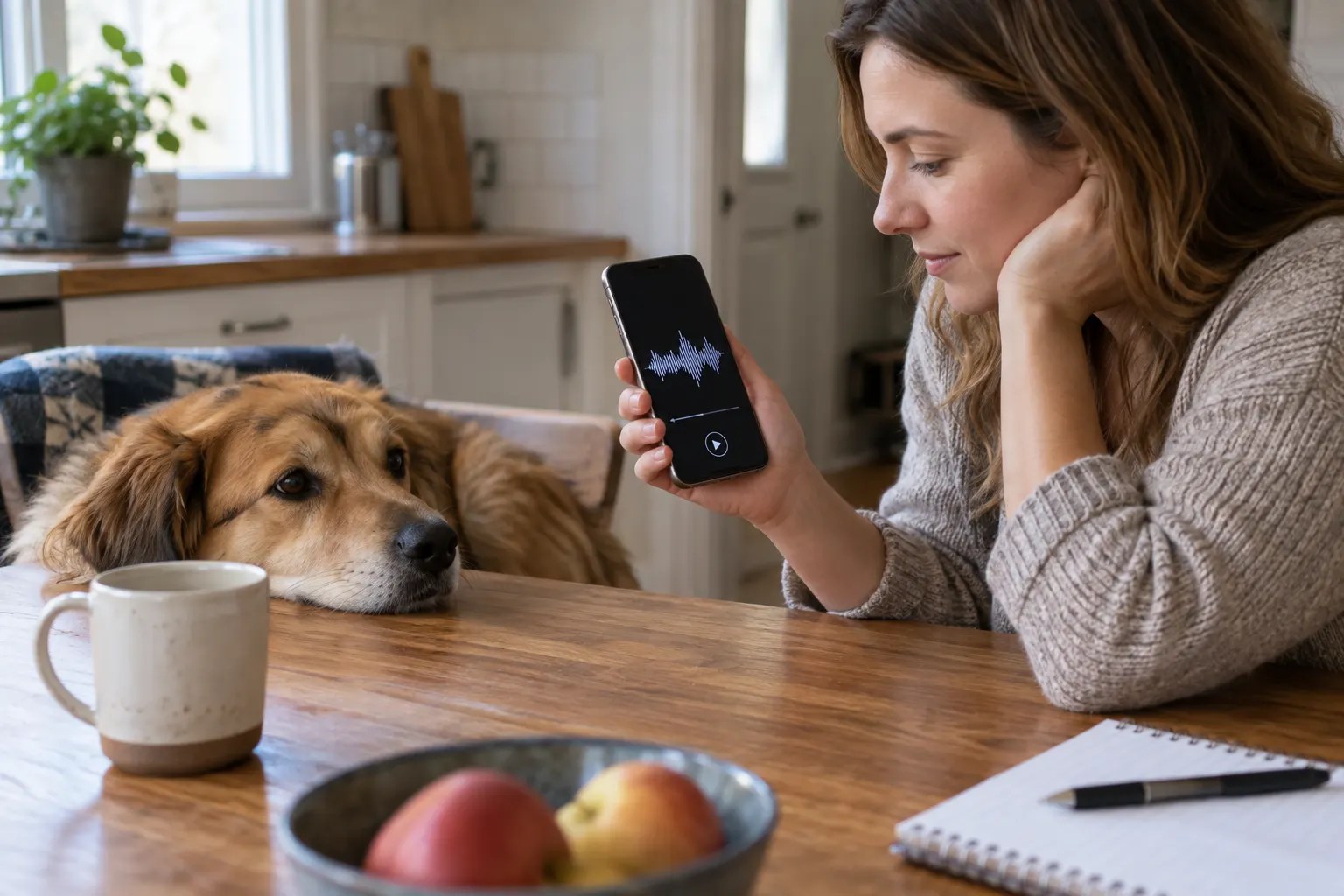
2. What did the whole dog do?
Watch the face, ears, body weight, tail, breathing and ability to move away or settle. One signal can mislead. A wagging tail does not always mean a dog is comfortable, and a loud bark does not always mean aggression. Body-language guidance works best when signals are read together.

3. Does the pattern repeat?
If you use an app for fun, test it against observations you already know. Does it give the same confident answer for different dogs, different situations, background television or a clipped recording? Does its label change when you record the same dog in a quieter room? Inconsistent results should make you less confident, not more curious about the app’s story.

4. Is this new for your dog?
A familiar bark at a familiar visitor is different from sudden, repeated vocalizing with limping, hiding, not eating or an inability to settle. Do not let an app’s cheerful “wants attention” label explain away a meaningful change. Call your veterinarian when a new pattern comes with signs of illness, pain or injury.
Before you install a pet-translator app
Look for a clear explanation of what the app predicts, what data it was tested on and how it measures mistakes. “Understands your pet” is not a test result. Also check whether recordings are stored, shared, used to train a model or deleted, especially if the microphone may capture people in your home.
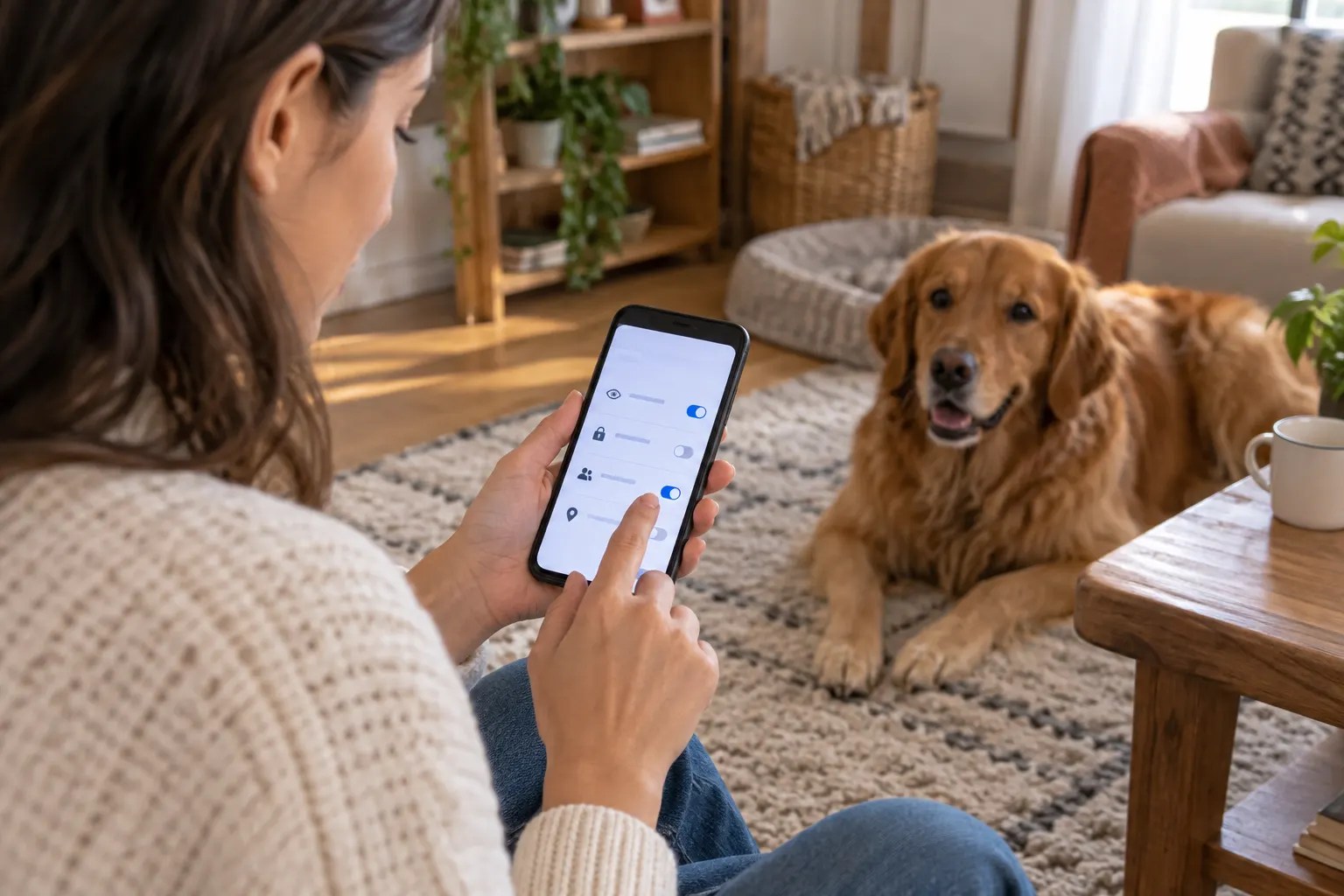
There is a useful role for your phone: capture a short video when a behavior is hard to describe, then show the whole scene to a qualified professional if needed. That is very different from asking a chatbot or app to diagnose the dog from one audio clip. For an unfamiliar or escalating behavior, document what happened and seek a veterinarian or qualified behavior professional rather than repeatedly testing labels.

Quick answers
Can ChatGPT translate my dog’s bark? It can describe possible explanations if you tell it the setting, but it cannot verify your dog’s private thought from an audio clip. Treat any first-person “translation” as creative wording, not evidence.
Do barks mean nothing, then? No. Researchers can detect meaningful acoustic differences across known situations. Meaning in daily life still depends on your dog and the broader context.
Should I stop using a translator app? You can use one as entertainment. Do not pay for certainty it has not demonstrated, and do not base health or safety decisions on its label.
What if my dog barks whenever I leave? A phone recording may show the pattern, but an app sentence cannot diagnose separation-related distress. Our guide to following and separation clues explains what else to watch. If this occurs in a hotel, check the property’s rules and your dog’s ability to settle before leaving them alone; see our hotel-room guide.

Bottom line: AI bark classification is real research. An exact dog-to-English translation is a much stronger claim. When an app gives your dog a sentence, pause and ask what you actually observed.
Sources reviewed
- Abzaliev, Perez Espinosa and Mihalcea: Towards Dog Bark Decoding (2024)
- American Kennel Club: The Meaning of Your Dog’s Barks
- American Kennel Club: How to Read Dog Body Language
Research note: We reviewed published sources but did not test a pet-translator app or train a model. Images are AI-generated editorial illustrations. This article is general information, not veterinary or behavioral diagnosis. Affiliate disclosure: This article has no affiliate product recommendation.
Leave a Reply