
The bath is over. You reach for a second towel, your dog slips through the bathroom door, and suddenly the hallway has become a racetrack.
It looks chaotic, but a short post-bath sprint is usually less mysterious than it seems. Some dogs are excited to be free. Others appear to release the tension they held while being washed. And some are simply wet, energized, and ready to move.
The important part is what comes with the running. A few fast laps followed by a nap are different from nonstop rubbing, repeated ear scratching, or a dog that still cannot settle once dry.

The 30-second check
Before chasing your dog with the towel, watch for a moment.
- Running: loose body, playful turns, and a quick return to normal usually fit ordinary zoomies.
- Rubbing: often means there is still water in the coat, so finish drying before guessing at a deeper reason.
- Head shaking or ear scratching: one whole-body shake is expected; repeated attention to one ear deserves a closer look.
You do not need to decide what your dog is “feeling” from one lap around the sofa. Look at the beginning and the ending. Were they tense in the bath? Do they relax once they are dry? That tells you more than the speed of the sprint.
Why baths can trigger zoomies
The American Kennel Club lists bathing as one situation that can precede zoomies. Excitement may be part of it, and so may the release of tension after an experience a dog found uncomfortable.
That gives us two plausible explanations, not a way to read an individual dog’s mind. A sprint does not prove your dog loved the bath, hated the shampoo, or needs an extra hour of exercise.
If your dog makes two laps, shakes once, grabs a toy, and settles, there may be nothing to fix. Give them a clear route with good footing and let the moment pass without turning it into a wrestling match.

Source: AKC: understanding zoomies
What about rubbing all over the carpet?
This is the part that feels personal. You have just washed the dog, and now they are pressing a damp shoulder into the rug.
Try the boring explanation first: the coat is still wet. Towel the chest, belly, legs, and the thicker fur around the neck and hips, then see whether the rubbing fades. If it stops once the coat is dry, you have learned something useful without inventing a motive.

For longer coats, press an absorbent towel into the fur instead of scrubbing back and forth. Swap towels when the first one becomes soaked. If you use a dog dryer, keep it cool, introduce the sound gradually, and keep airflow away from the face and ears.

Source: AKC: drying your dog safely
Make the escape route boring
The safest post-bath zoomies begin before the water turns on. Imagine the first ten seconds after the bathroom door opens. Is there a loose mat? A polished floor? An open staircase? A front door someone might use?
Move breakables, close outside doors, block the stairs, and put a secure non-slip mat where your dog steps out. The goal is not to create an obstacle course. It is to remove surprises from the route your wet dog is most likely to take.

Keep two towels within reach. One handles the first big shake; the other finishes the job. That small preparation is more useful than trying to catch a damp dog while opening cupboards with one hand.

AKC recommends an uncluttered space with good footing when zoomies happen. That advice matters even more when the dog is wet.
Change one thing at the next bath
If every bath ends badly, resist the urge to replace the entire routine at once. Think back to this bath instead.
Was the water comfortable? Was this a new shampoo? Did rinsing take longer than usual? Did the dryer frighten your dog? Did you rush because the towels were in another room?
Pick one ordinary improvement for next time: better footing, towels prepared in advance, a quieter drying method, or shorter handling pauses. Use shampoo made for dogs, follow the label or veterinary directions, and rinse thoroughly.

Do not reuse a product that you suspect caused irritation simply to “test” it. If itching or redness appeared after a new product, keep the bottle and ask your veterinarian what to do next.
Source: AKC: bathing guidance
When the funny video stops being funny
A quick whole-body shake after getting wet is normal dog behavior. Repeatedly shaking the head, scratching the same ear, tilting the head, losing balance, or staying agitated after drying is a different pattern.
PDSA advises contacting a veterinarian when ear scratching or head shaking becomes more frequent than usual. Ear and skin problems are among the possible causes. An involuntary head tremor needs prompt veterinary attention.
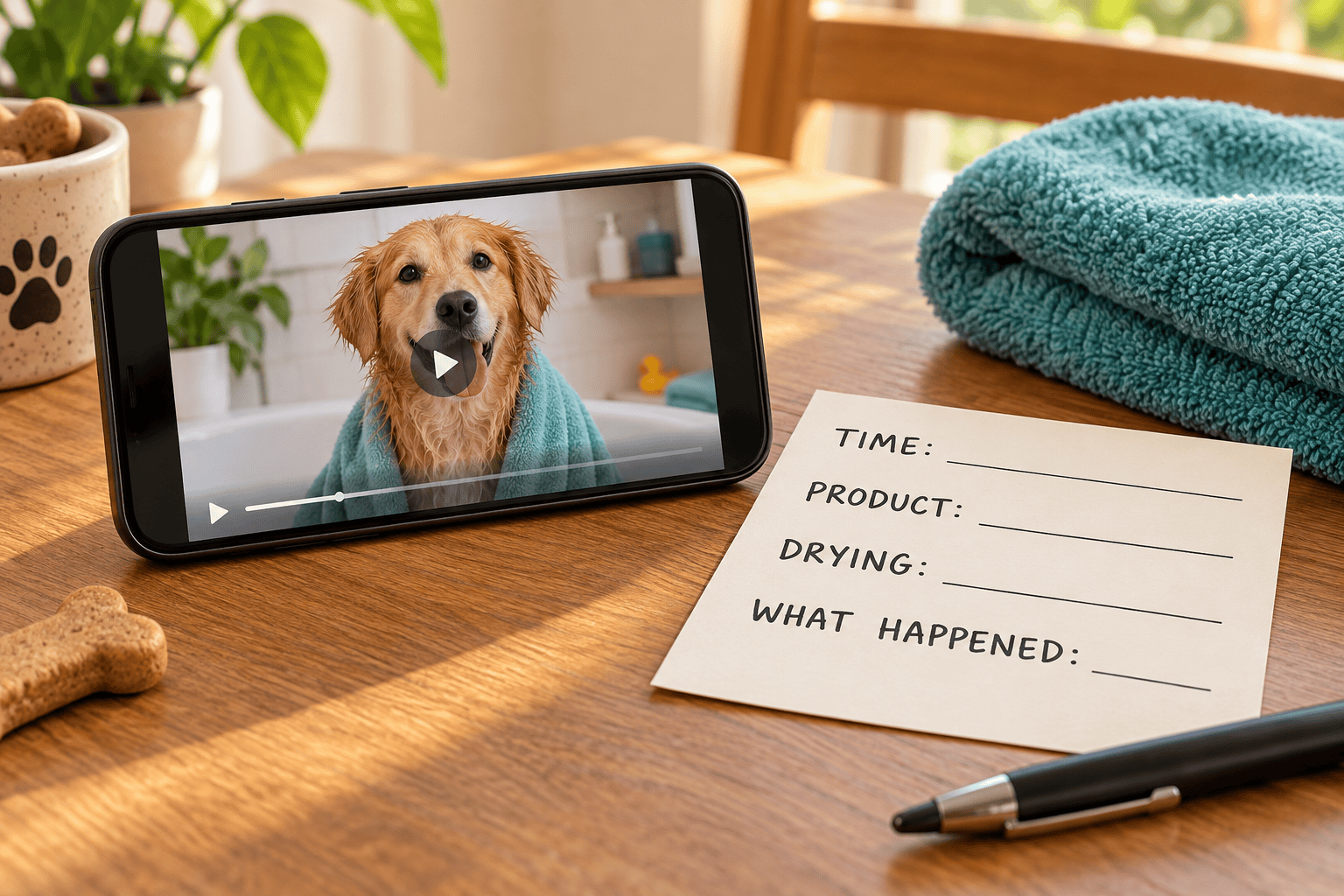
If you call, “my dog went crazy after the bath” is not the most useful description. Tell the clinic what you actually saw, when it began, which product you used, and whether it continued after the coat dried. A short video can help if recording it does not delay care.
Source: PDSA: itchy ears and head shaking
The ending tells you the most
You do not have to stop every joyful lap. Make the floor safe, finish drying without a chase, and watch what happens next.
If your dog settles comfortably, the post-bath sprint was probably just a short-lived event to prepare for. If the running gives way to persistent scratching, head shaking, or obvious discomfort, pay attention to that ending instead.

What does your dog do first after a bath: race down the hallway, roll on the rug, or head straight to bed?
This article provides general information and is not a veterinary examination or diagnosis. It has not been individually reviewed by a veterinarian.
Leave a Reply