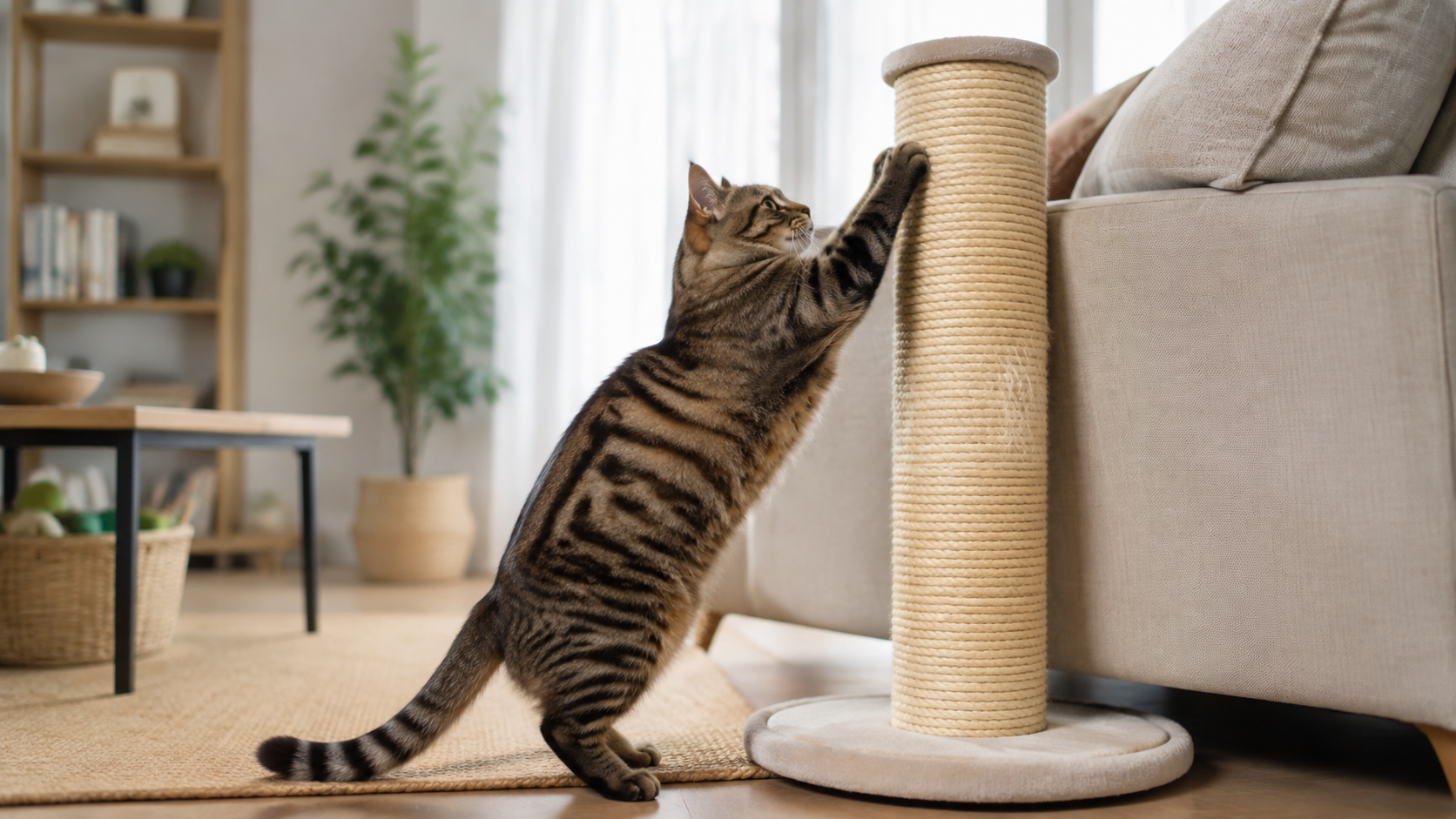
The new rough patch on the couch arm is frustrating, especially when there is already a scratching post in the house. But your cat is not choosing the sofa to get revenge. It is choosing a surface, angle, and location that work better than the alternative you offered.
The fastest fix is matching the replacement scratcher to the target your cat already chose, then protecting the furniture while the new option becomes familiar.

Quick answer: do this before moving the couch
Do not punish the cat or carry it away after the fact. Put a stable scratcher directly beside the damaged spot. Match the current target’s position, height, and texture as closely as you can. Protect the couch temporarily while the new option becomes part of the routine.
A post hidden in an unused corner often fails because the cat may be choosing the couch location as well as the fabric. Start where the problem is, not where you wish the cat would scratch.
Use this 30-second scratching preference check
| What the cat uses now | Likely preference to test | First placement |
|---|---|---|
| Couch arm, door frame, or drape | Tall vertical, stable surface that permits a full stretch | Directly against or beside the target |
| Rug, stairs, or flat carpet edge | Horizontal pad or flat scratch surface | On the same floor area |
| One specific chair, bed, or hallway corner | The same orientation and a similar texture | At that exact location first |
This is an experiment, not a personality test. Change one obvious variable at a time.

1. The couch may match the texture your cat actually likes
Cats do not all want the same surface. A woven sofa, carpet edge, wood trim, cardboard pad, or rope-textured panel can feel different under the claws. Watch the target before choosing a replacement. Is the cat pressing into fabric, pulling down on a rough surface, or raking across the floor?
Offer an option that resembles the texture first. There is no universal best material. The cat’s repeated choice is better evidence than a product label.

2. The height or angle may matter more than the brand
A cat that reaches upward on the couch arm may need a tall option that stays still while it stretches. A cat that scratches the stairs or rug may prefer a flat pad. A wobbly post can be rejected even when its material is promising.
Look for the movement: full reach upward, a downward pull, or a low raking motion. The new surface should let the cat perform the same motion without tipping or sliding away.

3. The location may be part of the message
The couch can sit beside family activity, a doorway, a favorite nap space, or a window. Those locations matter. Scratching can leave a visible and scent mark, so a quiet spare-room post may not compete with a sofa in the middle of the home.
Place the first replacement beside the damaged area. If several places are targeted, start with the one your cat uses most. Once the cat chooses the new surface consistently, move it only a small distance at a time.

4. The cat may scratch during predictable moments
Many cats scratch after waking, after a play burst, or when they enter a familiar room. A scratcher near a bed can catch a post-nap stretch. A second one near an entry or living-room route can give the cat an appropriate outlet before it reaches the couch.
When you see the cat use the new surface, respond quietly with praise, attention, or a reward it likes. Do not force paws onto the scratcher.

5. A new household pressure can make a familiar target more important
More scratching does not automatically mean stress, but a changed home can make familiar marking and stretching spots more important. A move, new furniture, visitors, another cat, an outdoor cat near a window, or a different daily routine can all change how a room feels.
Give cats more than one safe choice: resting spaces, clear routes through shared rooms, and separate scratching options in key areas.

6. The replacement may be correct but introduced too far away
The first job of a new scratcher is not to look tidy. It is to win against the current target. Keep it beside the couch or other scratched surface at first. After the cat uses it repeatedly, shift it gradually toward the long-term location.
Do not throw away a ragged, well-used scratcher just because it looks worn. If it remains sturdy and safe, the wear is evidence that it works.

The couch-saving setup: first 5 changes
- Photograph or note the target so you can identify texture, orientation, height, and location.
- Put a stable matching scratcher at the target.
- Add a second option in the cat’s main resting or activity area.
- Cover or limit access to the damaged area temporarily with a safe, non-entangling furniture cover or rearrangement.
- Reward use of the new surface, then clean or repair the old target after the cat has been redirected.

When more scratching deserves a closer look
Scratching by itself is normal. Ask a veterinarian or qualified behavior professional for help when a dramatic new behavior change comes with broader distress signs, aggression, altered toileting, reduced appetite, pain signs, or an environment you cannot make safe. The right support depends on the whole pattern, not one couch corner.
Questions owners ask
Why does my cat scratch the couch when it has a scratching post?
The current post may not match the couch’s texture, angle, height, stability, or location. Put a better-matched option directly beside the couch first. A post in a quiet corner may be usable but still lose to a central, familiar sofa arm.
How many scratching posts does one cat need?
Start with more than one option in rooms your cat actually uses. The right number depends on the home, preferred locations, and whether cats share the space. Variety matters more than buying identical posts and lining them up together.
Should I move the scratching post away from the couch right away?
No. First let the new surface compete at the exact problem location. Move it only after the cat chooses it consistently, and do so in small steps.
Will trimming claws stop couch scratching?
Claw care and scratching redirection are different issues. Even a cat with short claws still needs to stretch and scratch. For individual claw-care guidance, speak with a veterinarian or qualified professional.
Bottom line
The winning scratcher is not necessarily the most expensive one. It is the one that feels, stands, and sits where your cat already wants to scratch. Protect the couch while the new option wins, and look at wider environmental changes if the behavior suddenly escalates.
