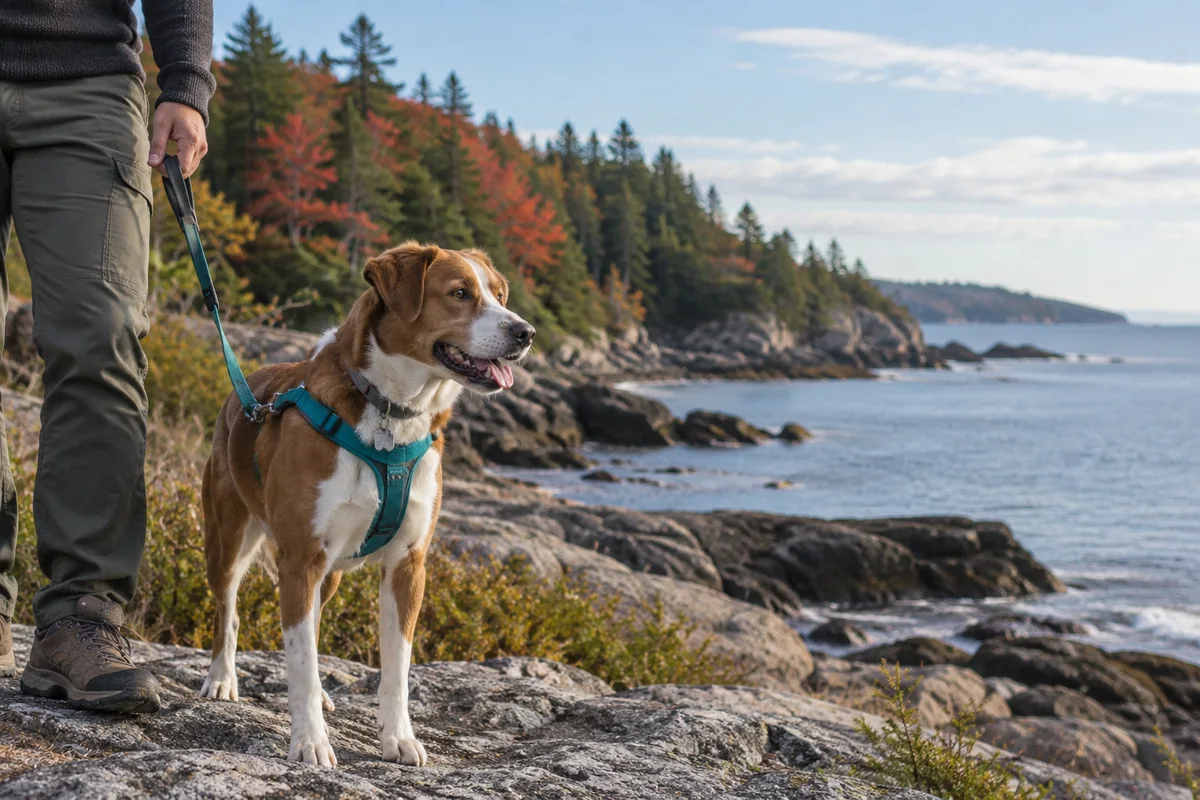
You picture a weekend in Maine: a walk through the trees, something good to eat, and your dog asleep before you are. Then you open a trail list and find ladders, exposed rock, and a sunrise plan that starts long before breakfast.
You do not need to turn an Acadia trip into a summit challenge. A Bar Harbor getaway can work around a much smaller plan: one outing your dog enjoys, somewhere comfortable to stay, and enough space in the day to change your mind.
The short version: use Bar Harbor as a base, check the exact Acadia route, and plan around walks rather than a list of attractions. Dogs are permitted in many parts of the park, but permission is not a promise that a route will suit your dog.
Reviewed October 2, 2026. This is a researched planning guide, not a personally tested itinerary. The credited Acadia photograph is historical. Other photographic scenes are AI-generated planning illustrations, not photographs of named trails, hotels, or current local conditions.

1. Choose a base that makes the ordinary parts easy
A room with a view is appealing. A room with an uncomplicated place to take your dog out may matter more at six in the morning.
Before paying, ask the property about the particular room you want. Confirm the dog limit, any size restrictions, pet charges, and where you can walk straight from the door. Ask whether dogs can ever stay in the room without an owner, rather than assuming that “pet-friendly” includes that arrangement.
Then look at your actual day. If your plans require repeated drives back to the room, a different base or fewer stops may make the weekend more enjoyable. There is no need to book the busiest part of town just because it appears in every travel roundup.
Our guide to leaving a dog in a pet-friendly hotel room explains why the property policy and your dog’s ability to settle are separate questions.
A useful message: “We are traveling with one dog on these dates. Does this room allow our dog, what are the total pet charges, and what is your unattended-pet policy?” Keep the reply with the booking. This guide does not verify individual hotels, vacancies, prices, or walkability.
2. Make a carriage-road walk the main event
A woodland walk gives you a shared activity rather than a sightseeing stop where one person waits outside with the dog. Acadia’s carriage roads are an obvious place to start researching that kind of outing.

.jpg)
The NPS carriage-road guide describes a crushed-stone network used by walkers, cyclists, and horses. That means a wide path can still involve hills, other users, and a longer return than you expected. Do not treat every carriage-road loop as an easy walk.
Choose a start point from the official map, check the distance between intersections, and decide where you will turn around. An out-and-back is a practical editorial option when you want to shorten the walk without committing to the rest of a loop. It is not a route recommendation or an accessibility assessment.
Match the plan to a walk your dog already handles comfortably. A dog who enjoys a short neighborhood outing does not automatically want a half-day on unfamiliar gravel. The scenery is a reason to slow down, not a reason to add miles.

The park rules to know: pets must stay on a leash no longer than six feet. Beehive and Precipice are closed to pets, as are other named routes on the official pet-access page. Public buildings and ranger-led programs are restricted. Most park lakes supply drinking water and prohibit swimming. Do not leave a pet unattended in a vehicle or campsite. Carry out waste and check for ticks afterward.

If your dog struggles with bikes or horses, the shared use is an important reason to reconsider the route. Permission to bring a dog does not tell you whether the experience will be pleasant. Read the carriage-road user guide before choosing a walk.
3. Pick one coastal outing, not every scenic stop
A rocky coast is a good reason to visit Maine. It is not a reason to make your dog negotiate every ledge that looks interesting in a photograph.
For a coastal outing, research the exact approach, footing, dog permission, and current status. Think about the return journey as well as the viewpoint. A short route with somewhere to turn back is more useful than an impressive destination reached by terrain your dog cannot manage.

Ocean Path may appear in your research. The NPS conditions page records past storm damage and temporary repairs along sections of it. That history is a reason to check the route, not a basis for declaring the entire path open, closed, or safe today. Review current conditions and signs at the entrance.
Keep a second option that does not depend on a shoreline walk. If the weather or footing is unsuitable, a shorter outing and time back at your lodging are a complete plan, not a failed trip.
4. Leave time for Bar Harbor without promising every patio
You do not need a list of ten dog-friendly restaurants to enjoy a town stop. You need to know whether the place you actually want to visit accepts your dog that day, in the seating area you will use.
Call before arranging a meal around outdoor seating. Ask about dogs, reservations, and what happens if the patio closes in bad weather. A policy that permits dogs is not a promise of an available table. This article does not name a restaurant because individual access and service availability were not checked.
Try a short town outing before committing to a long wait. If your dog seems uncomfortable with the crowd, head back or choose a quieter plan. A meal to take away can be a better fit than spending the afternoon managing a dog beneath a busy table.

Put downtime between outings. The part of the trip you remember may be the slow morning walk, not the third stop you squeezed in before dinner.
5. Build a two-day plan with room to change it
Here is an example structure, not a timed or tested route:
- Arrival day: settle into confirmed dog-friendly lodging, take an ordinary short walk, and keep dinner simple.
- First full day: choose one currently permitted carriage-road outing. Return for a break. Add a brief town visit only if it suits your dog.
- Second day: consider a checked coastal outing, or repeat the easier walk if that worked better. Leave time for the drive home.
Weather, closures, fitness, and your dog’s response can change that structure. It does not assign named trail distances or guarantee that a route is suitable.

Bring drinking water for the dog, a bowl, waste bags, usual food and medications, identification, and familiar bedding. Keep the route information available even if your phone cannot connect. If your dog has health needs or finds travel difficult, talk through the trip with your veterinarian before committing to a demanding itinerary.
For the park itself, read the current entrance-pass guidance. If driving Cadillac Summit Road is part of your plan, check its separate vehicle-reservation requirements. A park pass and a summit-road reservation are different arrangements; a reservation does not assign a parking space.

Before leaving the room each day, check the forecast, current park notices, and the specific route. A booking made weeks ago cannot settle those questions. October photographs also cannot promise peak foliage on your travel dates.

Is this the right trip for your dog?
It could be, if the journey is manageable and you want to spend most of the trip doing things together. It makes less sense if your must-do list is mainly attractions where the dog cannot join you.
You can have a memorable Bar Harbor weekend without doing every famous hike. Pick one shared activity you genuinely want, confirm the practical details, and let that be enough.
Still choosing where to go?
If a woodland weekend is not quite your dog’s trip, compare Bar Harbor with four other eastern U.S. getaways before you book.
Official sources and research note
Source links appear beside the claims they support. NPS pet access, carriage-road guidance, current conditions, fees, and summit reservations were reviewed October 2, 2026. Rules may change before travel. Proposed day plans and lodging questions are editorial suggestions, not verified local itineraries. No accommodation availability, restaurant policy, fall-color forecast, or absolute search-volume estimate is claimed.
Affiliate disclosure: this article contains no affiliate booking links.
Leave a Reply