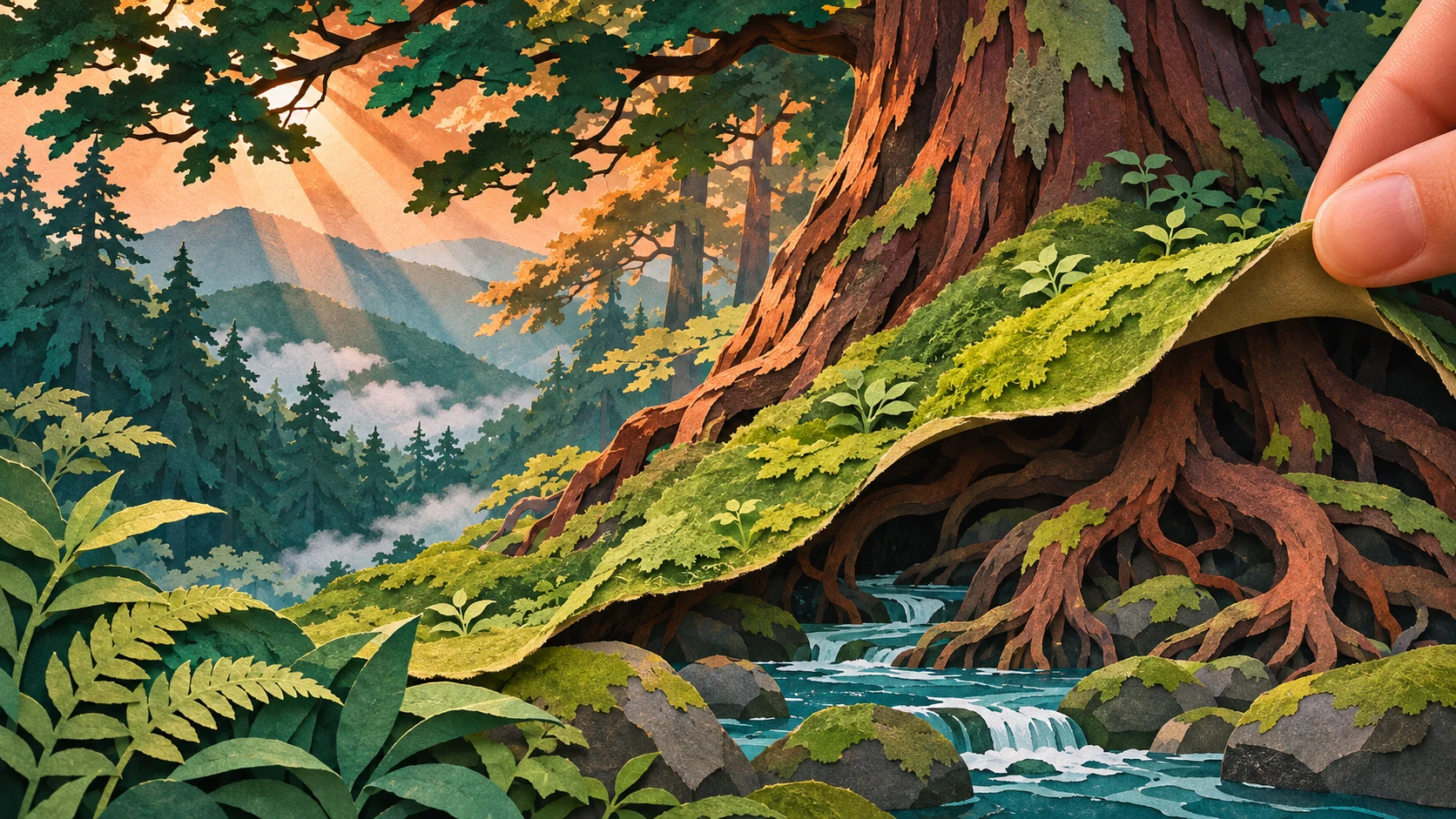
Studio Ghibli names Yakushima and Shirakami-Sanchi as major references for the landscapes of Princess Mononoke. You can see why the two make a good comparison. A Yakushima ravine can be dark, wet and crowded with moss-covered roots. A northern beech forest has a different canopy, bark and kind of light.
A hand lifts a curled layer of moss to reveal forest roots and water. AI-generated editorial illustration.
| In the film | Where it comes from | Real-world connection |
|---|---|---|
| Yakushima | Studio Ghibli names the island | Look for cedar, moss, granite and moving water |
| Shirakami-Sanchi | Studio Ghibli names the mountain region | Look for northern beech forest and mountain slopes |
| The forest of the film | An animated landscape with its own geography | The real references are regional |
What does Studio Ghibli actually say?
The studio’s FAQ puts Yakushima and Shirakami-Sanchi in its list of places that strongly informed the films. It distinguishes that list from places it identifies as official settings. The distinction matters here because a forest can inform the way a scene feels without supplying an address for the scene. Studio Ghibli FAQ
On a rewatch, look for details that carry the space from one shot to the next: roots that divide a path, pale water over dark stone, or patches of light that reach the forest floor. These are ways of reading the design rather than assigning individual shots to specific trees.

What can you see in Yakushima?
Japan’s Forestry Agency describes Shiratani Unsuikyo as a landscape of granite gorges, streams and waterfalls, with Yakusugi cedars, evergreen trees, ferns and moss. In the photographs, follow the line where a root meets the rock or water meets the bank. Those small edges make the scale of the ravine easier to read. Forestry Agency


Yakushima’s World Heritage listing covers a broader landscape that changes with elevation. Shiratani is a practical point of comparison for the wet forest textures in this guide. It is one part of the island. UNESCO Yakushima


How is Shirakami-Sanchi different?
Shirakami-Sanchi protects a large native Japanese beech forest in the northern mountains of Honshu. Smooth grey trunks and a broad canopy give the forest a different visual rhythm from a cedar ravine. Compare the spacing of trunks and the way the light spreads across the understory. UNESCO Shirakami-Sanchi


For a visit, consult the Forestry Agency for Shiratani access and the regional Shirakami guide for its separate routes and visitor areas. The two landscapes are far apart and have distinct access conditions. Visit Shirakami The blue water at Aoike and the stream corridor around Anmon Falls show two distinct features in the wider area. Check the relevant route information before setting out.


Leave a Reply