Quick answer
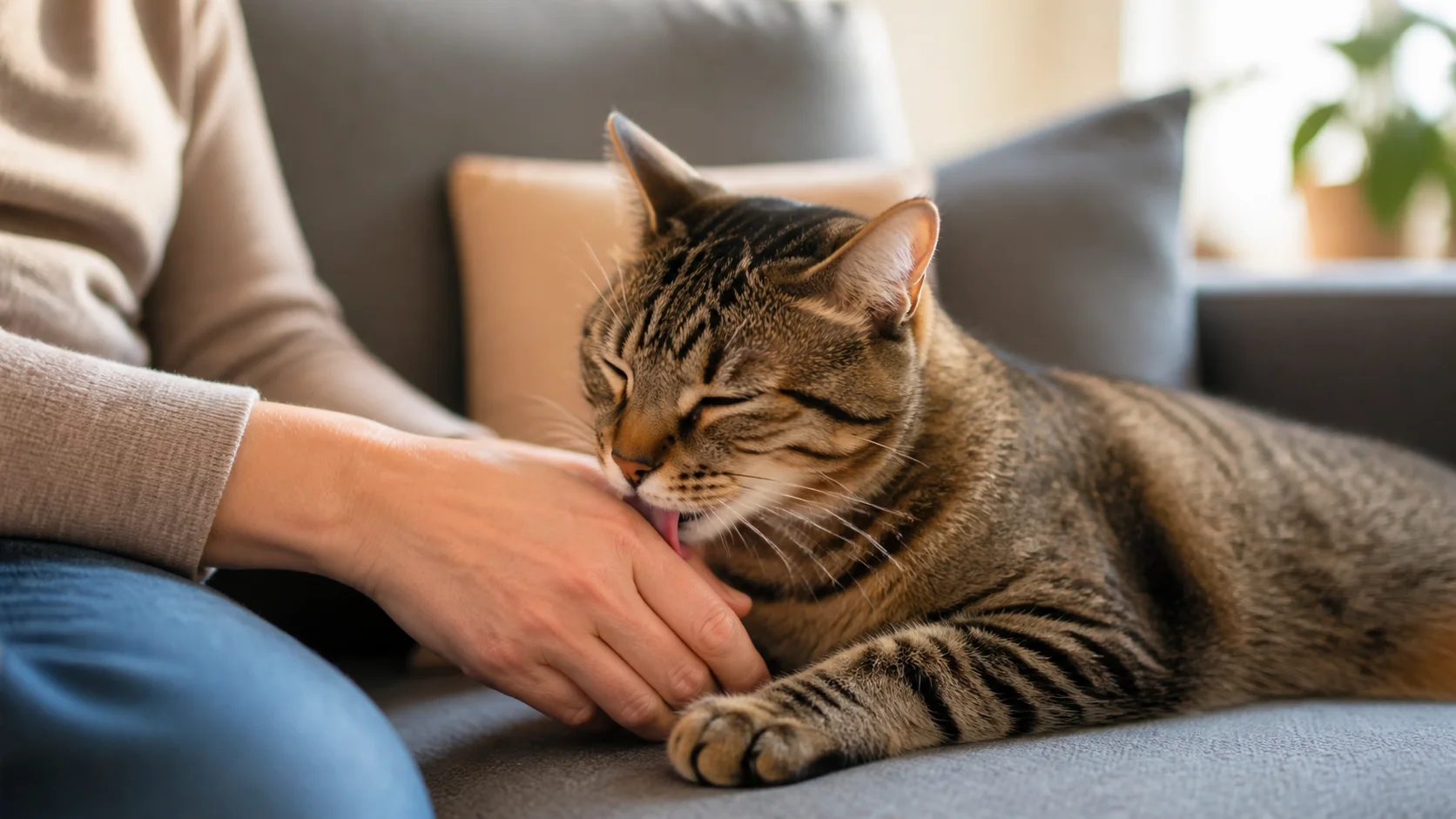
When a cat licks you and then bites, it may be moving from grooming or bonding into excitement, play, frustration, or a need to end contact. Context, body language, bite pressure, and what happened immediately before matter.
Stay calm, stop touching or moving your hand, and give the cat space. Do not punish it. If a bite punctures your skin, clean the wound and seek medical advice. If biting is new, harder than usual, or focused when you touch one area, contact a veterinarian.

Six signals your cat may be giving you
Signal 1
That was enough petting
Some cats enjoy a short interaction but reach a touch limit quickly. Tail flicking, body tension, ears turning back, dilated pupils, or moving away can be early signals to stop.

Signal 2
I am overexcited
Licking can be bonding behavior, but adding a bite may mean the interaction has become too intense. Stop while the cat is still calm rather than trying to get one more pet in.
Signal 3
Play with me – not with your hands
Some cats turn a moving hand, sleeve, arm, or foot into prey-like play. Redirect that energy to a wand toy, kicker toy, or other cat-safe toy instead of wrestling with fingers.

Signal 4
I wanted something else
Your cat may approach for food, play, a door opened, or attention, then become frustrated when it receives only petting. Look at kitchen timing, play routines, a closed door, and nearby cues.

Signal 5
I am stressed or startled
Noise, another pet, a person at the window, or a new smell can raise arousal. If a cat cannot get away from the trigger, it may bite the nearest hand. Give it distance and a safe route away.


Signal 6
That spot may hurt
Pain can make a cat react to touch. A bite that happens mainly when you touch one body area, or a sudden change in a previously tolerant cat, is a reason for a veterinary check.

What to do in the moment
- Keep your hand still and avoid a sudden loud reaction.
- Stop the interaction and give your cat space to settle.
- Do not punish, chase, or hold the cat down.
- Note where you were touching, what was happening nearby, and body language before the bite.
- Use a toy at a distance for play, not fingers or toes.

When a cat bite is more than a behavior question
If teeth break your skin, clean the wound promptly and seek medical advice. Cat bites can become infected. If children, older adults, or anyone with a higher risk of injury is involved, prevent contact during known high-risk moments and get professional advice.

Bottom line
Lick-then-bite behavior is often your cat communicating that its excitement, play, or touch tolerance has changed. Stop earlier, use toys for play, and treat sudden or painful changes as a reason to speak to a professional.

Sources
- Cats Protection: Why Does My Cat Bite Me?
- VCA: Petting Aggression
- Cornell: Feline Behavior Problems – Aggression
Pet Tech Compass may earn a commission from qualifying purchases. This article is general educational information, not veterinary diagnosis.
Watch the tail as well
For a closer look at the tail signals that can accompany an interaction, read the separate tail-movement guide.