
Reviewed September 4, 2026 · Dog behavior guide
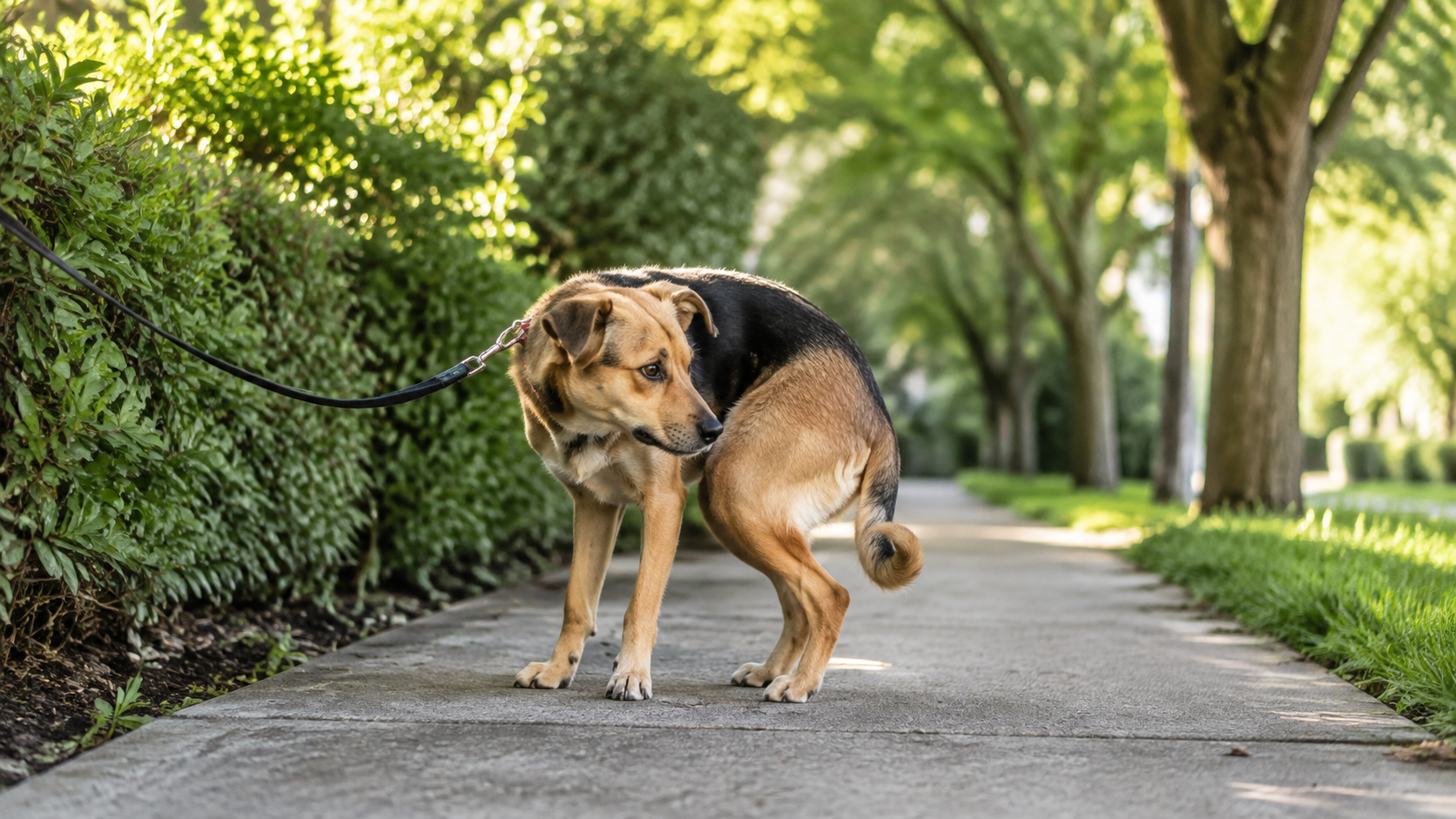
Your dog has found a patch of grass, sniffed it, turned once, then turned again. It can look like a very serious ritual for something so ordinary. Usually, a few circles are simply part of choosing a spot and getting settled. The useful question is not whether every turn has one hidden meaning. It is whether the routine is brief and comfortable, or suddenly long, repeated, and paired with trouble actually passing stool.
The short answer
Use this 30-second check
| What you see | Most useful next move |
|---|---|
| A few circles, sniffing, then a normal stool | Let the dog finish and continue the walk. |
| Choosing between grass patches or moving away from a busy spot | Give the dog a little leash slack and time to choose a clean, quiet place. |
| Repeated attempts with little or no stool | Contact a veterinarian for advice, especially if the pattern is new. |
| Straining, pain, vomiting, lethargy, blood, or a swollen-looking abdomen | Seek veterinary guidance promptly; do not treat it as a quirky habit. |

1. Your dog is checking the surface
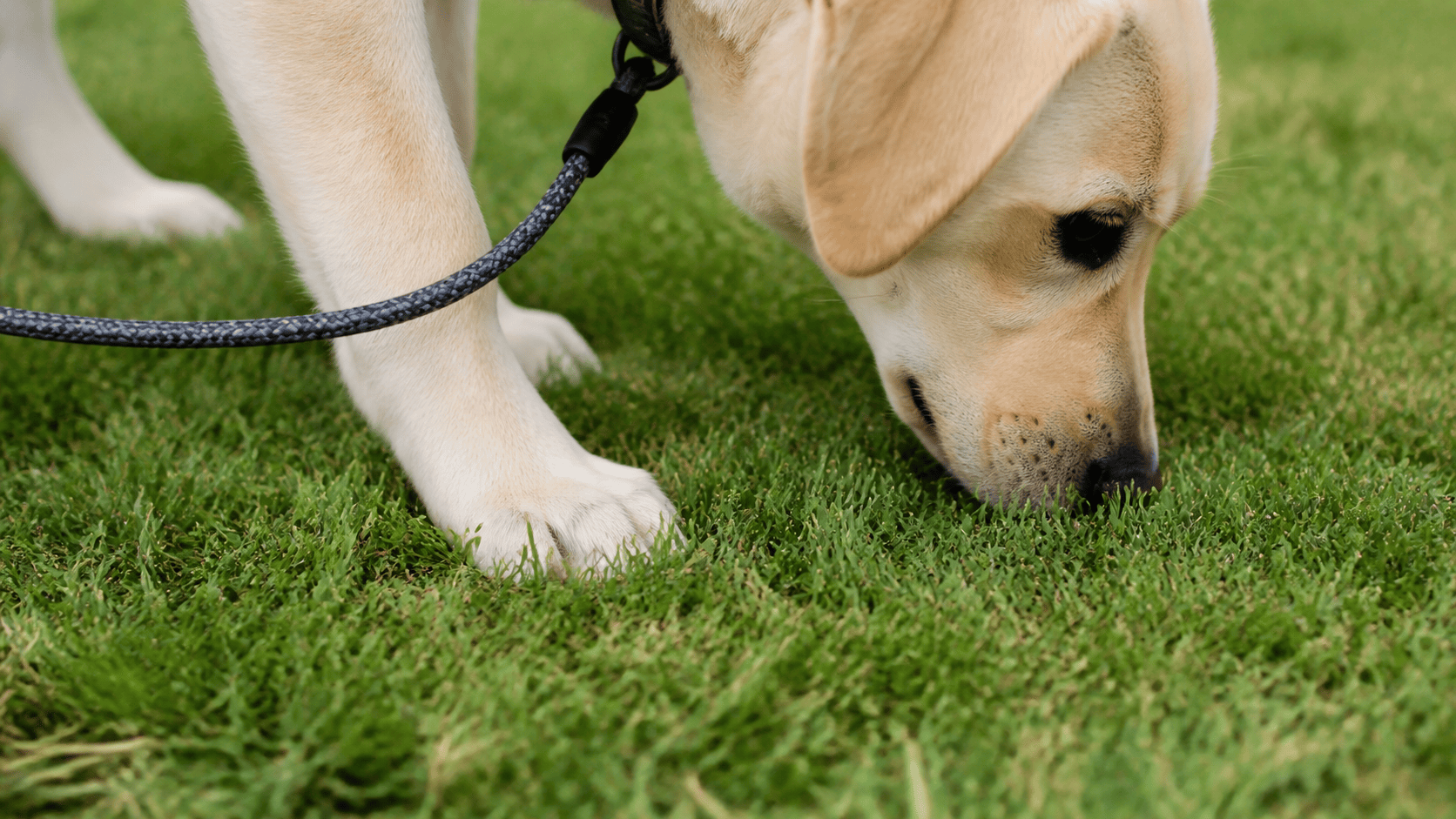
Dogs use smell to gather a great deal of information. Sniffing and turning can be part of deciding whether a patch of ground feels usable before they squat. The American Kennel Club notes that dogs may circle to find a cleaner or more comfortable surface. That does not mean every dog is following an exact rule. Some will turn once, some several times, and some will simply stop.
2. The spot may need to feel comfortable
Tall grass, uneven ground, a wet patch, or a place that feels too exposed can make a dog keep looking. A small turn can help a dog adjust its feet and choose a position. The behavior is similar to the ordinary circles many dogs make before lying down: a familiar preparation routine, not proof that anything is wrong.

3. The dog may be checking the surroundings
Squatting leaves a dog less able to move quickly. Some dogs pause, sniff, and look around before they settle. It is reasonable to treat this as one possible comfort or safety check, not a certainty about what the dog is thinking. Give the dog room instead of pulling it toward a spot just because the walk needs to move on.

4. Smells can make one place more interesting than another
For dogs, a bathroom break is also a scent-rich moment. The American Kennel Club explains that scent glands near the anus and in the paws can be part of the broader communication around toileting. That can explain why a dog spends time sniffing or returns to a familiar route. It does not mean the dog is deliberately sending a message every time it turns.
5. A brief circle can simply be part of the routine
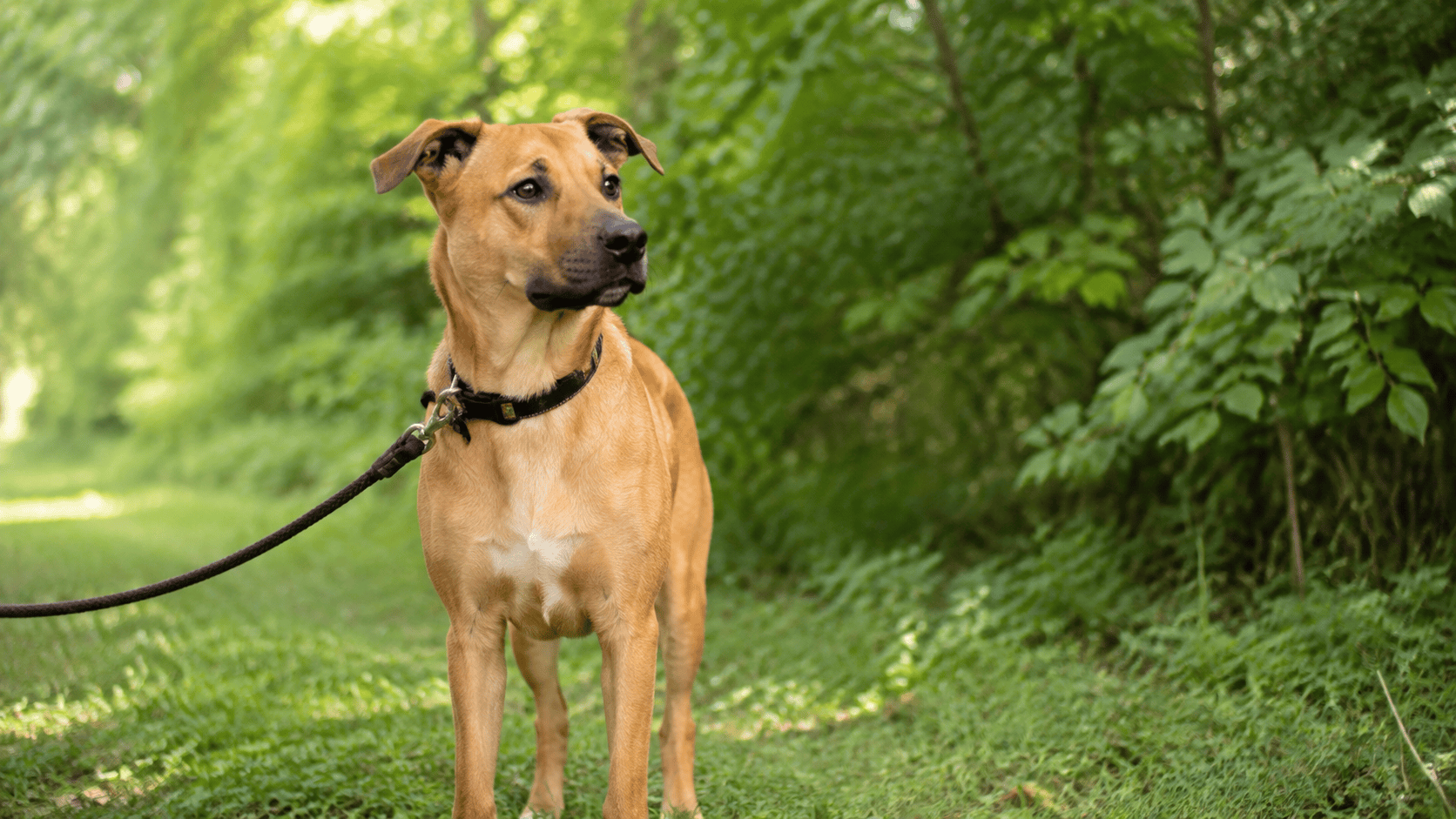
Dogs repeat routines that lead to a comfortable result. If your dog usually sniffs, makes two turns, poops normally, and walks away relaxed, that pattern generally needs no correction. The number of circles matters less than the change from your dog’s usual behavior and whether it can pass stool comfortably.

When circling deserves a closer look
Circling alone does not diagnose constipation, pain, or a blockage. The concern is a repeated unsuccessful attempt or a broader change in how your dog feels. VCA and the Merck Veterinary Manual list straining, pain when attempting to defecate, and firm or dry stool among constipation signs.
- Repeated squatting or straining with little or no stool produced.
- Vocalizing, obvious pain, or a sudden reluctance to squat.
- Blood in the stool, vomiting, loss of appetite, lethargy, or abdominal discomfort.
- A new pattern that continues, especially with hard, dry, very thin, or unusual stools.
Do not give laxatives, enemas, or a new supplement based only on an online behavior article. A dog that looks as though it is straining to poop may also have a urinary problem, and the cause matters.

Make outdoor bathroom breaks easier
- Build in a few unhurried minutes at the beginning and end of a walk.
- Use a calm area when possible, especially for a shy dog.
- Let the dog sniff and choose between safe, clean patches rather than constantly redirecting it.
- Notice what is normal for that dog: how long it takes, stool appearance, and whether it walks away relaxed.
- Record a new repeated pattern and any accompanying signs before you call the veterinary team.
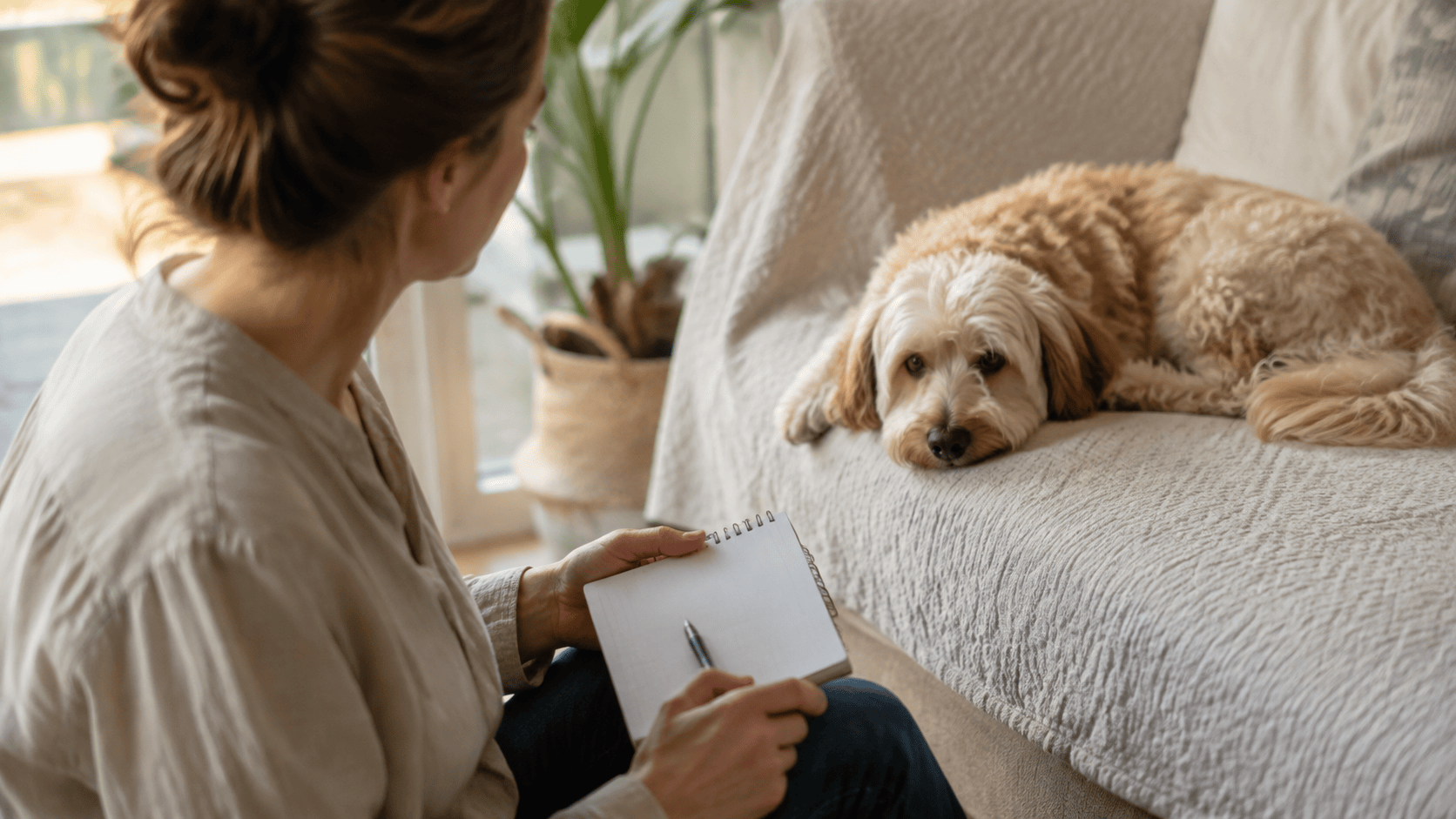
Do not punish a dog for taking a few turns. The goal is not to make toileting perfectly efficient. The goal is to notice when the routine has become effort, pain, or an unsuccessful attempt.
Quick questions owners ask
Do dogs really align themselves with Earth’s magnetic field before pooping?
That idea is often repeated online, but it is not useful as a practical explanation for an individual walk. A dog’s surface choice, comfort, scent, distraction level, and bowel urgency are more actionable observations.
How many circles are too many?
There is no universal number. A few relaxed turns followed by a normal stool are different from persistent circling, repeated squatting, or straining without producing stool.
Should I pull my dog toward one spot?
Not unless safety requires it. Give the dog a little time to settle. If it is unable to pass stool or looks uncomfortable, end the guessing and contact a veterinarian.
Bottom line
A short pre-poop circle is usually a normal dog routine. The useful distinction is not “circling or no circling.” It is relaxed selection of a spot versus repeated, uncomfortable, or unsuccessful attempts to defecate. Watch the whole pattern, then act on the signs that actually change the next step.


