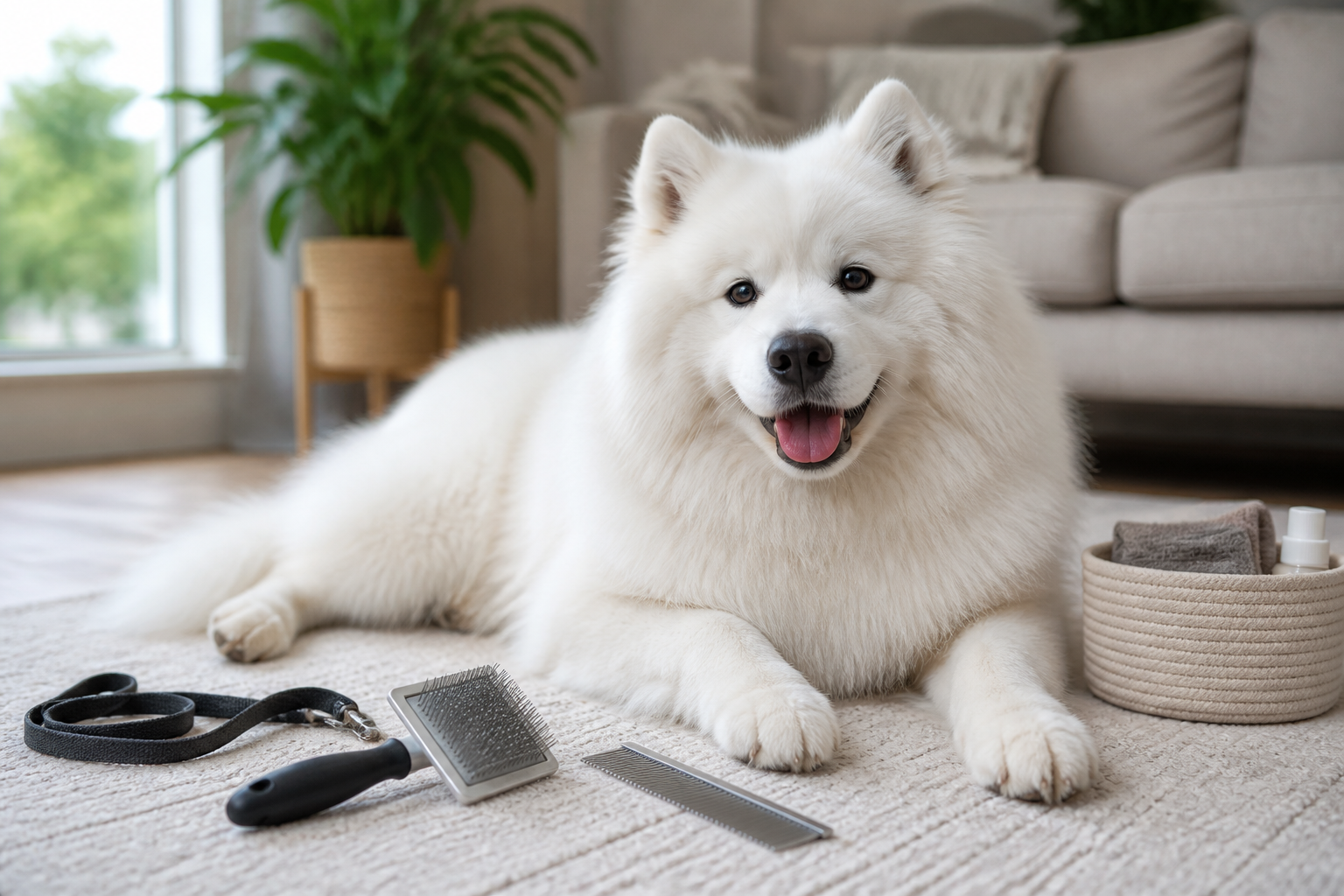
A Samoyed can look like the easy part of dog ownership: friendly face, white coat, happy expression. The work shows up after the photos. Hair gathers under the sofa. A short walk is not always enough. A dog bred to live close to people may not enjoy being left alone for most of the day.
So, are Samoyeds high maintenance? For many households, yes. Not because they are impossible dogs, but because their coat, activity needs, social needs, and heat management ask for steady time every week. The question is less “Can I handle a Samoyed?” and more “Does this fit my ordinary Tuesday?”
This guide is based on care guidance from the American Kennel Club, the Samoyed Club of America, and VCA Animal Hospitals. It is an adoption-planning guide, not a substitute for individual veterinary advice.

The 60-second fit check
| If this is true most weeks | A Samoyed may fit | A Samoyed may be hard to sustain |
|---|---|---|
| Someone has time for daily walks, play, and training | You can build exercise into the household routine | Most days are long, unpredictable, or hands-off |
| Loose white hair will not create conflict at home | Brushing and vacuuming are normal chores | Pet hair already feels like a recurring problem |
| The dog can be part of everyday life | People are home often or care is arranged | The dog would regularly be alone for long stretches |
| You can adjust activity around hot weather | Cooler periods and shade are available | Outdoor time must happen in peak heat |
This is not a pass-or-fail test. It is a way to notice where the work would land before the puppy arrives.
1. The coat is a household system, not a cosmetic detail
Samoyeds have a dense double coat. The American Kennel Club describes regular shedding with heavier shedding periods once or twice a year, and says daily brushing helps manage loose hair. The Samoyed Club of America is even more direct: a Samoyed is not a low-shed, self-cleaning dog.
That affects more than grooming appointments. It affects vacuuming, lint rollers, furniture covers, car seats, and how quickly hair builds up in corners. A person who likes grooming can treat this as routine bonding time. A person who already hates cleaning hair from clothing may find it exhausting.

2. Seasonal shedding changes the workload, not just the amount of fur
During heavier shedding periods, the normal weekly routine can turn into frequent coat work. Mats and compacted undercoat are harder to deal with after they form. The useful question is not whether you can brush once in a while. It is whether you can keep a regular routine when work, weather, and travel get busy.
Do not plan to solve the issue by shaving the coat. Guidance for double-coated breeds generally advises against shaving as a cooling shortcut. Ask a qualified groomer or veterinarian about your individual dog’s coat and skin instead.

3. A walk is part of the answer, not the whole answer
Samoyeds are working dogs with energy and a need for activity. AKC guidance calls for daily exercise, play, and mental stimulation. That does not mean every owner needs to run miles every morning. It does mean an ordinary routine needs room for purposeful time with the dog: walks, play, training, scent work, or another safe activity.
If the only plan is a quick bathroom break before work and another after dinner, the gap is likely to show up somewhere else. Boredom can become noise, digging, chewing, or general restlessness.

4. They notice when they are left out of the household
Samoyeds have a long history of close work and companionship with people. AKC describes them as social dogs that can become destructive when isolated for extended periods or when they lack activity. That is not a promise that every Samoyed will have separation problems. It is a practical warning not to choose the breed while assuming it will be content to occupy the backyard alone.
Before committing, map a normal weekday. Who handles the morning? What happens during the longest work block? Is a dog walker, family member, daycare, or a return-home break realistic rather than aspirational?

5. Training needs consistency before the dog gets big and strong
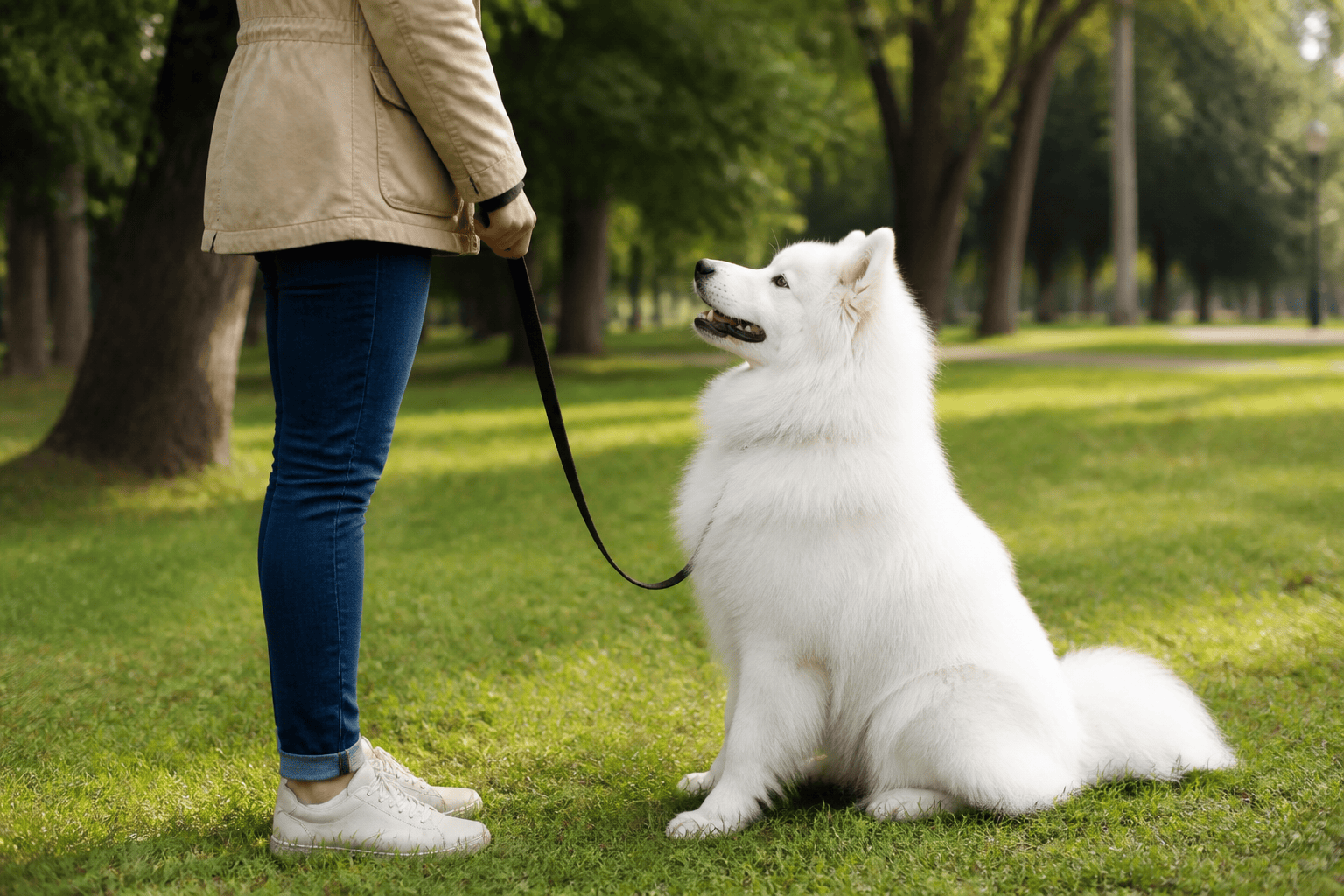
The friendly Samoyed image can hide how important early training is. The breed is smart, social, and active. AKC recommends early socialization, puppy classes, and consistent, firm but gentle guidance. This is not about being harsh. It is about making the household rules understandable and repeating them often enough to matter.
Plan for leash skills, recall precautions, visitors, calm settling, grooming handling, and polite greetings. Samoyeds may have a strong urge to roam, so off-leash freedom is not a casual decision.
6. Hot weather needs a real plan
Samoyeds were developed for cold climates. Their heavy double coat is not a reason to skip warm-weather safety planning. Move exercise to cooler parts of the day, provide shade and water, avoid hot pavement, and do not leave a dog in a parked car.
Panting alone can be normal after activity, but panting or drooling plus weakness, vomiting, confusion, collapse, or other concerning changes needs urgent veterinary attention. Heat illness is not a DIY grooming problem. If you are unsure, call a veterinary professional.


7. The purchase decision includes health records, not just a puppy photo
Responsible breeders use health screening to reduce known risks, though testing cannot guarantee a puppy will never develop a condition. AKC lists recommended Samoyed health tests from the national breed club, including hip evaluation, cardiac examination, ophthalmologist evaluation, and specific DNA tests.
Ask what tests were completed on the parents, where results can be verified, and what support the breeder provides after placement. Do not accept a vague “vet checked” statement as a substitute for breed-relevant health information.

The cost people forget: time that cannot be bundled into one weekend
The hidden cost is not only food, insurance, grooming tools, or training classes. It is repeatable time: brushing before a mat forms, walking before the dog is bored, training before a habit becomes established, and changing the outdoor plan when the day is hot.
That is why a Samoyed can suit an apartment or a house. Floor plan matters less than daily routine, safe exercise options, temperature management, and how often the dog is included in life. A large yard does not replace company or training. A smaller home does not automatically rule the breed out.

A better way to decide before you commit
- Put a daily 45- to 60-minute dog activity block on the calendar. Do not move it for convenience.
- Add a 10-minute grooming or home-cleanup block four times that week.
- Identify every day when the dog would be alone for a long stretch, then write the real plan for that day.
- Take one warm-day walk at the time you normally would, then decide whether that timing would be safe and comfortable for a thick-coated dog.
- Price the routine items and professional support you would actually use, not only the purchase price.
If this week feels manageable, you have something concrete to build on. If it falls apart, that is useful information before a dog depends on the plan.

So, are Samoyeds high maintenance?
They are high maintenance for households that need a low-shedding, low-contact, low-planning dog. They can be a very workable companion for people who enjoy regular grooming, can give them daily activity and company, and will adapt routines for weather.
The best answer is not the white coat in a viral photo. It is whether the care routine still works on a rainy weekday, a busy workweek, and the hottest day of summer.
Quick questions before you decide
The weekly reality check
Try the activity, grooming, cleaning, and alone-time plan for one normal week before a deposit. A plan that only works on calm weekends is not yet a plan.
The heat reality check
Decide in advance how you will shift walks, shade, water, and travel on the hottest days. Do not make the plan for a cold-weather dog after the heat arrives.

Samoyed FAQs
Do Samoyeds shed all year?
They shed regularly and usually have heavier seasonal shedding periods. Daily brushing and regular home cleaning help manage the coat, but they do not turn the breed into a low-shed dog.
Can a Samoyed live in an apartment?
Potentially, if the household can provide daily activity, training, companionship, and a safe plan for hot weather. A large yard helps with options, but it does not replace interaction or exercise.
Can a Samoyed be left alone while I work?
Every dog is different, but Samoyeds are social and active. Before choosing one, make a practical plan for the longest workdays rather than assuming the dog will be content alone for long stretches.
Are Samoyeds good for first-time dog owners?
They can be, but only for first-time owners who are ready for regular grooming, training, activity, and social time. Their friendly temperament does not make their care routine low-effort.
Do Samoyeds do well in hot weather?
They need a careful warm-weather routine. Use cooler times for activity, offer shade and water, avoid hot pavement, and seek veterinary help promptly for concerning signs of heat illness.