

Reviewed September 4, 2026 · Cat behavior guide
When a cat slowly presses one paw and then the other into a blanket, your lap, or the sofa, it can look exactly like they are kneading dough. Cat owners call it making biscuits. Most of the time, it is an ordinary, relaxed behavior. The useful question is not “What does every knead mean?” but “Is this the cat’s usual calm routine, or did something about it change?”
The short answer
Use this 30-second check
| What you see | Most useful next move |
|---|---|
| Slow kneading on a blanket or lap while the cat looks loose and calm | Let the cat settle; put a soft layer between claws and skin if needed. |
| Kneading before sleep in a familiar spot | Treat it as a normal routine; keep the resting area comfortable. |
| Claws catch skin or furniture | Redirect to a designated soft blanket and keep routine claw care up to date. |
| A sudden change with hiding, appetite change, touch avoidance, or other unusual behavior | Contact a veterinarian for advice rather than assuming it is only a habit. |

1. Kittens learn the motion early
Kittens knead while nursing. According to VCA, pressing the paws against the mother can help stimulate milk flow. Many cats keep some version of that movement as adults. That does not mean an adult cat is confused or hungry. It is simply a familiar motor pattern that can remain associated with safety and comfort.

2. The surface may feel like a good place to settle
Some cats knead right before they curl up. A fleece blanket, soft duvet, lap, or favorite cushion gives them something yielding to press. VCA notes that kneading may be part of preparing a comfortable place to rest. The best clue is timing: if your cat kneads, circles, and lies down, the routine may be more about settling than communicating a message to you.

3. Your cat may be comfortable near you
Cats often choose kneading spots carefully. When the chosen surface is your lap, the behavior can be a sign that your cat feels safe enough to relax there. But it is more accurate to call it a comfort cue than a universal declaration of affection. A cat can like you deeply and never knead on you; another can knead a blanket every night and prefer no cuddling afterward.

4. Paw scent can make a familiar spot feel familiar
Cats have scent glands around their paws. VCA notes that kneading can be one of several ways cats leave scent in a place they use. This is not the same as saying your cat is “claiming” you in a dramatic way. It can simply be part of using a familiar resting space.

5. The routine feels good, so it repeats
The slow left-right movement is often paired with purring, half-closed eyes, and a relaxed body. When kneading brings a soft blanket, a warm lap, gentle attention, or a quiet place to sleep, it can become part of a cat’s preferred settling routine. Watch the whole cat: soft posture, normal ears, a relaxed tail, and easy breathing provide more context than one paw movement alone.

When kneading deserves a closer look
Kneading alone rarely gives enough information to identify a problem. The concern is a change in the bigger picture. Call a veterinarian if the behavior is new and pronounced alongside one or more of these:
- Hiding more than usual or avoiding normal contact.
- Appetite, drinking, litter-box, sleep, grooming, or activity changes.
- New sensitivity when a familiar body area is touched.
- Vocalizing, restlessness, or inability to settle.
- Kneading in an unusual hidden place while the cat otherwise seems unwell.
Do not interpret these signs as a diagnosis. They are simply a reason to look beyond the blanket and describe the change clearly to a veterinary team.
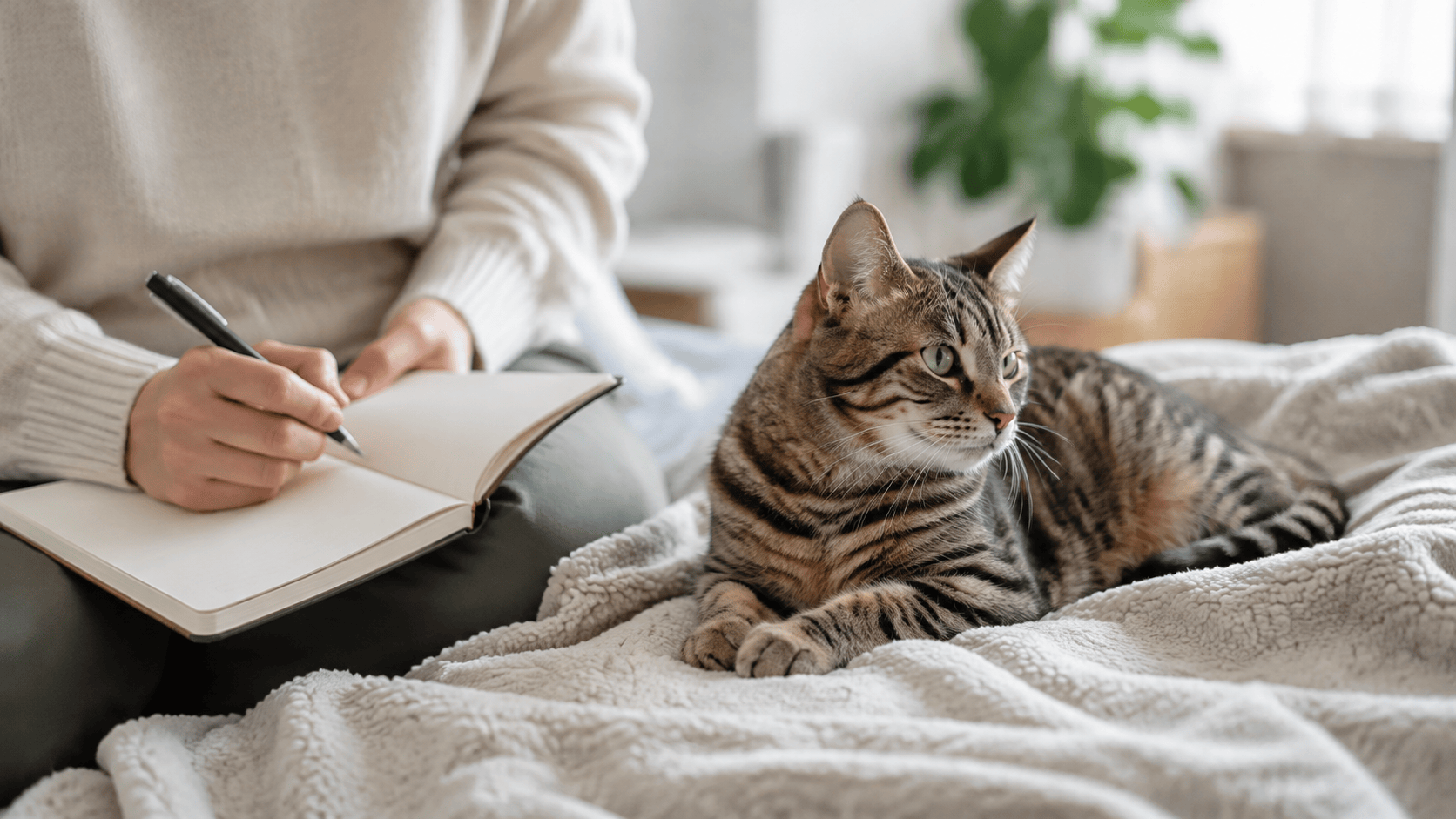
Make kneading more comfortable for both of you
- Keep a designated soft blanket near the cat’s favorite resting place.
- Put the blanket on your lap before the cat arrives if claws are uncomfortable.
- Keep nail care routine and gentle; ask a veterinary team or groomer to show you safe trimming if you are unsure.
- If the cat starts catching skin, quietly move the blanket under the paws rather than pushing the cat away.
- Let the cat choose when the interaction ends.

Avoid punishment or declawing. Cornell explains that physical punishment can create fear or worsen behavior problems.
Quick questions owners ask
Why does my cat knead on me and then walk away?
A lap can be one comfortable stop in a cat’s routine, not a promise that the cat wants a long cuddle. Let the cat decide whether to stay or move on.
Should I stop kneading when claws are out?
Do not punish the cat for kneading. Put a thick, soft blanket between the paws and your skin, then keep claw care gentle and regular.
Is blanket kneading different from kneading my lap?
The surface can change the practical meaning. A blanket may simply be a preferred place to settle, while a lap can add the comfort of being close to you. Neither setting alone proves what a cat feels.
Bottom line
Making biscuits is usually a small sign that a cat has found a soft, familiar, comfortable moment. It can connect to kittenhood, a sleeping routine, scent, or simply the pleasure of pressing on a favorite surface. The behavior becomes more useful to investigate when it changes suddenly or arrives with other changes in how your cat eats, hides, moves, or responds to touch.
